Search This Blog

Showing posts with label good stuff. Show all posts

Thursday, July 20, 2017

Review: Down Among the Sticks and Bones by Seanan McGuire

Down Among the Sticks and Bones (Wayward Children, #2)Down Among the Sticks and Bones by Seanan McGuire
My rating: 5 of 5 stars

I enjoyed this book so much, I went back to reread Every Heart a Doorway so I could meet Jack and Jill again, and better understand their choices in the context of where they'd come from. Down Among the Sticks and Bones is a prequel that gives a lot of strong hints about who they become in Eleanor West's Home for Wayward Children. I suggest reading them in order of publication.

Jacqueline and Jillian Wolcott are twins born to parents who had no business having children. The chaos of childhood and figuring out who you are in the world has no place in Serena and Chester Wolcott's well-ordered life. They initially foist the children off on their grandmother, but, on the girls' fifth birthday, the parents send the grandmother away without even giving her a chance to say goodbye. Jillian, the more rough-and-tumble of the two, is assigned the role of tomboy, while Jacqueline is dressed up in frilly, pretty dresses and admonished to keep herself clean.

Then, when the girls are twelve, they open a trunk their grandmother left behind to find not dress-up clothes, but a stairway going down into unknown depths. From there, they wind up on the Moors, where they're free to choose their own paths for the first time in their lives. Jill (which her parents always balked at calling her) chooses to become the coddled pet of a vampire, who dresses her up in pretty clothes and keeps her well-fed on an iron-rich diet. Jack chooses to apprentice to a mad scientist, where she eschews skirts and learns how to keep immaculately clean without running water, among other useful skills.

Jack and Jill each find love, out there on the Moors, but it's their love for each other that ties this story together. The book captures the double-edged nature of sibling love well. The girls know each other so well, which means they know exactly how to hurt one another.

This is a well-crafted tale, dark and poetic and utterly tragic. It's a novella, but there's a lot in there. I read most of it waiting in a hot car with the windows cracked. It was startling, emerging from that dark, cool world into the blazing heat, sticky and dying of thirst.

Be sure you want to know what made the twins who they are in Every Heart a Doorway. Be sure you want to go into the Moors with them. Be sure you want to know the consequences of the first choices Jack and Jill make.

Be sure.


View all my reviews

Monday, May 29, 2017

Review: Here, the World Entire by Anwen Hayward

Here, The World EntireHere, The World Entire by Anwen Kya Hayward
My rating: 5 of 5 stars

This book was written by someone I follow on Tumblr. She had hilarious stories about her cat on her blog, interspersed with Greek mythology. She actually posted a shorter version of this story before she turned it into a novella. So, I was very interested in reading the expanded version.

Here, The World Entire is a retelling of the Perseus myth, the part where he's tasked with retrieving Medusa's head. It's told from Medusa's perspective. Maybe that's been done before, but I've never come across it. I sincerely doubt it was so artfully done.

Medusa had a life before she became the snake-headed woman of legend, so ugly she turned men to stone. At least, in many versions of the myth, she does. This story goes with that interpretation, of the woman sworn to Athena, then betrayed by her goddess because Poseidon takes an interest in her.

And then it goes deeper. It posits that Medusa's exile is self-inflicted, because she can't stand turning people to stone. She warns people away, begs them not to look at her, and is heartbroken when they succumb to her curse. This Medusa is no monster, bent on revenge against all men for what one god did to her. She's a human, cursed by the goddess who was supposed to protect her.

The story gets into a lot of what mythology won't tell you. Myths don't depict the human view toward the gods, that they didn't worship them as all-knowing, benevolent entities. The Greek gods were viewed with dread, too, and derision. They were just as flawed as the people who worshiped them. They were just as subject to whims, or prejudices. We want to see Athena nowadays as a feminist icon, but, in the world that built her up, they assumed she hated women as much as they did. Medusa understands that, in this novella, but not until it's too late.

As much as I have a soft spot for mythology retellings, this one is beautifully done. It adds a lot to the Medusa myth, without taking away from what's already out there. I highly recommend it.

Unfortunately, you will not find this book at most retailers. You'll need to order it online if you want to read it. You really should.


View all my reviews

Review: Magic for Nothing (InCryptid #6) by Seanan McGuire

Magic for Nothing (InCryptid, #6)Magic for Nothing by Seanan McGuire
My rating: 5 of 5 stars

Anyone who's talked to me about books for more than 30 seconds knows I adore Seanan McGuire's books. I fell behind with this one, though. It's been out for over 2 1/2 months, but I'm just getting to my review? Past Me is so disappointed in Present Me.

This book introduces the perspective of Antimony ("Annie") Price, the youngest of the three siblings, and the one kept closest to home. She's both been protected against and held back from the spotlight all her life, because her siblings were allowed to pursue her passions, and one more Price out there in the world is too much for her parents' blood pressure. She has her interests outside the family profession, of course: TV and comic books and roller derby are her lifeblood, with a particular affinity for the X-Men.

Of course, this wouldn't be a book if she got to go on this way forever. Because of events in previous installments, Antimony has to infiltrate the English chapter of the Covenant of St. George, the people her family has been hiding from for centuries. The ones who want to exterminate all cryptids, believing them to be evil and against the natural order. And, just when she's starting to settle into that role, the Covenant decides to test her cover story by sending her into an American carnival to root out the cryptid or cryptids responsible for the disappearance of three teenagers in the carnival's proximity.

Of the three siblings, Antimony quickly became my favorite perspective character. She's snarky, well aware of her limitations, and she balances out the sense of awe with which people treat her older sister and brother. She reminds the reader that the Price family is still human, still vulnerable, and still a pain in her ass. For all her flippancy, Antimony is well aware of the danger she's walking into, and the stakes if she fails.

Antimony is also given the hardest task of any of her siblings. She isn't just getting to the bottom of a cryptid mystery; no, she's also balancing two levels of secret ID, trying not to piss off the grandmother of the (cryptid) boy she likes, trying to spy on the Covenant, and trying to protect her new friends from that very same Covenant. And she's working with far fewer resources, because reaching out to the family could expose them all.

One of the things accomplished in this book is to give the Covenant a human face. We meet the person running the Great Britain arm, and the next generation, sort of the Price sibling analogues. While it's harder to relish the idea of the Prices crushing an organization made up of thinking, feeling people, it also underscores their commitment to stop any sentient being from harming others. They've been shown, so far, to give all sorts of creatures the chance to show themselves capable of living peacefully. I wonder if the Covenant merits the same treatment. And if anyone in the Covenant is worthy of that chance.

In the end, everything wraps up in a satisfying yet intriguing way, which is how a volume in a series with more to come should end. There's a lot more for Antimony and the rest of her family to take care of before their story is done.

As always, looking forward to the next installment.


View all my reviews

Sunday, May 28, 2017

Review: My Grandmother Asked Me to Tell You She's Sorry by Fredrik Backman

My Grandmother Asked Me to Tell You She's SorryMy Grandmother Asked Me to Tell You She's Sorry by Fredrik Backman
My rating: 5 of 5 stars

This book was a delightful surprise. My sister sent it to me on audio, because she thought I'd like it. She knows my reading tastes well, apparently.

Elsa is seven years old, going on 8. Her best friend (and only friend) is her grandmother, 77 and going on 78. The book opens with Elsa and her grandmother at the police station, after the grandmother distracts Elsa from having been bullied at school by breaking into the monkey enclosure at the zoo and throwing clods of dirt (declaring they're monkey poo) at the security guard.

Not your ordinary grandmother, in other words.

Elsa and her grandmother share a series of fairy tales about The Land of Almost-Awake, and the Kingdom of Miamus within that land. In Miamus, Elsa and her grandmother are knights, and, though granny's adventures are behind her, she fills Elsa's ears with all her tales, and spurs her on her own adventures.

But the grandmother hasn't told Elsa she's dying of cancer. Elsa only finds out just before her granny succumbs. But then, a quest arrives from the grandmother, asking Elsa to deliver a letter telling someone she's sorry. Delivering the letter successfully continues the quest.

The characterization in this book is beautiful. Everyone is filtered through Elsa's perspective, and yet we see the whole picture of everyone. There are villains in the story, but they're still people, human and flawed and loved by someone. Those Elsa cares about, she's always finding a reason to love them, or at least admire them.

Despite the protagonist's age, this is not a YA or kids' book. People swear, and there are concepts such as war, substance abuse, tragedy, grief, and domestic abuse, which could be difficult for young readers to parse. Elsa is precocious, reads about anything she doesn't know about on Wikipedia, and has no tolerance for being talked down to. Her grandmother's fairy tales help her grasp some of the concepts in the book, but her exposure is often frightening or upsetting to her.

And yet, despite the dark themes within this book, the overwhelming feeling when it ends is warm and fuzzy. Elsa insists throughout the story that it has to have a happy ending, and, despite nothing turning out the way she expects, she gets her way, in that.

If you're prone to emotional responses to books, this one is apt to make you burst into tears, probably at several points in the narrative. But I can almost guarantee it will also have you laughing. And you'll almost certainly see stories, or grandmothers, or falling asleep, a little differently.

Give this a read. You'll be glad you did.

I listened to this on audio, narrated by Joan Walker. She did a lovely job, both keeping up the fairy-tale kind of tone throughout, and pronouncing a lot of difficult vocabulary created for this book. She had a lot of distinct voices for different characters, and I was never confused who Elsa was talking to in any given moment. Not once did her narration pull me out of the story; it enhanced it, if anything.


View all my reviews

Tuesday, October 18, 2016

Review: Something Wicked This Way Comes by Ray Bradbury

Something Wicked This Way ComesSomething Wicked This Way Comes by Ray Bradbury
My rating: 5 of 5 stars

I reread this book for my book club, as it was this month's very apt pick. I first read it when I was a freshman in high school, so I remembered only the most distinct images and themes. It was a pleasure to reread as an adult.

On a dark night in October, at precisely 3 AM, the carnival comes to Green Town, Illinois. Two boys, Will Halloway and Jim Nightshade, watch its magical arrival, but find the next day that it looks as ordinary as any traveling show, but for the mirror maze. The boys return at night to find it's as sinister as they remember, to Will's horror and Jim's delight. They enlist Will's father, Charles Halloway, to help them escape its clutches. Halloway has to confront his own mortality, which, at 54, he feels nipping at his heels.

It's a quick read. The mystery draws you in swiftly, and the chapters are short. It's easy to keep turning pages, thinking, one more chapter, until there's nothing left. The language can get bogged down in places, but it still rolls along at a nice clip. Bradbury needn't have waxed so poetic about libraries and their contents, for instance, but that might be my favorite passage in the whole book.

Though the story is told mostly from the boys' perspective, Halloway is the true hero of the story. He's the one who finds the antidote to the fear the carnival sows, who gives Will the answer for saving his friend. The fears the carnival inspires are most horrific to Halloway, who has to overcome the most to confront them.

The book will resonate most with older readers, but can still be enjoyed by younger ones as a chilling tale. There's a lot of depth and subtlety that would be lost on too young a reader, and it may be too scary for some.

Something Wicked This Way Comes was adapted into a movie by Disney, back in their creepy as heck phase in the 80's, between The Watcher in the Woods and Return to Oz. I'll have to rewatch it, to see if it holds up half as well as the book to my childhood experience.

I'll just make sure I watch it during the day, in case it does.


View all my reviews

Monday, August 1, 2016

Review: Flowers for Algernon by Daniel Keyes

Flowers for AlgernonFlowers for Algernon by Daniel Keyes

My rating: 5 of 5 stars


This is one of those books I was convinced I'd read years ago. The way people spoke of it, it sounded like my school couldn't possibly have overlooked assigning it. But the plot points people spoke of sparked no memory whatever, so I had to read it for myself.

There are two versions of this story: a shorter version written for magazine publication, and this longer edition. I may have read the short story, which would explain my certainty I'd read this. I still didn't remember the plot.

Flowers for Algernon follows Charlie Gordon, a young man with intellectual disabilities. He has an IQ of 68, and, while he can write and holds down a job, wishes he could be smarter. He is given an opportunity to receive a treatment that will increase his intelligence; they've already had a successful trial on a mouse named Algernon.

The trial works, and Charlie's life begins to change. He earns greater respect from Alice Kinnian, the attractive teacher who recommended him for the trial, but he also starts to scare his co-workers with his newfound intelligence, and he learns they were making fun of him before. Then, the mouse's intelligence begins to decay, and he dies. Charlie experiments to find the cause before the same happens to him.

The book was published in 1966, so, fortunately, many aspects of Charlie's story would've changed in a more modern setting. He wouldn't have risked being locked up in a state institution if not for his job, though homelessness would certainly have been a concern, if he didn't have access to the resources he'd need just to know what's available to help him. One would hope his enrollment at Ms. Kinnian's school might connect him with those resources, but many still fall through the cracks.

I wish I could say that Charlie's co-workers are a relic of an earlier time, but such people are still around. People with disabilities are better integrated into their communities these days, but that doesn't mean that all of the community members are supportive and accepting.

This story is hard to read. Not necessarily because of Charlie's struggles with spelling and grammar, and his later overly intellectual writings, though that doesn't help. Charlie's struggles inspire a lot of empathy, and it's hard not to want things to work out in his favor. The ending leaves some questions as to his eventual fate, but it's clear that he's worse off for having undergone this treatment. As his intelligence declines, he can't simply be proud of all he's accomplished, because now he knows what he's missing. He can never return to his days of blissful innocence.

While the approach taken in this book somewhat romanticizes the notion of simple, innocent people like Charlie, it also highlights how people without disabilities can make the lives of those with different needs easier, or harder. The book isn't perfect, by any means, but I strongly recommend giving it a read.


View all my reviews

Tuesday, February 9, 2016

Review: Why I Jump by Naoki Higashida

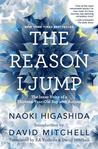
The Reason I Jump: The Inner Voice of a Thirteen-Year-Old Boy with AutismThe Reason I Jump: The Inner Voice of a Thirteen-Year-Old Boy with Autism by Naoki Higashida

My rating: 5 of 5 stars


So many of the books about children with disabilities are written by the parents or caretakers. It's difficult to find a variation of the theme of "people with disabilities are so inspiring," which is patronizing and unhelpful if you actually want to learn their perspectives. Thus far, my only source of the autistic perspective was Temple Grandin, who grew up in a different time and can tell us all about looking back on her experiences, but not the current experience of growing up in a world that considers autism worse than polio.

Why I Jump is written by a boy who has autism, and who's able to verbalize many of the frustrations he experiences. Some of the issues are cultural; his Japanese upbringing has less pride of individualism. But many of his experiences are universal. The social subtleties and seeming contradictions would confuse him no matter where he'd grown up.

Because the book was originally written in Japanese, it's difficult to tell if the stilted style is due to translation, or because that's how the author comes across. While many people with autism do avoid contractions, others speak far more smoothly. I've often heard the halting, near-stuttered language in other works translated from Japanese. It's too bad I couldn't read this perspective in its native language.

Much of the book is taken up by a question-and-answer format, which makes it difficult as a narrative. Nonetheless, as an audio book, the listening time passes quickly, with the author never belaboring a point or lecturing the reader. The book wraps up with a story written by the author that gives some insight into how his mind works and what he fantasizes about.

In the end, this book is only one perspective from one boy with autism. He falls short of several stereotypes, and comes across as a whole person the reader can empathize with (and who, the reader will realize, has empathy of his own). It's a start, certainly. I would like to read more like this book, Most especially, I would like to know books like this are being more widely read. An awful lot of the problems described in this book wouldn't be problems with a more understanding populace.


View all my reviews

Thursday, July 10, 2014

Progress: The Fun Part

I finished editing the first two books of the urban fantasy trilogy. The second book wound up needing a major rewrite to tighten up the plot and add tension and give some of my characters something to do. I'd meant to kill off a character, who survived in the previous draft. I fixed that.

It was not a fun change to make. I was morose for a whole day. I hope that helped me capture the fallout. We'll see. I have a crit partner reading it now. I realized after I'd sent it that I overwrote the ending, but I'll fix it.

Finishing that means I get to go back to the dragon story. I spent most of the holiday weekend typing the first book, and editing as I went. I got to know and understand the characters while writing all three books, so there are aspects I have to make sure I include from the start. I can also see holes where I neglect one or another of my ensemble cast, so I know I'll have to go back and give them something to do. I've slowed down the development of one plot point, cleaned up some of the redundancy and rambling, and spaced apart the reveals more.

Last night, I had to delete about five (double-spaced, rewritten) pages, because I was trying to resolve a conflict too soon. Characters needed space to ponder ramifications and illustrate their sincerity and make amends. Solving it too soon would let a character off the hook, and stunt development. The conflict wasn't even there in the first draft, but it became an essential turning point. I know it'll need more tweaking in later drafts, but I'm pleased with its addition.

I think that reflects my biggest writing weakness. I'm always in such a hurry to get to the good parts that I don't give enough narrative space to the buildup. An awful lot of my rewrites involve delaying plot points or leaving loose ends hanging a while longer. Maybe I can put a patch on my pantster ways by writing myself notes about scenes I'm excited to write or factoids I need to drop casually into the narrative. It's worth a shot.

When I wrapped up last night (okay, early this morning - I don't sleep well in summertime, so I might as well make my insomnia productive), I was at 64,250 words, with about half of my handwritten draft typed out. So, yup. It's an epic fantasy. Among other genres.

What I didn't expect was that I'm really enjoying what I've written. I'm looking at the words with a critical eye, but I keep running across turns of phrase that crack me up. My main character couldn't be more different from me, and has a quirky way of viewing the world. I hope the character's voice makes the series's concept easier to stomach. It's not fully revealed until the end of book one.

I'm actually excited at the idea of people reading this book. A little embarrassed about all the sex, but I've managed to pare it down to a less embarrassing degree. This is a story I could share with the people who've asked to read it without disclaimer.

Well, maybe not all of them. My co-workers may have to wait for it on store shelves. I don't want to know that people I know in a professional capacity have read it.

That's not all I'm working on. In my between times, I've been writing the third book of the urban fantasy trilogy. I've only ever written one draft of that book (as opposed to dozens of the first, and a handful of book two), and what I wrote isn't worth preserving. There's been a major thematic and world-building overhaul since I wrote it. Plus, it's tedious as hell. I feel a lot better about how this draft is turning out. In my typical fashion, I'm not completely sure how it'll pan out, but I have a lot of things to keep the characters occupied in the meantime.

Tuesday, April 29, 2014

Progress: Catching My Breath

You remember the trilogy I was working on the last time I checked in? If you've been watching this space at all, you've probably noticed I'm not updating a whole lot. That's because I was writing. And writing. And writing.

I finished the trilogy on Sunday morning.

As in, I've written two books since I last checked in in late January. Books in excess of 100,000 words. Don't ask me by how much, because I'm still writing them by hand. That was, apparently, the right call. I've had an easier time avoiding distractions, and I've been able to write during every minute of down time throughout my day.

And in some ways, it was wrong one. I've written through the night more than once. I've neglected a lot of real world concerns.

But I just wrote three books in five months! I guess I really wanted to write that story.

I think there are more stories to be told in that world. I just need to figure out what those stories are. I'd hate to get repetitive. I think I need to use different characters, because those ones have been through enough. They learned and grew from their adventures, and now anything I throw at them would have to be ridiculously overpowered to pose any challenge.

Honestly, though, it would be a waste to leave the world alone. I drew up a map and everything!

It's not much, but it's my fictional fantasy world.

Yeah, it's not much to look at. And I've changed it since I took this picture. But I kept losing track of where the characters were and how long it would take them to get from one point to another. Having a map made it a lot easier.

Next on my slate is typing up all my handwritten stuff, then editing it and sending it off to beta readers. A lot of people have expressed interest, but only a few get to read the early stages. No one but me will read the original handwritten form. Mostly because I'm the only one who can read my handwriting.

I have no idea how I did that while holding down a full-time job. I have no idea if I'll ever be able to do it again. But it's one of those things that made me remember why I wanted to be a writer.

Wednesday, February 5, 2014

Review: Half-Off Ragnarok (InCryptid #3) by Seanan McGuire

Half-Off Ragnarok (InCryptid, #3)Half-Off Ragnarok by Seanan McGuire
My rating: 5 of 5 stars

I won a copy of this book in a Goodreads First Reads giveaway. I was not compensated in any way for my review.

Can we just clone Seanan McGuire? Please? Because I want more InCryptid. I also want more October Daye. And sequels to Indexing. And more Mira Grant tales of science gone wrong. And short stories she keeps posting on her website. And I want her to be able to sleep and go to the Disney parks, because really, anyone who brings so much joy into the urban fantasy world deserves nice things. I'm not totally greedy.

It's not like she slacks off. Half-Off Ragnarok, which I was lucky enough to get as an ARC and will be buying in paperback when it comes out, is released on March 4. Sparrow Hill Road, which is in the InCryptid universe but addresses another aspect entirely, is due May 6. The Winter Long, Toby Daye's eighth book, is out in September. Symbiont is scheduled for a November release. I can't imagine the kind of productivity that lends itself to that release schedule.

But about Half-Off Ragnarok. This is the third InCryptid book, and the first to be narrated by Alexander Price, the oldest of the Price siblings and the only son. He's come to Ohio to mate a pair of basilisks, and, for his day job, works with reptiles at the zoo. He's dating Dr. Shelby Tanner, an Australian biologist who works with the big cats. He lives with his grandparents, on the Baker side of the family. He helps take care of his cousin, Sarah Zellaby, who's recovering from the events of Midnight Blue-Light Special.

Alex's busy life doesn't lend itself to much socialization. Or sleep, for that matter. Shelby is put off by his dozens of excuses about why he can't spend time with her, and seems on the verge of ending things. Then Alex finds the partially petrified corpse of one of his employees. He has to investigate which creature did it before the Covenant of St. George hears about it, without neglecting Shelby, pissing off the local gorgon population, or getting turned to stone, himself.

I did miss Verity, who makes a short cameo in a phone call, but Alex proves himself worthy of carrying this book on his own. The shift in perspective allows Alex to tell us things about the family Verity didn't find important or that didn't come up. We meet another colony of Aeslin mice, who are just as adorable as Verity's. We learn that, though they regard Alex as a deity (the God of Scales and Silence), he gets no additional perks from the position. He has to bribe the mice for privacy and participate in rituals just as Verity does.

We also see more aspects of the InCryptid world. Alex's focus is on non-sapient cryptids, so he can't reason with or threaten critters running amok. He has to trust his judgment on which ones are beyond redemption, and live with the consequences, whatever his decision. His focus is more on the biology than anthropology aspect.

Despite the shift in perspective, the tone of the series remains consistent. There's still lots of humor and levity, and I suspect the author had way too much fun writing Sarah's cryptic dialogue. It's not overdone, but it sure is random. The snark is perfectly intact, with plenty of snicker-worthy lines. Sarcasm appears to be genetic in the InCryptid universe.

I enjoyed this installment quite a lot, and will be eagerly awaiting the next. On the one hand, it's a whole year. On the other, it's only a year. There will be plenty of other books to read in the meantime.

View all my reviews

Sunday, January 26, 2014

Progress: Fast Forward

I honestly didn't expect to make another progress post so soon. I'm still handwriting my stories, and I don't just pull the notebook out when I have a minute. I also scribble in it when I'm home and winding down for bed. Or just because I want to write.

I took a vacation from social media the week before last. For the entire week, I didn't log into Twitter, Tumblr, or Facebook. I asked people to email me if it was terribly important, though the people I interact with most often don't even know most of the places I hang out online.

Mostly, I did it to see if I could. I was also trying to break some bad habits I'd developed around my morning ritual. Purging it seemed the appropriate step.

I didn't get a lot of chores done around the apartment, and I didn't reset my sleep schedule, as I'd hoped. Nor did I get much reading done. I did spend a lot of that time writing. I lost track of time writing. I stayed up into the wee hours writing. I'd forgotten that writing was the first thing that I stayed up until dawn for when I was younger.

I estimate my little notebooks fit about 22,000 words apiece. I started out the month with one filled. Here's what I ended my social media vacation with:


I was pretty proud of my little experiment. And now, a week later, I've filled one more notebook, bringing it to about 110,000 words in my rough draft. I have finished the epic fantasy parody I'd failed to write years ago. 

I'm already mentally mapping out book 2, and I have a rough sketch of book 3. It looks like it'll be a trilogy. I could probably pad it out more than that, if I really wanted to. I don't want to. I think these books will work best on a diet of high energy and good humor.

I'm afraid I might burn myself out if I write out the second one at the same rate. On the other hand, I don't want to lose my momentum. One of the great things about being a pantster is that enthusiasm for a story tends to grow as you write and discover. One of the awful things is that, if you don't write it fast enough, you'll forget that cool scene you've already written in your head. It's that second thought that had me writing at the speed I was, and the first that bolstered me for the last month and a half. I had a lot of fun finding ways to throw my character off-balance.

I could type up all my handwritten pages, I suppose. I still have book 2 of my urban fantasy trilogy I haven't typed up, and now all this. I tend to edit as I go, too, so I wind up with a more polished typed first draft. Especially now that I know what the ending is and where all those plot threads and characterizations are going.

What do you think? Keep going on the fantasy trio? Edit the UF? Focus on reading? 

What would you do?

Wednesday, January 1, 2014

2013: A Year in Reviews

I didn't do a lot of writing posts this year. But I did write up a review of each and every book I read in 2013, and I read a lot. Goodreads tells me it was 117 books, though I did cheat a little. Thirteen of those were The Human Division. The fact that I reviewed each and every installment has to count for something. I also won a reading challenge.

I think reviewing every single book has me reading a little differently, with more of an eye on technique and craft. I know formulating my thoughts about them has been helping me express myself better, though I do recognize they're not all masterpieces. At least you're getting your money's worth, right?

Last year, I recapped my favorites, and I enjoyed doing that. So, without further ado, below are my favorites of 2013. Please note that these are books I read in 2013, and many of them were published in previous years.

Favorite Debut: The Golem and the Jinni by Helene Wecker. It was funny, poignant, and topical. I cared
what happened to the title characters, the world was populated by what felt like real human beings, and it didn't end the way I expected. I wouldn't have guessed this was this author's first novel; she has the craft, level of detail, and research down pat. I look forward to her next book, whatever it may be.

Favorite Series Conclusion: MaddAddam by Margaret Atwood. A lovely, satisfying wrap-up to a series I can see myself rereading happily, despite my ever-looming to-read pile. Atwood has a background in poetry, but the prose is never mired in overly flowery descriptions. She understands what words are for, and uses the right ones.

Favorite Post-Apocalyptic: Swan Song by Robert R. McCammon. I admit, I was skeptical about all the love it was getting in reviews when I started out. It seemed dated and depressing. But all that atmosphere was building to a lovely and perfect conclusion. I loved all that stalling for leading me to that beautiful ending.

Favorite Reread: 1984 by George Orwell. I revisited it for a book club, because we were going to discuss it in the context of Brave New World, and I hadn't read it since high school. I didn't expect to like it as much; I thought it was one of those books I'd outgrow. But the politics and notions struck me all the more, now that I'm more of a participant in how the world works. I think it helped, also, to have read Margaret Atwood's perspective on it last year in In Other Worlds.

Favorite Audio Performance: The Importance of Being Earnest by Oscar Wilde barely edges out Macbeth by William Shakespeare, but only because we're talking about the performance, not the quality of the story. Oscar Wilde wins out for style. If it were up against a Shakespeare comedy, it wouldn't have stood a chance. If you check both reviews, though, you'll see the common element that made them both such tough contenders.

Favorite YA: The Absolutely True Diary of a Part-Time Indian by Sherman Alexie. Funny, revealing, universal yet illuminating. I wouldn't go so far as to make it required reading in schools, because that's how you make kids hate a book. But, I do think a lot of young people, especially misfits, artists, and ethnic minorities, might relate to the main character.

Favorite Fantasy: The Hundred Thousand Kingdoms by N.K. Jemisin. It was far better than it needed to be to hook me on the series. Personable, vulnerable gods and the best fantasy heroine I've ever read made this book positively addictive to me. This is one of those books that made me depressed I'd never write this well, then, when I got over it, determined to prove myself wrong.

Favorite Nonfiction: Let's Explore Diabetes with Owls by David Sedaris. Thoroughly entertaining, often funny, and expands on what we, as readers, know about Sedaris and his family. It also answers a number of questions I've wondered while reading other stories of his.

Favorite Serial Fiction: Indexing by Seanan McGuire. It'll be released as an entire volume in late January, but, to get the full experience, you'll have to put it down for two weeks after every chapter. (No; read it however you like. I'm curious how it stands up as a whole work, actually, and would appreciate comments letting me know what you think, if you discover it that way.)

Favorite Short Book: The Ocean at the End of the Lane by Neil Gaiman. It's been getting all kinds of critical acclaim, but, in this case, it's justified. This nostalgic tale about long-forgotten magic is lovely and poetic and a delightful read. And, it's just barely longer than a novella, so it's not like you've wasted a lot of reading time if you're not as enchanted as I was.

Favorite Doorstopper: Under the Dome by Stephen King. It justifies all that narrative space, but, whoo! It's a lot to find yourself faced with when you're already three books behind on your reading goal for the year.The themes resonated with me quite a bit, and it was deeper than I expected from Stephen King.

Favorite Concept: Lexicon by Max Barry. Control of the world through a few well-chosen words. Sounds like writing, true, but not the way it's presented here. I wasn't expecting to enjoy this book half as much as I did. And I don't pick up books with the expectation they'll be merely tolerable.

Favorite Kids' Book: Fortunately, the Milk by Neil Gaiman, illustrated by Skottie Young. A delightful tall tale about time traveling dinosaurs, redecorating aliens, and a scatterbrained dad. Don't wait for an excuse to read it to a kid. Read it for yourself.

Favorite Classic: The Idiot by Fyodor Dostoyevsky. An excellent book for those who like this kind of thing. Dostoyevky can be depressing, and rambling, and rather dark. That's what I like about his books. This one in particular manages to highlight some of the best parts of human nature, while condemning the worst. I didn't always understand character motivations, but I didn't care. The characters knew who they were and where they were going, and I wanted to follow them to see where they ended up.

Favorite Science Fiction: Redshirts by John Scalzi. A send-up of various science fiction tropes that serves as both homage and satire, which is a neat trick to pull. I still can't believe Scalzi did that*, and I'm a little mad he pulled it off so well.

Favorite Author remains Seanan McGuire. This year, in addition to numerous short stories published on her website, Seanan also published Midnight Blue-Light Special (InCryptid #2), Chimes at Midnight (October Daye #7), Parasite (writing as Mira Grant; first in a two-book series), Indexing (mentioned above), she had a story in The Mad Scientist's Guide to World Domination as well as several other anthologies, and she contributed to a Hugo-winning podcast. Just by sheer volume of my favorites of 2013, alone, she wins. But it's her consistency, her cheerful online presence, and her occasional posts about weighty, potentially controversial topics, that secures her the spot at the top of my author list for another year. The rest of her potential competition is running around in circles back at the start of the race.

So that's my 2013 in reading. How did yours fare?

I hope 2014 brings you some happy surprises, and many excellent books to read. Have a fun and safe New Year's.

* If you've read it, you know what that is. If you haven't, I'm not going to spoil the fun of finding out for yourself.

Saturday, December 28, 2013

Review: Macbeth by William Shakespeare

MacbethMacbeth by William Shakespeare
My rating: 5 of 5 stars

I read Macbeth way back in high school, and the plot's fairly well-known in popular culture. But, when I saw there was a performance by LA Theatre Works, with James Marsters in the title role, I had to pick it up. Once, not so long ago, I was at a convention, and an audience member asked Mr. Marsters for some Shakespeare dialogue. And he recited, word for word, the "Is this a dagger?" speech from this play. It was amazing.

Macbeth is about a Scottish general who's told a prophecy that he'll first get a title he thinks is well out of reach, then he'll be king. But his friend's bloodline is the one that'll stay on the throne. When the first part comes true, his wife connives to have him murder the king to speed up the prophecy. He then has his friend murdered, and tries to have his kids killed, too. He becomes paranoid, and goes to find the witches again. They tell him a series of impossible events that'll come to pass before he's deposed, and his confidence grows. But then the events start happening, and he refuses to back down, even when fighting a man who seems to fit the witches' description.

It's a story about greed, power, guilt, and ghosts, and contains a lot of elements of the histories and other tragedies. Thanks to the great emotional anguish required of the actors, it has some vied-after roles, though it's also rumored to be cursed. (My English teacher's theory was that people would usually put on "The Scottish Play" as a revenue-boosting move, and, if a theatre needed money badly, they'd've let the sets deteriorate significantly until that point.)

Luckily, this audiobook troupe is well up to the challenge, and they employed a number of sound effects to make up for the lack of visuals.

Shakespeare wrote his plays to be acted on a stage. If one must read them, I feel an audio performance is the closest one can get to the intended experience. It's certainly more dynamic than words on a page. And, I think, hearing the words spoken aloud, with the right inflection, makes up for a lot of the shift in language since the Elizabathan era.


View all my reviews

Monday, June 24, 2013

Progress Post: Looking Up

Slowly but surely, I'm getting there.

I've been handwriting a lot of the updates to my current work-in-progress. I've had some moments where it's a lot easier to grab a handful of blank pages than my entire laptop. I've noticed that I can write for longer periods of time without distraction when I'm handwriting, as opposed to typing. The drawback is that the side of my hand gets smudged with ink, and that it takes extra time to type up. I currently have 16 pages front and back, which roughly winds up as one double-spaced typed page apiece. The last time I typed up some pages, I'd topped 40,000 words. So that's going well.

I also have my crit partners. I've been working with them since January, and they've both had excellent ideas to improve book 1 and polish it up for publication. They both had some very positive things to say about it, too, which was exciting.

I wish I could say my excitement translated into getting their stuff read quickly, but, alas, my motivation is failing me in all aspects of life. Hopefully typing this out will be just the kick in the rear I need to get moving on that, because, really? Five months? That's just laziness on my part.

One really, really good thing happened last week. On Thursday, June 20th, I went to a reading and signing event for Neil Gaiman at Saratoga Springs. I found my way there, and eventually found a parking spot. I did not arrive in time to submit a question for Mr. Gaiman. But I did have plenty of time to knit and people watch
before the event.

Then it was really Neil Gaiman on the stage, and really Neil Gaiman reading from his book and answering questions and being humble and adorable.
Not a good photo at all, but the blob on
the right in black is, indeed, Neil Gaiman.
He read from the book he was on tour to promote, The Ocean at the End of the Lane, which our admission price got us a signed copy of. He also read from Fortunately, the Milk, his kids' book coming out this fall, which sounded utterly charming. He also discussed why this is his last book tour: because it's not fun for anyone when 4000+ people show up to get their books signed, and they're there all night, and he's bleary and grumpy and loses the ability to spell. He said he may do ninja signings, where he puts a notice up on his Twitter last-minute and maybe a couple hundred people come.

The event is going to be broadcast on WAMC on Tuesday, July 9th at 3 PM, and on Thursday, July 11th at 8:30 PM. Even if you're not local to the NY Capital Region, you can listen online at the link.

Then it came time for the signings. I was in group B, and wound up standing just in front of The Least Affected Youth, Ever. They loudly made fun of everyone and everything in the room, with sarcastic comments aplenty. Or maybe I was just overly sensitive because I was nervous, and had no moral support there to keep me centered.

I've met authors before, and almost always end up with that feeling I'm watching myself from outside, wondering what possessed me to say something so stupid. This time, I scribbled a note on the back of my email confirmation explaining I'm shy and that I clam up around people I admire, but that I loved his writing. I also scribbled the question I was going to ask, if I'd arrived in time to ask it. It was too involved for a quick, 30-second interaction, but I still got part of it answered.

When I finally got up to the front of the line and passed my note, I saw him read it, then his face visibly softened. He thanked me for my kind words, and held out his hand to be shaken. I shook it, and managed to whisper something like, "Thank you." He told me he was shy, too, and that one usually muddled through and made it, somehow, and learned to be better next time.

And now I have a signed copy of Ocean at the End of the Lane, and my copy of Fragile Things is signed and personalized. It's just a trade paperback, but it's also the last book I bought from Malaprop's before I had to move away from Asheville, NC.

The above doesn't have a whole lot to do with my writing progress. But that's one of the reasons I write. Because other writers can bring so many different people together to talk about how their words touched them. Because every writer I've met has been wonderful and warm and caring. Because, while I will never reach that level of fame, I could die happy if I met one person as ecstatic to meet me as I was to meet Neil Gaiman.

Monday, June 10, 2013

Movie vs. Book

black and white - film
Photo found here
As you know, if you read my review of Silver Linings Playbook, I recently had the chance to compare a
book and movie side-by-side.

If I'm going to read a book and see the movie, I'll always read the book first. I've found that doing it the other way around gets images stuck in my head so I can't appreciate the book's subtler parts, and sometimes it confuses me.

Silver Linings Playbook has to be the first time I've liked a movie better than the book, full stop. It's not that it was a bad book. It was partly the strength of the actors, one of whom won an Oscar for her portrayal. Mostly, though, it was that the movie shifted the focus to external forces, rather than letting me wonder the whole time what was wrong with the narrator. Mysteries that drive the narrative in the book are stated outright in the movie, making it an enjoyable experience even for those familiar with the story. There were a lot of changes, but they all made sense for the movie's framework.

Another movie that accomplishes this is Stardust. I enjoyed the movie, but I have to view it separately from the book. They're different entities. The book is whimsical and sweet and understated, while the movie is funny and sweet and adventurous. I liked the bittersweet ending to the book, but would have been disappointed to see that happen to the movie characters. I can't say I like the movie better than the book, because I have to qualify it.

The Last Unicorn, The Neverending Story, and Princess Bride were all a part of my childhood, and I'd seen the movies long before picking up the books. I wound up liking the books better for The Last Unicorn and The Neverending Story, and I found The Princess Bride book to be indistinguishable from the movie, and so a tie.

I could list the examples where the changes between the book and movie infuriated me, or where I felt disappointed, or where I declared the movie didn't exist. But, you don't have all week.

I find that movies must, by their very nature, simplify inner monologues and leave character motivation implied. Action has to be moved to an external source, and revelations must be bigger. Movies have a tighter time frame to work in, so subplots and entire characters are often cut. (Oddly, Silver Linings Playbook added characters, and expanded the roles of some while compressing the time frame.) Sometimes, those cuts and changes lead simply to a different story, not an inferior or superior one, as discussed above. Most of the time, though, I find the movie oversimplified and lacking in everything I liked about the book.

A criticism I heard fairly often last year of The Hunger Games movie was that it was impossible to follow if one hadn't read the books. Having read all three books, I don't know if that's the case, but I'd be interested to hear from those who've only seen the movie. I'm also interested to know if you've ever watched a movie after reading a book, and wound up liking the book more. So, please, comment below if something comes to mind.

Tuesday, January 15, 2013

Instilling a Love of Reading

One of my Christmas presents this year was an audio book. It wasn't just any audio book, though. My father recorded himself reading Songs for a Machine Age, in a format I could import into my iPod. He did it all in one take, so I have his stumbles, misreadings, corrections, pauses to turn pages, and background noises. At one point, the phone rings, and he informs me upon resuming that it was a wrong number. Another time, he pauses to tell my sister's dog what a good girl she is. There are a couple of points where I can hear the murmur of conversation, and I recognize my sister's and my mother's voices.

So it's hardly a polished production, but it's certainly something to hold onto. Not just for those personal gems, but also because my father has a wonderful voice. He majored in speech in college, and had a radio show for much of my childhood. Many of my memories as a kid involve visiting him at the radio station, making faces at him through the soundproof glass to mess him up while he was on the air (he never faltered), and making paper airplanes to throw off the second floor into the lobby. He also performed several roles for the Cape Cod Radio Mystery Theater, of which I got to watch some of the recordings.

Photo of father reading to his daughter courtesy of
the Library of Congress (Public Domain)
I didn't know how he'd worked to hone his voice when I was a kid, though. All I knew was, my father's voice soothed me, and I loved to hear him read. My sisters and I would make him read us Dr. Seuss books (One Fish, Two Fish, Red Fish, Blue Fish was a particular favorite), and make him read it faster and faster, trying to trip him up. We couldn't read sections of it, even slowly, without spoonerisms galore, but I remember that he always read flawlessly.

I don't remember how old I was when he read me The Hobbit over the summer, one chapter at a time. I remember the voices he had for the characters, and how some of them made me laugh. I remember begging him to read a little more, but I don't recall if he indulged me. I remember it started me on my interest in fantastic narratives, and I couldn't get through The Lord of the Rings for years because Bilbo played such a tiny part in it. I remember when the local high school's summer drama program cast him as Gandalf, my mind couldn't grasp anyone else in the role.

I'm well aware that I was lucky to grow up with both of my parents, and that I was downright fortunate that my father had that half an hour to spend with me every night, reading me a story. Not everyone comes by their love of reading this way, and I'm privileged to have this story to share with all of you.

But, if you have children, or you're thinking of having them, also think about how you want them to feel about reading. Whether you love it, or you feel indifferent to reading, if you want your children to grow up to love reading, part of it is making time for teaching them how.

And, if you're uninterested in children of your own, or unable to have them, consider volunteering with a local literacy nonprofit, or at your local library. Lifelong readers start young. These are the memories fond readers carry with them for a very long time.

Friday, December 28, 2012

Review: The Girl Who Circumnavigated Fairyland in a Ship of Her Own Making by Catherynne M. Valente


The Girl Who Circumnavigated Fairyland in a Ship of Her Own MakingThe Girl Who Circumnavigated Fairyland in a Ship of Her Own Making by Catherynne M. Valente
My rating: 5 of 5 stars

I read this on audio, over the course of driving to and from my parents' for Christmas. I understand I missed out on a lot, not having the illustrations accompanying the text, but the story holds up just fine on its own.

The story follows September, a 12-year-old girl invited by the Green Wind to visit Fairyland. There, she gains a quest from a witch named Goodbye, meets the Marquess, the corrupt ruler of Fairyland, retrieves her mother's sword from the autumn woods, and then, as the title says, circumnavigates fairyland in a ship of her own making. Along the way, there are many whimsical characters and events, and the book is just packed with vivid and creative imagery. I suppose that's where the illustrations might help, but the descriptions can also stand on their own.

The book is told in a self-aware, almost meta way. The narrator frequently cuts in to interject something for the reader, whether it's foreshadowing or things September doesn't know or just a comment on storytelling or Fairyland in general. As the audio is narrated by the author, this seemed the most natural thing in the world, to me.

One thing that kept delighting me about this book is that Catherynne Valente is friends with Seanan McGuire, and she sprinkles several homages to McGuire's work throughout this book. September's name is compared to October, which is the heroine of McGuire's debut series. "I am not a toy," is a line toward the end of the book, which is straight from McGuire's song, "Wicked Girls." And September's favorite things being orange, fall, and Halloween are all traits she shares with McGuire, though the similarity does end there.

That's not to say there's nothing else to like about the book. Like I said, the imagery is creative and whimsical. I have no idea where Valente came up with some of this, though its inclusion in this version of Fairyland seems the most natural thing in the world. There are references that ground it to a fantastical world we know and love, but mostly, this Fairyland is populated with a slight twist on tired tropes, which is something I love to read. These elements are fused without seeming random or out of the blue, which is a tricky balancing act, one Valente pulls off without making it look difficult.

This would be an excellent book to read to a middle grade (age 7 and up) reader as a bedtime story. It's up there with The Hobbit for something adults can enjoy without being bored, while never talking down to the kids it's written for. I can see why people rave about this book, now. It's delightful.


View all my reviews

Friday, December 21, 2012

Review: American on Purpose by Craig Ferguson


American on PurposeAmerican on Purpose by Craig Ferguson
My rating: 5 of 5 stars

I had no idea Craig Ferguson was a decent writer. Not that I know a lot about him, but this poignant and touching memoir is not what I expected from a comedian. Clearly, I've been reading the wrong memoirs.

This is the third book I've read this year written by a comedy writer/actor, and it's definitely my favorite of the three. While I'd gone in expecting something funny and light, I wound up a lot more impressed by his tale of redemption. Ferguson ties the story of his life together neatly through repetition, synchronicity, and highlighting moments when his friends chose differently than he did. The book opens with his meeting then-President Bush at the White House Correspondents' Dinner, which later contrasts with a story he tells about Peter Cook and Prince Charles.

Were this fiction, I would've been yelling at the main character for being too stupid to live. Ferguson sugar-coats none of the truth about alcoholism. He describes it in an informed way that clearly divides an alcoholic from a person who drinks. He also shows the lengths he would go to for, and in consequence of, alcohol. He describes waking up in puddles of filth he hopes are his own, getting arrested, cheating on his two wives and numerous girlfriends, blacking out, and finally missing out on Christmas at home. Alcohol puts him tens of thousands of dollars in debt, breaks up both of his marriages, loses him jobs, and gets in his way at every turn.

Were that the only narrative thread, I might've given up on it, but there are others: that of his career, and that of his desire to live in America, formed when he went to New York City with his father instead of going on a high school class trip. These give the story some hope, which luckily pays off. He doesn't get sober because of his desire to live in America, explicitly, but it helps.

I was expecting something like an extended stand-up routine from this book, but I liked what I got, instead. I knew the energy of a stand-up routine couldn't maintain an entire book, but this is serious stuff. And yet, Ferguson includes moments of levity that often had me chuckling aloud.

I listened to the audio edition of this book, which is read by Craig Ferguson. At one point, he marvels about Americans' fascination with Scottish accents, at which I had to admit that was a major bonus of this edition. Ferguson has a good, strong voice for audio listening, and no one knows the comedic timing of his writing better than he does. If you're not quite sold on this book, see if you can listen to a sample of the audio book. If that doesn't persuade you, this book is not for you.


View all my reviews

Tuesday, December 18, 2012

Review: In Other Worlds by Margaret Atwood


In Other Worlds: SF and the Human ImaginationIn Other Worlds: SF and the Human Imagination by Margaret Atwood
My rating: 5 of 5 stars

I've read a lot of Margaret Atwood's fiction, but not a lot of her nonfiction. I was hoping for some insight into why she uses the SF trappings she does in her books, and, in that, I was not disappointed. I also learned some things, along the way, including a whole other way to think of genre fiction, no matter how you label it.

Atwood is known for resisting a "science fiction" label, and she explains within these pages why. It's not because she looks down on science fiction, but because she considers her works to be speculative fiction, a branch she considers separate. (I use it as a catch-all for science fiction, fantasy, urban fantasy, etc.)

The book is broken up into personal essays and reviews or commentaries on specific works. The publication of these items is often years apart, and so there's some overlap and repetition. What's interesting is that there is no contradiction. By the time Atwood wrote the first of these pieces, she already knew things she's only grown to solidify.

Atwood's higher education background is in Victorian literature. A lot of this book, then, involves themes and novels of that time period, though she does branch out to cover mythology and modern science fiction and superheroes.

The result is a surprisingly cohesive package covering several concepts regarding science fiction's role in our lives. She addresses the snobbish literary attitudes toward genre, pointing out that its greatest sin is that people enjoy reading it. She discusses "ustopia," which is neither dystopia nor utopia, or maybe it's both. It's how she classifies her own works that others (including me) have classified as dystopian: The Handmaid's Tale, Oryx and Crake, and The Year of the Flood. She goes into what influenced these books, and how she feels they distort the modern world, rather than predicting a probable future.

The reviews cover an array of classics and modern stories, from Gulliver's Travels to Never Let Me Go. I was amused to find that, with one exception, I'd either read the books in question, or never heard of them in my life. Luckily, with Atwood's commentary, it sounds like I've been spared having to read them for myself. There's only so much sexism, repression, and colonialism a modern reader can take.

The essays can be repetitive, but this only serves to underline her main points about the universal truths even pulpy science fiction is tapping into. Through these essays, Atwood helps to elevate science fiction, if not to the same level as literary, at least out of the mud into which many critics have kicked it.

If you want to think about your science fiction differently, as part of a greater whole in the history of fiction, I highly recommend you pick this up.

I "read" the audio edition, which is narrated by Margaret Atwood and Susan Denaker. I like to hear the author's intonation when I'm reading a book, though Atwood lacks Denaker's polish. Still, they picked a narrator who sounds similar enough to Margaret Atwood that I forgot the narrators had switched until it switched back. Atwood has a slight Canadian accent, and her voice fades every hour or so, but I enjoyed hearing her read her essays, and I wish she'd been able to read it all. I understand why she couldn't, though, and I'm happy with her temporary replacement.


View all my reviews

Sunday, December 9, 2012

Pride and Prejudice and the Friend Zone

cover for the Penguin Classics version of Pride and Prejudice
I'm veering a bit off-course of my usual blathering about writing and learning from books to share some thoughts about one book in particular. I recently decided to reread Pride and Prejudice, because I'd been reading commentary describing Jane Austen as the precursor to romance novels, and that it's her fault we have the attitude in fiction that women will come around if a guy is nice enough to them. They traced this back to Pride and Prejudice, and Lizzy Bennet's about-face regarding Mr. Darcy. I knew this wasn't the case, but I didn't remember the exact content of the book well enough to dispute this assertion.

I picked it up on audio, and I'm about 2/3rds of the way through it now. Luckily, I didn't have to read far to get the proof I needed.

In chapter 19, Elizabeth is approached with a proposal of marriage by Mr. Collins. She's done nothing to encourage him up to this point, and, the more time she spends around him, the less she likes him. Also, she's not the sort to hold back on her feelings. So, when he asks for her hand in marriage, she flat out but politely rejects him.

His answer is that he's heard it's customary, because of "female modesty," for a woman to reject a marriage proposal the first time, so he isn't discouraged. This goes back and forth several times, and she says, "You must give me leave to judge for myself, and pay me the compliment of believing what I say." When that fails to discourage him, she says that she doesn't know what she can say that will.

It was a surprise to hear this from a female character, even one as strong-willed and outspoken as Lizzy Bennet, during the Regency era. It's more direct than I'd expected, and it addresses exactly the point I was looking for to show that Austen didn't advise men to wait around for women to change their minds.

What makes Lizzy change her mind about Mr. Darcy is not that he changes, but that she finds out she's misjudged him. Within the book, she gets to see more sides of him. He's a textbook introvert, not the snobbish, cruel man she's been led to believe he is. He's a contrast to Mr. Collins, who really is that boorish and annoying, and who Lizzy was right to reject.

If readers are getting out of this that Austen wanted women to love the jerks who express interest, they didn't read very deeply, and they missed that line in chapter 19. She advocates, in this very book, for women knowing their own minds, and shows us how annoying it is to be pestered by someone they don't like.

I couldn't help but form parallels between Lizzy Bennet's predicament and that of the "friend zone" I've been reading a lot of commentary about lately. Mr. Collins feels entitled to Lizzy's affection, and won't hear otherwise, no matter how she feels, much like the "nice guys" who lament the attention their female friends lavish on "jerks."

It's interesting, that Jane Austen knew and wrote about something we still haven't grasped, almost 200 years later. I wish I read more modern stories that got it. Until then, I have my Pride and Prejudice rereads.