Search This Blog

Showing posts with label 5 stars. Show all posts

Thursday, July 20, 2017

Review: Down Among the Sticks and Bones by Seanan McGuire

Down Among the Sticks and Bones (Wayward Children, #2)Down Among the Sticks and Bones by Seanan McGuire
My rating: 5 of 5 stars

I enjoyed this book so much, I went back to reread Every Heart a Doorway so I could meet Jack and Jill again, and better understand their choices in the context of where they'd come from. Down Among the Sticks and Bones is a prequel that gives a lot of strong hints about who they become in Eleanor West's Home for Wayward Children. I suggest reading them in order of publication.

Jacqueline and Jillian Wolcott are twins born to parents who had no business having children. The chaos of childhood and figuring out who you are in the world has no place in Serena and Chester Wolcott's well-ordered life. They initially foist the children off on their grandmother, but, on the girls' fifth birthday, the parents send the grandmother away without even giving her a chance to say goodbye. Jillian, the more rough-and-tumble of the two, is assigned the role of tomboy, while Jacqueline is dressed up in frilly, pretty dresses and admonished to keep herself clean.

Then, when the girls are twelve, they open a trunk their grandmother left behind to find not dress-up clothes, but a stairway going down into unknown depths. From there, they wind up on the Moors, where they're free to choose their own paths for the first time in their lives. Jill (which her parents always balked at calling her) chooses to become the coddled pet of a vampire, who dresses her up in pretty clothes and keeps her well-fed on an iron-rich diet. Jack chooses to apprentice to a mad scientist, where she eschews skirts and learns how to keep immaculately clean without running water, among other useful skills.

Jack and Jill each find love, out there on the Moors, but it's their love for each other that ties this story together. The book captures the double-edged nature of sibling love well. The girls know each other so well, which means they know exactly how to hurt one another.

This is a well-crafted tale, dark and poetic and utterly tragic. It's a novella, but there's a lot in there. I read most of it waiting in a hot car with the windows cracked. It was startling, emerging from that dark, cool world into the blazing heat, sticky and dying of thirst.

Be sure you want to know what made the twins who they are in Every Heart a Doorway. Be sure you want to go into the Moors with them. Be sure you want to know the consequences of the first choices Jack and Jill make.

Be sure.


View all my reviews

Review: Final Girls by Riley Sager

Final GirlsFinal Girls by Riley Sager
My rating: 5 of 5 stars

I won this book in a Goodreads First Reads giveaway, which comes with the expectation that I'll review the book. I was not compensated in any way for my review.

I'm usually wary of debut novels. There's something of the unpolished about them, some unrealized potential. I should've read more closely. This is the writer's first book under this name. He honed his craft on his murder mystery series set closer to home.

The Final Girl is a horror movie trope, where the good girl who kept away from the sex and drugs that got her friends killed becomes the last one left, and has to confront the killer to make it out alive. Quincy Carpenter has lived through that reality, emerging as the sole survivor in a stabbing spree at Pine Cottage deep in the woods of Pennsylvania. She's blocked out the memory of that horrific time, from the moment where she watched her best friend bleed out to her timely rescue. People have tried to help her remember, but it's stayed locked away for ten years.

Then Lisa Milner, another Final Girl who survived a similar horror, turns up dead, her wrists slashed in her bathtub. Soon after, Samantha Boyd, the most reclusive of the Final Girls, shows up at Quincy's Manhattan apartment. As relieved as Quincy is to have a friend she shares a big part of herself with, she quickly finds plenty of reasons to question Sam's motives in tracking her down. Sam wants Quincy to remember Pine Cottage, but why?

I had an inkling of where the book was going within the first few pages, but I managed to discard my theories and just go along for the ride. Two women bonding over similar trauma might not sound like a fun read, but the plotting and tension kept me flipping pages. I was delighted to be right, in the end, but I'd nearly forgotten my initial suspicion by then.

There's a lot to this book: trauma, survivor's guilt, mental illness, trust, sensationalism, resilience, strength, anger, growth through pain, friendship, denial, labels, and survival. The book sidesteps easy answers, handling the complexity of Quincy's perspective with nuance. Quincy is a multilayered, flawed character. She works so hard at being the person she believes she is that the real Quincy can only come out in exaggerated bursts. She makes her life even harder than it has to be, but you can see exactly why she does, because she isn't even equipped to imagine the alternatives. I would've hated her as a person, but, as a character, she's perfect.

If you like your thrillers raw and bloody and heavy on the psychological, I strongly recommend you give this book a try. I was thoroughly engrossed by Final Girls, and fully invested in Quincy's story. I'm interested to see what else the pseudonymous Riley Sager comes out with, and I may even give Todd Ritter's mysteries a chance.

Maybe I'll skip the first one.


View all my reviews

Monday, May 29, 2017

Review: Here, the World Entire by Anwen Hayward

Here, The World EntireHere, The World Entire by Anwen Kya Hayward
My rating: 5 of 5 stars

This book was written by someone I follow on Tumblr. She had hilarious stories about her cat on her blog, interspersed with Greek mythology. She actually posted a shorter version of this story before she turned it into a novella. So, I was very interested in reading the expanded version.

Here, The World Entire is a retelling of the Perseus myth, the part where he's tasked with retrieving Medusa's head. It's told from Medusa's perspective. Maybe that's been done before, but I've never come across it. I sincerely doubt it was so artfully done.

Medusa had a life before she became the snake-headed woman of legend, so ugly she turned men to stone. At least, in many versions of the myth, she does. This story goes with that interpretation, of the woman sworn to Athena, then betrayed by her goddess because Poseidon takes an interest in her.

And then it goes deeper. It posits that Medusa's exile is self-inflicted, because she can't stand turning people to stone. She warns people away, begs them not to look at her, and is heartbroken when they succumb to her curse. This Medusa is no monster, bent on revenge against all men for what one god did to her. She's a human, cursed by the goddess who was supposed to protect her.

The story gets into a lot of what mythology won't tell you. Myths don't depict the human view toward the gods, that they didn't worship them as all-knowing, benevolent entities. The Greek gods were viewed with dread, too, and derision. They were just as flawed as the people who worshiped them. They were just as subject to whims, or prejudices. We want to see Athena nowadays as a feminist icon, but, in the world that built her up, they assumed she hated women as much as they did. Medusa understands that, in this novella, but not until it's too late.

As much as I have a soft spot for mythology retellings, this one is beautifully done. It adds a lot to the Medusa myth, without taking away from what's already out there. I highly recommend it.

Unfortunately, you will not find this book at most retailers. You'll need to order it online if you want to read it. You really should.


View all my reviews

Review: Magic for Nothing (InCryptid #6) by Seanan McGuire

Magic for Nothing (InCryptid, #6)Magic for Nothing by Seanan McGuire
My rating: 5 of 5 stars

Anyone who's talked to me about books for more than 30 seconds knows I adore Seanan McGuire's books. I fell behind with this one, though. It's been out for over 2 1/2 months, but I'm just getting to my review? Past Me is so disappointed in Present Me.

This book introduces the perspective of Antimony ("Annie") Price, the youngest of the three siblings, and the one kept closest to home. She's both been protected against and held back from the spotlight all her life, because her siblings were allowed to pursue her passions, and one more Price out there in the world is too much for her parents' blood pressure. She has her interests outside the family profession, of course: TV and comic books and roller derby are her lifeblood, with a particular affinity for the X-Men.

Of course, this wouldn't be a book if she got to go on this way forever. Because of events in previous installments, Antimony has to infiltrate the English chapter of the Covenant of St. George, the people her family has been hiding from for centuries. The ones who want to exterminate all cryptids, believing them to be evil and against the natural order. And, just when she's starting to settle into that role, the Covenant decides to test her cover story by sending her into an American carnival to root out the cryptid or cryptids responsible for the disappearance of three teenagers in the carnival's proximity.

Of the three siblings, Antimony quickly became my favorite perspective character. She's snarky, well aware of her limitations, and she balances out the sense of awe with which people treat her older sister and brother. She reminds the reader that the Price family is still human, still vulnerable, and still a pain in her ass. For all her flippancy, Antimony is well aware of the danger she's walking into, and the stakes if she fails.

Antimony is also given the hardest task of any of her siblings. She isn't just getting to the bottom of a cryptid mystery; no, she's also balancing two levels of secret ID, trying not to piss off the grandmother of the (cryptid) boy she likes, trying to spy on the Covenant, and trying to protect her new friends from that very same Covenant. And she's working with far fewer resources, because reaching out to the family could expose them all.

One of the things accomplished in this book is to give the Covenant a human face. We meet the person running the Great Britain arm, and the next generation, sort of the Price sibling analogues. While it's harder to relish the idea of the Prices crushing an organization made up of thinking, feeling people, it also underscores their commitment to stop any sentient being from harming others. They've been shown, so far, to give all sorts of creatures the chance to show themselves capable of living peacefully. I wonder if the Covenant merits the same treatment. And if anyone in the Covenant is worthy of that chance.

In the end, everything wraps up in a satisfying yet intriguing way, which is how a volume in a series with more to come should end. There's a lot more for Antimony and the rest of her family to take care of before their story is done.

As always, looking forward to the next installment.


View all my reviews

Sunday, May 28, 2017

Review: My Grandmother Asked Me to Tell You She's Sorry by Fredrik Backman

My Grandmother Asked Me to Tell You She's SorryMy Grandmother Asked Me to Tell You She's Sorry by Fredrik Backman
My rating: 5 of 5 stars

This book was a delightful surprise. My sister sent it to me on audio, because she thought I'd like it. She knows my reading tastes well, apparently.

Elsa is seven years old, going on 8. Her best friend (and only friend) is her grandmother, 77 and going on 78. The book opens with Elsa and her grandmother at the police station, after the grandmother distracts Elsa from having been bullied at school by breaking into the monkey enclosure at the zoo and throwing clods of dirt (declaring they're monkey poo) at the security guard.

Not your ordinary grandmother, in other words.

Elsa and her grandmother share a series of fairy tales about The Land of Almost-Awake, and the Kingdom of Miamus within that land. In Miamus, Elsa and her grandmother are knights, and, though granny's adventures are behind her, she fills Elsa's ears with all her tales, and spurs her on her own adventures.

But the grandmother hasn't told Elsa she's dying of cancer. Elsa only finds out just before her granny succumbs. But then, a quest arrives from the grandmother, asking Elsa to deliver a letter telling someone she's sorry. Delivering the letter successfully continues the quest.

The characterization in this book is beautiful. Everyone is filtered through Elsa's perspective, and yet we see the whole picture of everyone. There are villains in the story, but they're still people, human and flawed and loved by someone. Those Elsa cares about, she's always finding a reason to love them, or at least admire them.

Despite the protagonist's age, this is not a YA or kids' book. People swear, and there are concepts such as war, substance abuse, tragedy, grief, and domestic abuse, which could be difficult for young readers to parse. Elsa is precocious, reads about anything she doesn't know about on Wikipedia, and has no tolerance for being talked down to. Her grandmother's fairy tales help her grasp some of the concepts in the book, but her exposure is often frightening or upsetting to her.

And yet, despite the dark themes within this book, the overwhelming feeling when it ends is warm and fuzzy. Elsa insists throughout the story that it has to have a happy ending, and, despite nothing turning out the way she expects, she gets her way, in that.

If you're prone to emotional responses to books, this one is apt to make you burst into tears, probably at several points in the narrative. But I can almost guarantee it will also have you laughing. And you'll almost certainly see stories, or grandmothers, or falling asleep, a little differently.

Give this a read. You'll be glad you did.

I listened to this on audio, narrated by Joan Walker. She did a lovely job, both keeping up the fairy-tale kind of tone throughout, and pronouncing a lot of difficult vocabulary created for this book. She had a lot of distinct voices for different characters, and I was never confused who Elsa was talking to in any given moment. Not once did her narration pull me out of the story; it enhanced it, if anything.


View all my reviews

Tuesday, October 18, 2016

Review: Something Wicked This Way Comes by Ray Bradbury

Something Wicked This Way ComesSomething Wicked This Way Comes by Ray Bradbury
My rating: 5 of 5 stars

I reread this book for my book club, as it was this month's very apt pick. I first read it when I was a freshman in high school, so I remembered only the most distinct images and themes. It was a pleasure to reread as an adult.

On a dark night in October, at precisely 3 AM, the carnival comes to Green Town, Illinois. Two boys, Will Halloway and Jim Nightshade, watch its magical arrival, but find the next day that it looks as ordinary as any traveling show, but for the mirror maze. The boys return at night to find it's as sinister as they remember, to Will's horror and Jim's delight. They enlist Will's father, Charles Halloway, to help them escape its clutches. Halloway has to confront his own mortality, which, at 54, he feels nipping at his heels.

It's a quick read. The mystery draws you in swiftly, and the chapters are short. It's easy to keep turning pages, thinking, one more chapter, until there's nothing left. The language can get bogged down in places, but it still rolls along at a nice clip. Bradbury needn't have waxed so poetic about libraries and their contents, for instance, but that might be my favorite passage in the whole book.

Though the story is told mostly from the boys' perspective, Halloway is the true hero of the story. He's the one who finds the antidote to the fear the carnival sows, who gives Will the answer for saving his friend. The fears the carnival inspires are most horrific to Halloway, who has to overcome the most to confront them.

The book will resonate most with older readers, but can still be enjoyed by younger ones as a chilling tale. There's a lot of depth and subtlety that would be lost on too young a reader, and it may be too scary for some.

Something Wicked This Way Comes was adapted into a movie by Disney, back in their creepy as heck phase in the 80's, between The Watcher in the Woods and Return to Oz. I'll have to rewatch it, to see if it holds up half as well as the book to my childhood experience.

I'll just make sure I watch it during the day, in case it does.


View all my reviews

Monday, August 1, 2016

Review: Flowers for Algernon by Daniel Keyes

Flowers for AlgernonFlowers for Algernon by Daniel Keyes

My rating: 5 of 5 stars


This is one of those books I was convinced I'd read years ago. The way people spoke of it, it sounded like my school couldn't possibly have overlooked assigning it. But the plot points people spoke of sparked no memory whatever, so I had to read it for myself.

There are two versions of this story: a shorter version written for magazine publication, and this longer edition. I may have read the short story, which would explain my certainty I'd read this. I still didn't remember the plot.

Flowers for Algernon follows Charlie Gordon, a young man with intellectual disabilities. He has an IQ of 68, and, while he can write and holds down a job, wishes he could be smarter. He is given an opportunity to receive a treatment that will increase his intelligence; they've already had a successful trial on a mouse named Algernon.

The trial works, and Charlie's life begins to change. He earns greater respect from Alice Kinnian, the attractive teacher who recommended him for the trial, but he also starts to scare his co-workers with his newfound intelligence, and he learns they were making fun of him before. Then, the mouse's intelligence begins to decay, and he dies. Charlie experiments to find the cause before the same happens to him.

The book was published in 1966, so, fortunately, many aspects of Charlie's story would've changed in a more modern setting. He wouldn't have risked being locked up in a state institution if not for his job, though homelessness would certainly have been a concern, if he didn't have access to the resources he'd need just to know what's available to help him. One would hope his enrollment at Ms. Kinnian's school might connect him with those resources, but many still fall through the cracks.

I wish I could say that Charlie's co-workers are a relic of an earlier time, but such people are still around. People with disabilities are better integrated into their communities these days, but that doesn't mean that all of the community members are supportive and accepting.

This story is hard to read. Not necessarily because of Charlie's struggles with spelling and grammar, and his later overly intellectual writings, though that doesn't help. Charlie's struggles inspire a lot of empathy, and it's hard not to want things to work out in his favor. The ending leaves some questions as to his eventual fate, but it's clear that he's worse off for having undergone this treatment. As his intelligence declines, he can't simply be proud of all he's accomplished, because now he knows what he's missing. He can never return to his days of blissful innocence.

While the approach taken in this book somewhat romanticizes the notion of simple, innocent people like Charlie, it also highlights how people without disabilities can make the lives of those with different needs easier, or harder. The book isn't perfect, by any means, but I strongly recommend giving it a read.


View all my reviews

Tuesday, February 9, 2016

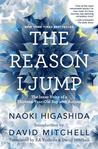
Review: Why I Jump by Naoki Higashida

The Reason I Jump: The Inner Voice of a Thirteen-Year-Old Boy with AutismThe Reason I Jump: The Inner Voice of a Thirteen-Year-Old Boy with Autism by Naoki Higashida

My rating: 5 of 5 stars


So many of the books about children with disabilities are written by the parents or caretakers. It's difficult to find a variation of the theme of "people with disabilities are so inspiring," which is patronizing and unhelpful if you actually want to learn their perspectives. Thus far, my only source of the autistic perspective was Temple Grandin, who grew up in a different time and can tell us all about looking back on her experiences, but not the current experience of growing up in a world that considers autism worse than polio.

Why I Jump is written by a boy who has autism, and who's able to verbalize many of the frustrations he experiences. Some of the issues are cultural; his Japanese upbringing has less pride of individualism. But many of his experiences are universal. The social subtleties and seeming contradictions would confuse him no matter where he'd grown up.

Because the book was originally written in Japanese, it's difficult to tell if the stilted style is due to translation, or because that's how the author comes across. While many people with autism do avoid contractions, others speak far more smoothly. I've often heard the halting, near-stuttered language in other works translated from Japanese. It's too bad I couldn't read this perspective in its native language.

Much of the book is taken up by a question-and-answer format, which makes it difficult as a narrative. Nonetheless, as an audio book, the listening time passes quickly, with the author never belaboring a point or lecturing the reader. The book wraps up with a story written by the author that gives some insight into how his mind works and what he fantasizes about.

In the end, this book is only one perspective from one boy with autism. He falls short of several stereotypes, and comes across as a whole person the reader can empathize with (and who, the reader will realize, has empathy of his own). It's a start, certainly. I would like to read more like this book, Most especially, I would like to know books like this are being more widely read. An awful lot of the problems described in this book wouldn't be problems with a more understanding populace.


View all my reviews

Monday, November 3, 2014

Review: Coraline by Neil Gaiman

CoralineCoraline by Neil Gaiman
My rating: 5 of 5 stars

I'd read this book years ago. Then it was picked as the October read for my book club, and I leapt at the chance for a reread. This is a delightfully creepy read.

Coraline has just moved to an old house, divided up into apartments, where she feels ignored by her parents and generally bored out of her skull. While exploring, she discovers a door that only opens onto a brick wall. But that night, when she visits it after everyone's asleep, she discovers that it's a portal to a world with a doting mother, a fun father, and a brightly-colored bedroom with toys that can move by themselves. She soon learns the important lesson about things that seem too good to be true. She has to call on all her wits, bravery, and resources to rescue her parents from the malevolent spirit who's created Coraline's ideal world.

Even before Coraline learns of the price of staying in the other mother's realm, there are plenty of hints that not all is as it seems. The trained mice her upstairs neighbor is building a circus for send along a message to beware, and the dotty old ladies downstairs read her tea leaves and find a dire warning. Nonetheless, it's easy to see why Coraline is able to ignore these signs. The other mother really does her homework in researching how to make Coraline's new life perfect.

One of the ghost children the other mother has captured before calls the other mother "the Beldam," which brings to mind Keats' "La Belle Dame Sans Merci." The story isn't exactly a parallel of the poem, but it certainly seems to be the same creature. One doesn't need a familiarity with the poem, though, to follow Coraline's story, or why she needs to stop the Beldam, or why the story's so sinister and creepy. There are plenty of frightening elements, and the creature shows her colors before long.

My favorite aspect of this story is Coraline's continued resourcefulness. She outsmarts the Beldam not with an easy solution, but by thinking on her feet. She does luck into some of the elements she needs to solve the puzzle, but the resolution is all her. And the final nail in the coffin, which the movie version was quick to do away with, requires a great force of will and bravery to go through with. Coraline is an admirable heroine.

While Coraline seems to be about 8 years old in the book (and perhaps 12 or 13 in the movie), I would recommend any parents of children that young screen this before sharing it with your children. It has some frightening imagery that may stay with a small child. I would've been all right, reading this at 7 or 8, but I don't represent all children, ever. The book is aimed for a younger audience, but it can easily be enjoyed by their parents. Or, in my case, aunt.

I was happy to have the excuse to reread this book. It's delightfully written, and deliciously creepy. Coraline is a fun companion, and her adventure ends all too soon. Probably not in her opinion, but one can't help but miss her once the book is closed.


View all my reviews

Sunday, November 2, 2014

Review: The Legend of Sleepy Hollow by Washington Irving

The Legend of Sleepy HollowThe Legend of Sleepy Hollow by Washington Irving
My rating: 5 of 5 stars

Who could resist an audio of The Legend of Sleepy Hollow, read by the actor who plays Ichabod Crane on the TV series? I certainly couldn't, especially because Audible was giving it away for free.

I thought I'd already read this story, but it turns out I've seen so many adaptations, I thought I had. There's no substitute for the real thing, it turns out.

Ichabod Crane is a poor schoolmaster in Sleepy Hollow, obsessed with ghost stories. He relies on the good people of the village to satisfy his enormous appetite for good food, and thinks he's hit the jackpot when he catches the eye of Katrina van Tassel, eligible daughter of the wealthiest family in the area. Then one night, he goes to a party at her house, and Brom Bones, his romantic rival, is there. Katrina rebuffs Ichabod, and then that night, he encounters the Headless Horseman who's rumored to haunt the woods near where he's buried. Ichabod is never seen in Sleepy Hollow again.

Interestingly, it's not a ghost story. There's a strong implication it was Brom Bones who took the guise of the Horseman to scare Ichabod off. There's also an implication that Katrina only pretended to be interested in him to provoke his rival to compete for her. And Ichabod's interest in Katrina, pretty as she is, is fueled by greed. All of which certainly turns all of the pop culture tropes about the story on its head.

The Legend of Sleepy Hollow is a spooky story, but, more, it's a commentary on a time and place that don't exist anymore, and a study in human nature. Had Ichabod any reason to think he stood a chance with Katrina, had his belief in ghosts been any less, had his rival been less determined to scare Ichabod off, this story might have ended differently. Interestingly, the most straightforward interpretation of the story puts the blame on Katrina's shoulders for the cruelty of Brom Bones's prank, and scaring Ichabod half to death.

If you've never read this story, you could do a lot worse than to pick it up for yourself. Especially if you have an Audible account, and can listen to a fictional Ichabod telling it for free.

As I said, I listened to the audio, narrated by Tom Mison. He does a lovely job with the reading. I detected no problems with pronunciation, and there are none of the volume issues I run into with a lot of audio books. If you like the Sleepy Hollow TV series, there's a really good chance you'll enjoy this production.


View all my reviews

Saturday, November 1, 2014

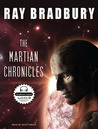
Review: The Martian Chronicles by Ray Bradbury

The Martian ChroniclesThe Martian Chronicles by Ray Bradbury
My rating: 5 of 5 stars

Ah, if only someone told me what to expect from this book. The way people described it, it sounded like any other space opera about human settlers on a fictional Mars. Had someone told me it was more Twilight Zone than Star Wars, I would've snapped it up a lot sooner.

The Martian Chronicles follows a series of short stories about the human colonization of Mars. But this book has none of the innocent optimism of most stories about space written in the 1950's. It's creepy and menacing, and ends on anything but a hopeful note. This posits a world where Martians kill the first human arrivals, first out of jealousy, then because they think we're crazy. As in War of the Worlds, though, our germs do them in, leaving us free to colonize Mars and destroy everything from those who came before. But then nuclear war happens on Earth, and almost everyone vacates to return to their families or help with the war effort. They would've been better off staying on Mars.

A lot of the book is a commentary on colonialism, erasure, and appropriation, while parts get into religion and the nature of God, and other stories illustrate the inherent destructive nature of humanity. Most of the stories end badly for the characters, but it's rarely because of outside forces. More often than not, people bring their misfortunes down on themselves.

My favorite story of the collection is "Usher II," about a man who re-creates Edgar Allen Poe's works in a ghoulish replica of The House of Usher, then uses it to punish those responsible for taking fantasy works out of circulation. It has shades of Fahrenheit 451, with a dash of schadenfreude. That one left me grinning wickedly.

It turns out that my mental comparison of these stories to The Twilight Zone is no accident. Ray Bradbury wrote several episodes, which I'd never realized. It makes sense, in light of how well he writes creepy, stay-in-your-head horror, but I'd never put it together before. This book definitely leans on his creepier side. If you liked "The Veldt" or Something Wicked This Way Comes, those will give you a much better idea of what to expect than most other SF of the era.

I wish I knew what I was missing out on, when I kept skipping over this book. I thoroughly enjoyed this. Hopefully my review will save you from making the same mistake I did.

I listened to this book on audio, narrated by Scott Brick. He has a very manly-man sort of delivery, making the stories sound sort of pulpish. Still, his delivery is strong, and he narrates clearly. There are some places where I had to adjust the volume, either because he had shouting characters shout or whispering characters talk in a very low voice, but, for the most part, it was good narration, and didn't detract any from the story.


View all my reviews

Friday, October 17, 2014

Review: Lock In by John Scalzi

Lock InLock In by John Scalzi
My rating: 5 of 5 stars

This is the John Scalzi's latest book. It's a bit of a departure from the other books I've read of his, but he was visiting Saratoga Springs on his tour to promote it, so I thought I'd give it a listen. Audible gave me copies narrated by Wil Wheaton and Amber Benson with my pre-order, and I decided arbitrarily to listen to Ms. Benson's version.

Lock In takes place in a near future that could've been post-apocalyptic. A virus that first manifests with flu-like symptoms has forever changed the world. Not in its decreasing the population, though that is a thing. Some percentage of survivors of Haden's syndrome are locked in, bodily paralyzed but fully aware of everything going on around them. The story opens 25 years later, after the technology to adapt Hadens (the shorthand for those locked in) to normal society is so well established, the government is cutting funding for further research.

Our perspective character is Chris Shane, the child of a former basketball star, and brand new FBI agent. Shane was afflicted with Haden's very young, and can't remember ever moving around in a human body. Instead, Shane became the public face of Haden's, and those struggling to integrate into normal society with the adaptations created for them. Shane is assigned to a special Haden unit within the FBI, and immediately has a case, on top of security for planned rallies protesting the aforementioned legislation.

Shane's gender is never given within the story, and, believe me, I listened. Shane is always called "Agent Shane," never Mr. or Ms., and Chris is Marcus Shane's child, not son or daughter. Even the scene where Shane looks down on the lifeless body technology frees Shane from, there's no physical marker, no remark on the body's attractiveness, no descriptor of hair length or necessary personal grooming. Part of it is that Shane doesn't appear to identify with the body lying in the cradle. Shane has lived through the movements of a threep (a sort of personal robot Hadens can use to move around and experience life) for so long, the shape of the flesh Shane was born into doesn't seem to matter.

This adds a layer of meta to the story. Because, while Shane is integrated with the threep to experience the world, the reader is integrated with Shane, who's a blank slate. Reading as an analogue for integration is an easier explanation to wrap one's mind around than any amount the narrative might've offered. It's a much easier leap.

Scalzi peppers in a lot of other descriptors that make it easier to grasp Shane's experience. The first time Shane compares the threep to a car, it clicked into place for me: necessary to get around, an extension of yourself if you're comfortable enough with the technology, expensive and far from disposable, but not the end of the world if it's damaged. With such easy imagery, Scalzi makes this world seem very real.

That it's grounded very much in modern politics and attitudes also makes suspension of disbelief that much easier. I work with people with disabilities. I've seen very similar attitudes to the ones Shane encounters, and some of the conversations are, word-for-word, ones I've had with employers about the people I advocate for. The attitude that allows the gutting of funding for Haden's research is the same attitude that has our funding sources dwindling while people shout about wasteful Medicaid spending. The dehumanization experienced by Hadens is a sad reflection of how I see the population I represent perceived.

As much as the story wouldn't exist without Haden's, it's not about Haden's. It's an exciting mystery in its own right, populated with multifaceted and compelling characters. Shane might be genderfluid, but that doesn't mean every aspect of Shane's character is so hard to pin down. This is a smart, snarky character who views disability as just a facet of self, and one open to self-deprecating jabs. The story rests on Shane's very capable shoulders, even if they are made of machine parts.

This story works on so many levels. I was deeply impressed. It's a neat concept, taken to some intriguing places, with some well-thought-out worldbuilding. It's a futuristic police procedural filled with surprises. It's a character study about disability and what a mind can handle and what some people are capable of. Mostly, it's an entertaining story, with a low cost of admission. You don't need a degree in epidemiology to understand Haden's, nor do you need engineering or programming background to get the concept of threeps and integration. You can just pick up this story and enjoy the many levels it works on. Or, you can just enjoy the story for what it is.

And I'm not just saying that because of how appreciative Mr. Scalzi was of the apple cider doughnuts I brought him from Bella Napoli when I saw him on tour.

As I noted above, I listened to this with Amber Benson's narration. I don't know if it would've been that different with Wheaton's, but she did a wonderful reading. She captured Shane's voice superbly. If I hadn't been listening so closely for gender markers, I would've been convinced that she'd been hired because she was the closest human analogue to Chris Shane. It was an excellent reading experience. I recommend it.


View all my reviews

Thursday, October 2, 2014

Review: The Winter Long (October Daye #8) by Seanan McGuire

The Winter Long (October Daye, #8)The Winter Long by Seanan McGuire
My rating: 5 of 5 stars

This is the eighth book in Seanan McGuire's October Daye series. I think I say every time that they get better with each installation, but, well, it's true. McGuire does her homework, building intrigue and tension into earlier books that pay off handsomely with each new installment.

The Winter Long opens with the Winter Solstice ball, and Toby's official designation as the realm's hero. No sooner has she dropped into bed to recover from her long night of social obligations than she gets a visit from Simon Torquill, brother to Toby's liege and the one responsible for her spending 14 years as a fish. He wants to help her, only his definition of "help" is wanting to turn her into a tree for the next century so she can't be killed.

There are a number of reveals in this book that have been building for 7 books, and that I won't spoil if you haven't yet had the pleasure. Toby's nemesis is all the more formidable for blindsiding Toby. Alliances shift, relationships change, Toby empathizes with characters she had every reason to hate, and the Luidaeg gets to step outside her snarky-cryptic-adviser role to show off why she's the subject of parents' warnings and children's nightmares.

If a young writer asked me how to write foreshadowing, I would plunk down this series and say, "Get reading." All of the shocking reveals have been telegraphed from the start, yet they still blindside us, because Toby was (and we were) off investigating this shiny clue over here. As I posted elsewhere, McGuire was dropping breadcrumbs while we were following the shiny stones.

Everyone's favorite Cait Sidhe is here, backing Toby up and lending emergency transportation through the Shadow Roads, and providing much-needed levity. His role at the end of the book is probably the least surprising reveal, but it's a pleasant surprise.

The pacing of this book is lightning fast. The bulk of it takes place over a period of 24 hours. The only reason Toby stops is because she's unconscious. That's not a spoiler, because, of course she is. She tests the very limits of her magical abilities (and her body's blood capacity). She's far from the strongest magic user in Faerie, but she's probably the most determined.

There are hints of things to come in future books. I suspect we'll see some way of getting around Elf-shot, because Rayseline and her break with reality is too good to let lie. Er, no pun intended. And there's plenty stirred up by Simon's return that needs addressing. Lastly, the series can't come to a close without Toby having conversation or three with her mother, Amandine.

Beyond that, I won't make any predictions, because this series is too good to pick apart with speculation. It's best enjoyed when you trust McGuire to do what the story needs, and wait to see what that is. I'm still going to take note of clues I pick up along the way, because chances are good they'll pay off nicely, but I'm not going to cling to my predictions. I like how she handles them better every time.

If you're not reading this series yet, go pick up Rosemary and Rue, then
  A Local Habitation

, and so on until you're caught up. I'll wait. Because I need more people in my life I can talk to about my love for these books. They're so much fun. You don't hate fun, do you?

View all my reviews

Saturday, September 13, 2014

Review: The Wind-Up Bird Chronicle by Haruki Murakami

The Wind-Up Bird ChronicleThe Wind-Up Bird Chronicle by Haruki Murakami
My rating: 5 of 5 stars

This is the ninth book in my 2014 TBR Challenge. My sister gave it to me as a Christmas present years ago, but I set it aside for a time when I could get over the intimidation factor. Interestingly, I would not have appreciated it the way I do if I'd read it right away.

Toru Okada is unemployed by choice, living in a house that belongs to his uncle but would otherwise go empty, and has no idea what he wants out of the future. As the story opens, his cat is missing. The cat is named after his brother-in-law, who he dislikes. Then one day, his wife fails to come home from work. The aforementioned brother tells him she wants a divorce, but Okada is determined to find her and talk to her, himself, to get to the bottom of it. She writes him a letter explaining her actions and telling him to move on, but he remains unconvinced. His quest to find her becomes an inner journey, fueled by sensory deprivation inside an old, dried-up well, the mystical sisters Malta and Creta Kano, and his friendship with a flippant teenager who's stopped going to school.

Had I read this book years ago, Okada's passivity would've driven me up a wall. I would've been yelling at him to do something, instead of waiting for a solution to come to him. But two years ago, I found myself in similar circumstances. My husband left, with no hint to where he'd gone. He'd left only a note that explained nothing. Okada's and my stories diverge there; his wife, Kumiko, needs rescuing, and she's worth the effort, whereas my separation was an inevitability, and I'm better off now. Still, I can understand Okada's paralysis, his sense that the solution is out of his hands, his increasingly odd decisions. I didn't have any encounters with a prostitute of the mind, but I can relate to Okada's mental state. The story resonated with me.

The book is beautifully written. Even as a translation, the language is musical, full of vivid imagery. Haruki Mirakami works in impossibility alongside the mundane, and he makes good use of these elements. He has a parallel narrative about a Japanese soldier during WWII running throughout that even this historically illiterate reader can follow.

To call the narrative dreamlike is cheating, because dreams are such an essential part of the story. The story depends on the line between sleeping and waking being porous and blurry.

I was worried this book would feel like homework, or at least that it would be a slog to get through. I expected that I would need to paste a polite smile on my face when my sister asked what I thought. Instead, I find myself hoping she's read it, so we can talk about it. I owe her my thanks for this one. She didn't know it when she gave it to me, but I needed this book.


View all my reviews

Thursday, August 21, 2014

Review: Sparrow Hill Road (Ghost Stories #1) by Seanan McGuire

Sparrow Hill Road (Ghost Stories, #1)Sparrow Hill Road by Seanan McGuire
My rating: 5 of 5 stars

I picked this up when it first came out, but, unlike most Seanan McGuire books, I didn't immediately tear into it. I was familiar with Rose's story thanks to the serial fiction published in The Edge of Propinquity. It turns out the book is as far removed from the serial as the serial is from the original song that inspired it.

Rose Marshall is a road ghost. If you've ever heard the tale of the hitchhiking ghost who vanishes before reaching its destination, you know the other side of Rose's story. Rose is a benevolent ghost, but there are those who don't think so, and want her stopped. And then there's Bobby Cross, the reason she's been stuck at age 16 for the last 60 years. She lives in fear of being caught by him, at the same time as she rescues those who die on the road from his grasp.

The story doesn't entirely lose its serial-fiction roots. Rose repeats herself frequently and explains things the reader might already know. Each chapter could easily be read as a stand-alone story, though you'd lose the overall narrative arc. Rose warns the reader early on about the fluid nature of time to a ghost, and so it makes sense that she might go over things she's already said. She's not sure where the reader is jumping into the story.

Rose's voice is more lyrical and rich than Seanan McGuire's other first-person narrators. She speaks in metaphor and imagery, evoking the sort of rambling thoughts that can only come to mind when you're alone on a lonely stretch of road with nothing better to think about. That's not to say the book rambles. She often sets the mood with a few well-placed words. Her voice reads as a combination of road metaphors, 1950's slang, and trucker shorthand.

If you've read the serialized version of this story, you'll have the bare bones of the plot laid out, but you'll have missed out on a lot of details that tie the story together. I couldn't do a compare-and-contrast, because I can't be positive if I forgot certain details from the serialized story or if they weren't there. I do know that this version of Rose's story is the richer and more vibrant.

Rose's story takes place in the same universe as McGuire's InCryptid stories, which start with
  Discount Armageddon

. Rose refers several times to the Healy family and its creepy, possibly-haunted house in her hometown, though none of the family members make an appearance. Rose is seeing another side of that world. I can see where she might cross paths with a future InCryptid story, but there's no room for it in this tale.

Once upon a time, the "Sparrow Hill Road" short stories made me interested in looking up road ghost stories to learn more about the tales Rose refers to. Sparrow Hill Road in its polished form makes me nostalgic for a time I never lived through, and finishing it makes me miss a friend I've never met. Unlike in the short stories, this version leaves room for more of Rose's story. I look forward to visiting more of the second America Rose guides us through.

I've been recommending this book all over the place to friends interested in ghost stories and local tales and urban legends. It's an excellent compilation of those tales, at the same time as it gives them a face and their own voice. I can't overstate how highly I recommend this book.

View all my reviews

Tuesday, July 29, 2014

Review: The Night of the Mary Kay Commandos: A Bloom County Book by Berkeley Breathed

The Night of the Mary Kay Commandos: A Bloom County BookThe Night of the Mary Kay Commandos: A Bloom County Book by Berkeley Breathed
My rating: 5 of 5 stars

I was lucky enough to pick up a pile of classic Bloom County strips at a library book sale. This is the only one of the set that I remember reading before. It also seems to be when the comic strip was at its best.

In this volume, Bill the Cat runs for president, with Opus as his running mate. Opus is called in front of a congressional committee to determine his liberalism, which takes him out of the running. Bloom County is ordered to meet a gender parity quota, only to learn there's already a woman among them, sparking a witch hunt. Oliver, the young black scientist of the group, discovers that cat sweat regrows hair, and its outlawing (due to "acking" side effects) turns it into a lucrative illegal trade. And Opus breaks into an animal testing facility in hopes of reuniting with his mother, leading to a run-in with the title characters ("Even their uzis are pink!").

This set of strips has Opus gaining prominence as a main character in Bloom County. Whereas earlier strips put him in more of a sidekick role, in these, most of the stories center around him. I don't think that makes him an author mouthpiece, though, unless the author suffers from very poor self-esteem. The strip never resists a chance to point out how awkward, effeminate, and undesirable he is.

The issues that come up in the comic strip kept up with current events very well in their publication in the late 1980's. Most of the punchlines reference the news soundbites in ways most readers would recognize. That doesn't make them foreign or hopelessly dated, though. We still talk about the media's reactionary nature, the War on Drugs, gender roles, animal testing, and divisive politics.

I've been enjoying revisiting these old strips. Dated as some of the jokes are, it's nice to finally understand some of them in their proper context. I'm glad I had the chance to do so.


View all my reviews

Friday, June 20, 2014

Review: The Robber Bride by Margaret Atwood

The Robber BrideThe Robber Bride by Margaret Atwood
My rating: 5 of 5 stars

This is the sixth book in my 2014 TBR Pile Challenge. I always enjoy Margaret Atwood's books, but I can never make myself pick them up to read. The challenge seemed like as good an excuse as any.

The story is told through the perspectives of three women. Tony Fremont is a petite history professor, Charis (whose last name is never given, to my recollection) works in a spiritual gift shop and spouts New Agey nonsense, and Roz Andrews is wealthy and owns a women's magazine. All three have been betrayed by a woman named Zenia, and it's this shared experience that holds them together. Otherwise, they have very little in common. Tony is timid and lives inside her own head. Charis is evangelical about her respect for all life, and Roz is brash and bold. Roz is also the only one who identifies as a feminist, though all three exhibit different ideals of feminism. They believe Zenia to be dead, until, over lunch, they see her walk into the restaurant.

Zenia is less a character than a force of nature. She's a chameleon, changing her looks, personality, and approach just to best insinuate herself into these women's lives to wreck them from the inside. She tells each a different story about her childhood, one that echoes each woman's own childhood trauma or resonates in some way. She lies to all three of them about where she is in her life, and she plants seeds of doubt in their own competence, as well as in how well they can trust the men in their lives.

Zenia could be argued to represent a lot of things. She could be the voice of a society that wants to punish the three women for not performing femininity. She might embody mistrust and doubt, sure killers of a relationship. I was leaning in favor of Zenia being an aspect of each of the women whose lives she ruins. On the surface, though, she's manipulative and remorseless. I recognized women I've known in Zenia, though I wouldn't flatter any of them by comparing them to her. She's an amalgam of the evil women pitted against women can do.

The narrative delves deeply into each of the three women. We get series of flashbacks for each of them that show their childhoods, how they met Zenia, how Zenia wrecked their lives, and how their present situations came about.

Interestingly, each of the women winds up in a better place because of Zenia's interference. Charis's Billy and Roz's Mitch were toxic, and the women are better off without them. Charis's grief is the catalyst for her going after an inheritance she deserves. Roz's magazine takes off with Zenia's help, and Zenia gives Roz's son the reason he needs to open up to his mother. While Tony mistrusts West after he returns from being used up by Zenia, he's more devoted than ever after the events, and she buys a lovely house in the meantime to distract herself from her grief. Not that I would argue that Zenia set out to do them any favors. That they were all better off after Zenia tore through their lives was not her goal.

I had to admire Zenia, in a way. She lies with perfect conviction, manipulates everyone around her deftly, wriggles out of consequences without even mussing her hair, and always ends up on top. She's resourceful, and always has a backup plan. We learn very little about her, and what we do learn is unlikely to be true. But we do see a woman who knows what she wants and how to get it.

This book is written extraordinarily well. That's not to say it was an enjoyable read. I spent much of my reading trying not to compare my own troubles with Tony's, Charis's, or Roz's. I sympathized most strongly with Tony, though I'm quite certain my story won't end so neatly. The book did lend me some new perspectives I hadn't considered. Despite my discomfort, I'm glad I read it.


View all my reviews

Thursday, June 19, 2014

Review: Fuzzy Nation by John Scalzi

Fuzzy NationFuzzy Nation by John Scalzi
My rating: 5 of 5 stars

I've never read Little Fuzzy, the book this is based on. But I did like the premise, and I was curious what Scalzi would do with it. This book didn't take it in the direction I expected, which isn't a bad thing at all.

Jack Holloway is a private contractor for ZaraCorp, an interplanetary mining corporation. When he returns to his remote home in an otherworldly jungle, he finds a bipedal creature that somewhat resembles a cat. He grabs video of it to share with his biologist ex-girlfriend, Isabel Wangai, because it's a new species that no one knows anyone about. She comes out to investigate, to find a family of five living with Jack. After some study, she comes to the conclusion they're sentient. But if they are, ZaraCorp has to stop exploiting their world's resources. Jack and Isabel take to the courts to argue in favor of the cute little guys. But that may target them for extinction, if previous sentience hearings are any indication.

Jack is not a likable guy. If I knew him, personally, he'd be the sort I'd barely tolerate, and avoid as much as I could. He's arrogant, self-serving, antagonistic, and unrepentant. The narrative does change his attitude in many ways, but he remains much the same. Interestingly, the character he gets along best with is Mark Sullivan, Isabel's lawyer boyfriend. Sullivan is well aware of Jack's personality and deficiencies, and he isn't afraid to call him on them. He saves Jack from himself more than once.

Of course, because Jack is so unlikable, his shining moments are all that much better. His moments of selflessness say a lot about those deserving of his goodwill. And because he's such a jerk, he has less of a problem than anyone else in the narrative taking underhanded tactics or calling people on their obvious ploys. I thought Jack was a good example of how characters needn't always be likable to carry a story.

Despite a third of this story's taking place in a courtroom, it's interesting and dynamic. John Scalzi knows how to withhold information for dramatic tension, and just when to reveal it. The characters populating the story all help carry it along, and do a lot of make up for Jack's jerk tendencies. I loved Judge Soltan. She was like an interstellar Judge Judy.

I don't know what Little Fuzzy might've lacked that this was making up for, but I'm glad John Scalzi saw that need. This was a thoroughly enjoyable read.

I listened to this on audio, narrated by Wil Wheaton. Scalzi mentions in an introduction that he's especially glad Wheaton is narrating, for reasons the readers can glean. There's a character named Wheaton Aubrey VII, and Wil Wheaton captures his spoiled, bratty persona well. He does an excellent job narrating the rest of the story, too. He gets across the emotion in certain scenes so well, I teared up. From all the Scalzi books I've listened to audio, it seems like Wil Wheaton is his official narrator. I'm okay with that.


View all my reviews

Thursday, May 29, 2014

Review: Forbid the Sea (October Daye, #0.2) by Seanan McGuire

Forbid the Sea (October Daye, #0.2)Forbid the Sea by Seanan McGuire
My rating: 5 of 5 stars

I needed to scrub my brain after the last book I read. This seemed like a good bet. It's available for download free on Seanan McGuire's website.

"Forbid the Sea" takes place 10 years after the events of "Rat-Catcher." London's fae are only just returning to their homes. Everyone's favorite King of Cats, Tybalt, takes a boat ride down the Thames, where he meets a handsome young Selkie named Dylan. They become involved (yes, Tybalt, like many fae, is bisexual; you only don't notice in the present day because he's monogamous). Then Tybalt learns why Dylan's in London, and he has a choice to make between personal feelings and fae politics.

It's a fast read, though not because it's action-packed. It has the feel of a sweet summer romance throughout most of it, but there is that thread of menace running just under the surface. Tybalt is clearly lonely, and mourning the events that left his Court empty. This makes him overlook some aspects of Dylan he should've questioned. He's content to only dig into the first layer of secrets. And he shows Dylan (and therefore the reader) how much different he was when he was only Rand. There are hints of the Tybalt that appears to October Daye at sunrise in Rosemary and Rue, but he's changed through the centuries. By Chimes at Midnight, he's shown a lot more of the gentle tenderness we see in this story.

You don't need to have read "Rat-Catcher" to follow this story, though it does help with context. Even if you can't get your hands on the earlier story, I recommend reading this one if you're a fan of Tybalt. The download link is up at the top of the review, and it's author-hosted. So give it a read. It's chock full of insight into a fan-favorite character.

View all my reviews

Monday, April 28, 2014

Review: Fahrenheit 451 by Ray Bradbury

Fahrenheit 451Fahrenheit 451 by Ray Bradbury
My rating: 5 of 5 stars

I reread this book for a book club. I'm glad I did, because apparently I retained nothing of the first time I read it. I know it's been a while, but you'd think I'd remember more than a few brief flashes. It's not like this is an unmemorable book.

Fahrenheit 451 tells the story of a dystopian America that burns books and sneers at learning and depth. Most people pass the time interacting with their televisions, acting out a scripted part with a fictional "family". We meet Guy Montag on the night he's just gotten back from burning down a reader's house and all the books in it, to find his wife has attempted suicide by sleeping pill overdose. The stomach pump operators who show up tell him this happens a lot, and he starts to wonder what's wrong with the society he lives in.

What sets Fahrenheit 451 apart from other dystopian novels is that there's no outside push to destroy knowledge or wipe out a way of life. This is a world its citizens have chosen to embrace. Yes, there are outliers, but those content with the status quo have no trouble trampling over them in their quest for utter mindlessness.

Most people bring up this book when people talk about books being banned from schools and libraries. It rather misses the point. Books don't need to be banned in this world. The fires are just a show to put on for the people, to reassure them their way of life is the right one.

Of course there are antecedents of modern ills. Clarisse McClellan, the young woman who helps Guy wrap his mind around what's wrong with the world, bemoans the disappearance of sidewalks and front porches, and how everything is sped up. How many miles of sidewalk does your city or town of residence have? How often do you see people just out on a walk? When was the last time everyone in your neighborhood hung out on their front porches? It might seem like pointless nostalgia in 2014, but it's changed how we see other people and how we converse.

While some of Bradbury's ideas seem borne of mere technophobia, for the most part, this book has a lot of things to say about modern society. He does allow for good storytelling in TV later in the narrative, luckily, which reassured me he wasn't just another "kill your TV" nut.

Unfortunately, the edition I own has an appendix with the author's comments after the book's publication. While I agree with Bradbury's assertion that he shouldn't edit existing works, his stubborn assertion that he needn't add depth to female or minority characterizations left a bad taste in my mouth. I see merit in criticizing authors for their blind spots, so they can work to correct them in later works. Bradbury felt differently, which is a shame.


View all my reviews