Search This Blog

Sunday, November 2, 2014

Review: Blow Me Down by Katie MacAlister

Blow Me DownBlow Me Down by Katie MacAlister
My rating: 3 of 5 stars

By the description, this had all the potential to be like Vicki Lewis Thompson's Nerds series. Unfortunately, it fell victim to the need to shove an alpha hero mold onto its potential beta, thereby watering down a lot of character development that could've been so much more interesting.

Amy Stewart is a buttoned-up financial analyst when her daughter talks her into trying out a virtual reality pirate game. There, Amy meets Black Corbin, who's really PC Monroe, the game's creator. Not that she realizes it, at first. She takes him for just another computer character, and she's unimpressed. She beats him at a swordfighting, and he's smitten. Then they both realize they're locked in to their virtual reality headsets, thanks to a virus written in by an irate ex-employee. They need to work together to figure out which character the saboteur is hiding in, and stop his plans, if only they can quit boinking long enough to get to it.

The plot is fairly simple, though it has Amy running all over Corbin's creation to stall her progress. It takes no time for Amy and Corbin to wind up in bed together, and an embarrassingly short time for him to start spouting the L word. Even if their perception of time wasn't warped by the game, it would still be premature.

And Corbin's characterization has such potential. Instead, the game gives him the confidence to act the part of the alpha male jerk, who decides he wants Amy and can do whatever he wants to get her. And of course it feels so good she's swooning in no time. Interesting leaps in VR technology, there.

The concept of this book is interesting, but it is, at its core, romance. And, because I don't buy the romance between these two characters, especially not the way it unfolds, I wasn't on board with the rest of it. There are only two characters populating the world Corbin and Amy inhabit; the rest are constructs of the program. And yet, even the "real" people feel just as flat as the NPCs Amy interacts with. Corbin's best friend is only there to push Corbin and Amy together that much faster, and the bad guy is pure cardboard.

This story had potential, and maybe a more thoughtful author not determined to shoehorn her male love interest into an alpha male role and to hurry along the romance might've been up to the task. Overall, though, this was a disappointing read.


View all my reviews

Saturday, November 1, 2014

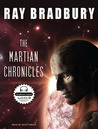
Review: The Martian Chronicles by Ray Bradbury

The Martian ChroniclesThe Martian Chronicles by Ray Bradbury
My rating: 5 of 5 stars

Ah, if only someone told me what to expect from this book. The way people described it, it sounded like any other space opera about human settlers on a fictional Mars. Had someone told me it was more Twilight Zone than Star Wars, I would've snapped it up a lot sooner.

The Martian Chronicles follows a series of short stories about the human colonization of Mars. But this book has none of the innocent optimism of most stories about space written in the 1950's. It's creepy and menacing, and ends on anything but a hopeful note. This posits a world where Martians kill the first human arrivals, first out of jealousy, then because they think we're crazy. As in War of the Worlds, though, our germs do them in, leaving us free to colonize Mars and destroy everything from those who came before. But then nuclear war happens on Earth, and almost everyone vacates to return to their families or help with the war effort. They would've been better off staying on Mars.

A lot of the book is a commentary on colonialism, erasure, and appropriation, while parts get into religion and the nature of God, and other stories illustrate the inherent destructive nature of humanity. Most of the stories end badly for the characters, but it's rarely because of outside forces. More often than not, people bring their misfortunes down on themselves.

My favorite story of the collection is "Usher II," about a man who re-creates Edgar Allen Poe's works in a ghoulish replica of The House of Usher, then uses it to punish those responsible for taking fantasy works out of circulation. It has shades of Fahrenheit 451, with a dash of schadenfreude. That one left me grinning wickedly.

It turns out that my mental comparison of these stories to The Twilight Zone is no accident. Ray Bradbury wrote several episodes, which I'd never realized. It makes sense, in light of how well he writes creepy, stay-in-your-head horror, but I'd never put it together before. This book definitely leans on his creepier side. If you liked "The Veldt" or Something Wicked This Way Comes, those will give you a much better idea of what to expect than most other SF of the era.

I wish I knew what I was missing out on, when I kept skipping over this book. I thoroughly enjoyed this. Hopefully my review will save you from making the same mistake I did.

I listened to this book on audio, narrated by Scott Brick. He has a very manly-man sort of delivery, making the stories sound sort of pulpish. Still, his delivery is strong, and he narrates clearly. There are some places where I had to adjust the volume, either because he had shouting characters shout or whispering characters talk in a very low voice, but, for the most part, it was good narration, and didn't detract any from the story.


View all my reviews

Review: Shattered Pillars (Eternal Sky #2) by Elizabeth Bear

Shattered Pillars (Eternal Sky, #2)Shattered Pillars by Elizabeth Bear
My rating: 4 of 5 stars

This is the second book in a trilogy that's turned out to be a real treat for me. I didn't know what the expect from the start, and it continues to be full of fun surprises. I have no idea what might happen next, but I'm going to enjoy finding out.

The Eternal Sky trilogy's mythology takes a departure from traditionally European fantasy worlds, and borrows from Russian, Central Asian, and Middle Eastern stories. The reason seemingly contradictory mythologies can exist is because each land's supremacy is shown by whose sky shines overhead. This isn't a matter of time zones; it's a matter of the number of moons in a sky changing by stepping over a border.

In this, Temur, whose people are nomadic horse breeders and excellent warriors, accepts his role as the future Khagan of his people. The wizard (and once-Princess) Samarkar is there to help, as is Hrahima, a sentient tiger, and the silent monk Hsiung. But there are political forces massed against Temur. His cousin also wants to claim the throne, and is being both manipulated and helped by al-Sephehr, a powerful sorcerer with ancient magic under his control. Meanwhile, Edene, the woman he set out to rescue, amasses a kind of undead army to support him.

The characters have grown from their initial beginnings. Samarkar's magic has grown in strength, while Temur's acceptance of the responsibility he must bear is central to the story. We learn a lot more about their companions, and why they're accompanying them, and we even get some back story on the terrible assassin on Temur's trail.

Every page of this story fills out this lush, multifaceted world all the more. There's a lot going on here. The politics are just as complicated as in any historical period, the magic is well-thought-out and nicely balanced, and the people are as fleshed out and thoughtful as anyone you might meet in your hometown. There are no flat, "because I'm the bad guy" villains here, nor any easy answers that would solve everything.

I'm looking forward to what the next book holds. I have no idea what to expect. I think I know where it's headed, but, knowing this series, I'll be surprised. And I'll like it that way.


View all my reviews

Review: Kitty Takes a Vacation (Kitty Norville #3) by Carrie Vaughn

Kitty Takes a Holiday (Kitty Norville, #3)Kitty Takes a Holiday by Carrie Vaughn
My rating: 3 of 5 stars

This is the third book in the Kitty Norville series. As much as I appreciate that the books don't fall into a convenient formula, it makes for some uneven quality of the books.

In this installation, Kitty is taking a break while she works on a memoir about her life and how she became a werewolf. Only, she's stuck, and doesn't know where to start. Then barbed-wire crosses start showing up on her property, as well as animal sacrifices on her front porch. And, to top it all off, her lawyer, Ben, is brought to her by her werewolf hunter buddy, Cormac, because he's been bitten.

So far, every book surprises us by where Kitty starts out, and where she ends up. For a series, there are a lot of changes from one book to the next. Kitty remains unsure of herself, but a reader can track her progress. Her reason for rising to the occasion makes perfect sense: with Ben to look out for, she has something more important to worry about.

Unfortunately, Ben drags the story down a lot. He spends a good chunk of the plot moping, and planning to have Cormac kill him so he won't have to live as a werewolf. While it does give Kitty a chance to reflect on the drawbacks of lycanthropy, the back-and-forth, stomping about, and pouting don't make for interesting reading.

There's a mystery within this book, but it's fairly obvious who's behind it. The town where Kitty's hiding out has so few people, and she interacts with even fewer than that. The mystery definitely didn't do anything to heighten the tension.

The pacing is off in this book. The main conflicts are presented to Kitty one at a time, which is awfully polite of them. The biggest of the problems takes until the last third of the book to show up, and it's so geographically removed that I wondered why the author bothered including it in this book. It made the plot take on a stuttering, start-and-stop momentum that made it hard to want to keep reading.

I do plan to pick up the fourth book in this series, but I'm not in any hurry to get to it. Hopefully the pacing is better. I don't think I could make it through another book about Kitty killing time until she's ready to join the world of the living.

I listened to this book on audio, narrated by Marguerite Gavin. She has a lovely, smoky sort of voice, the kind of voice I can imagine Kitty, herself, might have. Though, her pronunciation of "lycanthropy" gets more annoying every time I hear it.


View all my reviews

Friday, October 17, 2014

Review: Lock In by John Scalzi

Lock InLock In by John Scalzi
My rating: 5 of 5 stars

This is the John Scalzi's latest book. It's a bit of a departure from the other books I've read of his, but he was visiting Saratoga Springs on his tour to promote it, so I thought I'd give it a listen. Audible gave me copies narrated by Wil Wheaton and Amber Benson with my pre-order, and I decided arbitrarily to listen to Ms. Benson's version.

Lock In takes place in a near future that could've been post-apocalyptic. A virus that first manifests with flu-like symptoms has forever changed the world. Not in its decreasing the population, though that is a thing. Some percentage of survivors of Haden's syndrome are locked in, bodily paralyzed but fully aware of everything going on around them. The story opens 25 years later, after the technology to adapt Hadens (the shorthand for those locked in) to normal society is so well established, the government is cutting funding for further research.

Our perspective character is Chris Shane, the child of a former basketball star, and brand new FBI agent. Shane was afflicted with Haden's very young, and can't remember ever moving around in a human body. Instead, Shane became the public face of Haden's, and those struggling to integrate into normal society with the adaptations created for them. Shane is assigned to a special Haden unit within the FBI, and immediately has a case, on top of security for planned rallies protesting the aforementioned legislation.

Shane's gender is never given within the story, and, believe me, I listened. Shane is always called "Agent Shane," never Mr. or Ms., and Chris is Marcus Shane's child, not son or daughter. Even the scene where Shane looks down on the lifeless body technology frees Shane from, there's no physical marker, no remark on the body's attractiveness, no descriptor of hair length or necessary personal grooming. Part of it is that Shane doesn't appear to identify with the body lying in the cradle. Shane has lived through the movements of a threep (a sort of personal robot Hadens can use to move around and experience life) for so long, the shape of the flesh Shane was born into doesn't seem to matter.

This adds a layer of meta to the story. Because, while Shane is integrated with the threep to experience the world, the reader is integrated with Shane, who's a blank slate. Reading as an analogue for integration is an easier explanation to wrap one's mind around than any amount the narrative might've offered. It's a much easier leap.

Scalzi peppers in a lot of other descriptors that make it easier to grasp Shane's experience. The first time Shane compares the threep to a car, it clicked into place for me: necessary to get around, an extension of yourself if you're comfortable enough with the technology, expensive and far from disposable, but not the end of the world if it's damaged. With such easy imagery, Scalzi makes this world seem very real.

That it's grounded very much in modern politics and attitudes also makes suspension of disbelief that much easier. I work with people with disabilities. I've seen very similar attitudes to the ones Shane encounters, and some of the conversations are, word-for-word, ones I've had with employers about the people I advocate for. The attitude that allows the gutting of funding for Haden's research is the same attitude that has our funding sources dwindling while people shout about wasteful Medicaid spending. The dehumanization experienced by Hadens is a sad reflection of how I see the population I represent perceived.

As much as the story wouldn't exist without Haden's, it's not about Haden's. It's an exciting mystery in its own right, populated with multifaceted and compelling characters. Shane might be genderfluid, but that doesn't mean every aspect of Shane's character is so hard to pin down. This is a smart, snarky character who views disability as just a facet of self, and one open to self-deprecating jabs. The story rests on Shane's very capable shoulders, even if they are made of machine parts.

This story works on so many levels. I was deeply impressed. It's a neat concept, taken to some intriguing places, with some well-thought-out worldbuilding. It's a futuristic police procedural filled with surprises. It's a character study about disability and what a mind can handle and what some people are capable of. Mostly, it's an entertaining story, with a low cost of admission. You don't need a degree in epidemiology to understand Haden's, nor do you need engineering or programming background to get the concept of threeps and integration. You can just pick up this story and enjoy the many levels it works on. Or, you can just enjoy the story for what it is.

And I'm not just saying that because of how appreciative Mr. Scalzi was of the apple cider doughnuts I brought him from Bella Napoli when I saw him on tour.

As I noted above, I listened to this with Amber Benson's narration. I don't know if it would've been that different with Wheaton's, but she did a wonderful reading. She captured Shane's voice superbly. If I hadn't been listening so closely for gender markers, I would've been convinced that she'd been hired because she was the closest human analogue to Chris Shane. It was an excellent reading experience. I recommend it.


View all my reviews

Wednesday, October 15, 2014

Review: The Hot Zone (Rainshadow, #3; Harmony, #11) by Jayne Castle

The Hot Zone (Rainshadow, #3; Harmony, #11)The Hot Zone by Jayne Castle
My rating: 2 of 5 stars

This is another book read for a book club, and quite possibly the straw that broke the camel's back. I can't keep clogging up my reading time with this tripe. My to-read is 773 items long, for crying out loud.

This is the third book in a series, the eleventh in a larger series. It follows Sedona Snow, recent kidnapping escapee, and Cyrus Jones, guy in charge of an organization Sedona has every reason to mistrust.

Maybe I'd've liked this better if I'd read the earlier books. This gave very little context. I managed to glean that they were on an alien world, that the world brings out psychic abilities in everyone, and that Lyle is some otherworldly critter whose abilities are whatever the plot needs him for, called a dust bunny by all the characters. Beyond that, I just had to trust that all the world-building elements had been established in earlier books. So, if nothing else, this book showed me the importance of catching a reader up in a series as if they haven't been following from the start.

The book might've worked on the strength of the relationship between Cyrus and Sedona, but, no. It's pretty formula romance: circumstances throw them into close proximity, there's tension, there are reasons to resist, they're all over each other, then they're in love. A lot of their reasons for being drawn to one another hinge on their psychic abilities, so it was beyond me.

The writing stood out as clumsy and artless, too. For all their "as you know, Bob," dialogue, the characters might've bothered to catch me up on what I needed to know about the world. Instead, they clunked around about a mystery I didn't particularly care about, and that doesn't come into play until the last 50 pages. The pacing needed work.

Normally, I might've gone back to read earlier books, to pick up on the context I missed. I won't punish myself with more of this author. This is one, in all her various pseudonyms, to stay far, far away from.

At least now I can say for sure I've tried out paranormal romance, and it's definitely not my thing.


View all my reviews

Review: Journey to the Center of the Earth by Jules Verne

Journey to the Center of the Earth: A Signature Performance by Tim CurryJourney to the Center of the Earth: A Signature Performance by Tim Curry by Jules Verne
My rating: 4 of 5 stars

This is another of those classics you almost don't have to read. The main points are already such a part of popular culture that reading it is mostly a matter of waiting to see when each part will come up. Still, when I saw it was narrated by Tim Curry, I thought it worth a shot.

The story opens with the discovery of a strange document inside the pages of an old book which brags of a journey through the planet, undertaken some centuries before. Our reluctant protagonist is talked into joining his uncle, the intrepid Professor Lidenbrock, on his own such exploration. Lidenbrock is a geologist, and believes the journey is possible, while Axel holds to scientific convention that says the Earth is full of magma. Of course modern science has borne out Axel's view, but it would be a short book if Lidenbrock didn't turn out to be correct. His theory is sound, by the scientific knowledge of the time.

The book's greatest value lies in its snapshot of scientific inquiry during Verne's time. Verne extrapolates several suppositions, based on the scientific knowledge he's working with. There are several points where he flirts with the truth (he dances all around the theory of continental drift, for instance), only to fall short because he lacks a crucial piece of later discovery. The fantastic creatures the explorers find living underground say a lot about the fossil records that existed then.

The story is fairly straightforward: Axel and his uncle go to Iceland, hire a guide, find the entrance the long-ago explorer used, and travel as far down through the earth as they can before circumstances force them to surface. Most of the narrative involves what Axel sees, rather than what he does. When he does make a decision, it's often the worst one possible. The greatest danger he faces is when he's separated from his uncle and the guide, and his light goes out.

So it's not the most exciting narrative. Still, it's interesting to see Verne's various theories about what an underground explorer might see, and how he came to those conclusions. There were times when I hoped the characters would move toward sources of danger, just to spice up the narrative a bit, but these characters were far too prudent for that.

If it hadn't been Tim Curry reading this to me, I wouldn't have soldiered through it. He adds a much-needed spark to the story. His narration is dynamic, and was often the only reason I kept listening. It was nice to experience this book for myself, but I would've felt the slog a lot more keenly in a print version.


View all my reviews

Tuesday, October 7, 2014

Review: Thief of Shadows by Elizabeth Hoyt

Thief of Shadows (Maiden Lane, #4)Thief of Shadows by Elizabeth Hoyt
My rating: 3 of 5 stars

This book is the latest in my quest to find a romance novel that doesn't make me roll my eyes. While it had promise, the idea behind it is silly, and it was determined to take away everything I liked about it.

The premise of the book is that the Ghost of St. Giles runs around in a harlequin costume by night, protecting the weak and rescuing kidnapped urchins. By day, he's the mild-mannered Winter Makepeace, headmaster of a school for orphaned children.

And why does he go about in a costume and mask, risking his life? So he can meet Lady Isabel Beckinhall when she rescues him from an angry mob, brings him home, and strips him naked (except the mask, of course) to treat his wounds. Several more fortunate coincidences throw these two together, and the tension grows. She tells him how sad she is she can't have kids, and why there's a boy who isn't her kid running around her house. He tells her why he's a virgin, and plans on staying one. (Guess how long that one sticks. Go on. Guess.)

I could believe these two liked each other by the end of the book, though his quick study in the bedroom had me raising an eyebrow. I could believe he'd question his life as the Ghost in light of his relationship. What I couldn't believe was how easily she made the sacrifices she did for the relationship. It robbed her of a lot of the things that made her such a strong character. I'm all for compromise in a relationship, but must romance novels always end with the heroine losing herself in the hero?

I also feel that, if there's a beta hero in a story, the author should let him be a beta. Stop reminding us how virile he is. Stop making the heroine swoon under his power. There are plenty of alpha male stories that cover those tropes. Let the beta male show his strength in recognizing and respecting the heroine's.

If you like historical romance with a masked hero, and you read a broad range of romance with no quibbles with the tropes, this one will suit you fine. It's a story about a beta finding his inner alpha by putting on a mask, until the woman draws it out of him. Personally, I don't find the transformation an improvement.


View all my reviews

Thursday, October 2, 2014

Review: The Winter Long (October Daye #8) by Seanan McGuire

The Winter Long (October Daye, #8)The Winter Long by Seanan McGuire
My rating: 5 of 5 stars

This is the eighth book in Seanan McGuire's October Daye series. I think I say every time that they get better with each installation, but, well, it's true. McGuire does her homework, building intrigue and tension into earlier books that pay off handsomely with each new installment.

The Winter Long opens with the Winter Solstice ball, and Toby's official designation as the realm's hero. No sooner has she dropped into bed to recover from her long night of social obligations than she gets a visit from Simon Torquill, brother to Toby's liege and the one responsible for her spending 14 years as a fish. He wants to help her, only his definition of "help" is wanting to turn her into a tree for the next century so she can't be killed.

There are a number of reveals in this book that have been building for 7 books, and that I won't spoil if you haven't yet had the pleasure. Toby's nemesis is all the more formidable for blindsiding Toby. Alliances shift, relationships change, Toby empathizes with characters she had every reason to hate, and the Luidaeg gets to step outside her snarky-cryptic-adviser role to show off why she's the subject of parents' warnings and children's nightmares.

If a young writer asked me how to write foreshadowing, I would plunk down this series and say, "Get reading." All of the shocking reveals have been telegraphed from the start, yet they still blindside us, because Toby was (and we were) off investigating this shiny clue over here. As I posted elsewhere, McGuire was dropping breadcrumbs while we were following the shiny stones.

Everyone's favorite Cait Sidhe is here, backing Toby up and lending emergency transportation through the Shadow Roads, and providing much-needed levity. His role at the end of the book is probably the least surprising reveal, but it's a pleasant surprise.

The pacing of this book is lightning fast. The bulk of it takes place over a period of 24 hours. The only reason Toby stops is because she's unconscious. That's not a spoiler, because, of course she is. She tests the very limits of her magical abilities (and her body's blood capacity). She's far from the strongest magic user in Faerie, but she's probably the most determined.

There are hints of things to come in future books. I suspect we'll see some way of getting around Elf-shot, because Rayseline and her break with reality is too good to let lie. Er, no pun intended. And there's plenty stirred up by Simon's return that needs addressing. Lastly, the series can't come to a close without Toby having conversation or three with her mother, Amandine.

Beyond that, I won't make any predictions, because this series is too good to pick apart with speculation. It's best enjoyed when you trust McGuire to do what the story needs, and wait to see what that is. I'm still going to take note of clues I pick up along the way, because chances are good they'll pay off nicely, but I'm not going to cling to my predictions. I like how she handles them better every time.

If you're not reading this series yet, go pick up Rosemary and Rue, then
  A Local Habitation

, and so on until you're caught up. I'll wait. Because I need more people in my life I can talk to about my love for these books. They're so much fun. You don't hate fun, do you?

View all my reviews

Wednesday, September 24, 2014

Review: Fun Home by Alison Bechdel

Fun Home: A Family TragicomicFun Home: A Family Tragicomic by Alison Bechdel
My rating: 4 of 5 stars

Alison Bechdel is best known for the Bechdel test, which a movie passes if it has two named female characters who speak to each other about something other than a male character. It's a low bar for gender representation, and yet a minority of mainstream films pass it. Bechdel introduced the test in her webcomic.

Fun Home covers far different material than what Bechdel has online. It's a memoir in graphic novel form, of a childhood spent in rural Appalachia under the shadow of her closeted gay father. She only learned the context for a lot of the events of her childhood after her father commits suicide (maybe) and her mother reveals the truth young Bechdel was sheltered from. Bechdel blames herself for her father's suicide, which she's convinced was sparked from her coming out as a lesbian.

The story is told mostly as a series of flashbacks and musings. Bechdel starts each chapter with a seed of memory: a photograph, a letter, a book, or just musing about a childhood recollection. The picture emerges in pieces, of her father's perfectionism, about her museum-quality house, of the family funeral home business and the strange attitudes about death that lends itself to.

Interestingly, the father is never presented as a villain. Bechdel could have exposed his lies and secrets, and blamed him for all the ills in her life. Instead, she presents him as a flawed but sympathetic figure. Her mother suffers for his choices, and Bechdel never glosses over that, but her own attitude is of curiosity and regret. She seems to find, at least in these pages, the sense of closure her father's death left her craving.

Some of the narrative is woven into classical allusions that, unfortunately, went straight over my head. Fun Home assumes some familiarity with Ulysses, which I've never read, and it offers none of the contextual clues that would've brought it together. I can only assume this book is more profound if you share Bechdel's reading list.

I wouldn't have thought the graphic novel format would lend itself to a memoir, but it was used to good effect here. Bechdel illustrates several concepts that don't work in prose, and reproduces photographs to offer context that we'd otherwise have to take her word for. For all the strangeness of the relationship with her father she describes, nothing captures it quite like her vividly illustrated dreams, or her scene stagings that show him off to the side, engaged only with his inner world. And her childhood home is hard to grasp without the illustrations capturing their pristine perfection.

This is probably the most profound graphic novel I'll ever read. It's short, but that doesn't mean it's a quick read. It's dense with meaning and emotional resonance. It was excellently done.


View all my reviews

Saturday, September 13, 2014

Review: The Wind-Up Bird Chronicle by Haruki Murakami

The Wind-Up Bird ChronicleThe Wind-Up Bird Chronicle by Haruki Murakami
My rating: 5 of 5 stars

This is the ninth book in my 2014 TBR Challenge. My sister gave it to me as a Christmas present years ago, but I set it aside for a time when I could get over the intimidation factor. Interestingly, I would not have appreciated it the way I do if I'd read it right away.

Toru Okada is unemployed by choice, living in a house that belongs to his uncle but would otherwise go empty, and has no idea what he wants out of the future. As the story opens, his cat is missing. The cat is named after his brother-in-law, who he dislikes. Then one day, his wife fails to come home from work. The aforementioned brother tells him she wants a divorce, but Okada is determined to find her and talk to her, himself, to get to the bottom of it. She writes him a letter explaining her actions and telling him to move on, but he remains unconvinced. His quest to find her becomes an inner journey, fueled by sensory deprivation inside an old, dried-up well, the mystical sisters Malta and Creta Kano, and his friendship with a flippant teenager who's stopped going to school.

Had I read this book years ago, Okada's passivity would've driven me up a wall. I would've been yelling at him to do something, instead of waiting for a solution to come to him. But two years ago, I found myself in similar circumstances. My husband left, with no hint to where he'd gone. He'd left only a note that explained nothing. Okada's and my stories diverge there; his wife, Kumiko, needs rescuing, and she's worth the effort, whereas my separation was an inevitability, and I'm better off now. Still, I can understand Okada's paralysis, his sense that the solution is out of his hands, his increasingly odd decisions. I didn't have any encounters with a prostitute of the mind, but I can relate to Okada's mental state. The story resonated with me.

The book is beautifully written. Even as a translation, the language is musical, full of vivid imagery. Haruki Mirakami works in impossibility alongside the mundane, and he makes good use of these elements. He has a parallel narrative about a Japanese soldier during WWII running throughout that even this historically illiterate reader can follow.

To call the narrative dreamlike is cheating, because dreams are such an essential part of the story. The story depends on the line between sleeping and waking being porous and blurry.

I was worried this book would feel like homework, or at least that it would be a slog to get through. I expected that I would need to paste a polite smile on my face when my sister asked what I thought. Instead, I find myself hoping she's read it, so we can talk about it. I owe her my thanks for this one. She didn't know it when she gave it to me, but I needed this book.


View all my reviews

Friday, September 12, 2014

Review: Bellwether by Connie Willis

BellwetherBellwether by Connie Willis
My rating: 4 of 5 stars

I initially marked this book as science fiction. Connie Willis is best known for writing SF. But, there are no science fiction elements in this book. Some of the science is fictional, but it's too modern-day and plausible to be classified in the genre.

Sandra Foster is a sociologist working for a research corporation, studying fads. HiTek wants to know what starts them, so they can start the next one. The  incompetent office assistant, Flip, misdelivers a package, and Sandra meets Bennett O'Reilly when she tries to return it. He's a chaos theorist, and she's so used to analyzing fads that her entire thought process grinds to a halt when she sees he's not following a single one. Intrigued, she sticks close, even combining their research projects when his funding hits a major snag.

The plot is fairly light, with few surprises. Sandra researches trends, is stymied by Flip or HiTek's management, grows closer to Bennett, and accidentally reaches a goal almost every background character is striving for. She spends a lot of the book musing about the happy accidents of science, so the ending manages to feel nothing like a deus ex machina.

Sandra's voice is dryly sarcastic. She presents the people around her like an ongoing sociological observation, noting their quirks and patterns while remaining curiously unaware of her internal world. Her lack of self-awareness plays a part in the overall plot, so it's entirely forgivable.

The book is social commentary with a lot of insight into human nature. While the book's answers to what causes fads is too pat for the real world, the insights about their spread and how people regard them is spot on.

Sandra's observations about HiTek's management are satire at its best. She pokes fun at corporate speak, red tape, team-building exercises, useless meetings, and the disconnect between management and the people doing the work. Through Flip, Willis illustrates how the least competent are often the best rewarded.

Flip stands for a lot more than that, though. She has even less self-awareness than Sandra, and she actively undermines a lot of HiTek scientists' efforts. Every bit of progress is stymied by Flip's carelessness, and she lobbies to get rid of the only person who can neutralize her disasters. Not out of jealousy, but because the woman is a smoker when the fad is to treat smokers like second-class citizens.

The subject of fads has interested me for a long time: how they start, why people pick them up, why they die. Despite its status as fiction, this book had a lot of answers for me, and many of its views coincided with my own. I found it hilarious and entertaining, and the theme is one I can get behind.

I listened to this on audio, narrated by Kate Reading. I've listened to books she's narrated before, and she's always impressed me with her crisp, professional delivery. She gets across Sandra's voice well, and captures Flip's attitude by giving her a lazy drawl. Some of the other characters sounded similar to one another, but it was forgivable, because Sandra rarely talks to large groups of people at a time. I could always tell who was really speaking.


View all my reviews

Review: The Neil Gaiman Audio Collection

The Neil Gaiman Audio CollectionThe Neil Gaiman Audio Collection by Neil Gaiman
My rating: 4 of 5 stars

This is a very quick audio collection of Neil Gaiman's stories for young readers. It includes three stories and a poem.

The Day I Swapped My Dad for Two Goldfish is about a boy who trades his dad to his friend, then has to keep going farther and farther from his house to trade him back. It's a funny story, mostly in how nonplussed the father is, and each child's disappointment to discover the dad was the worse end of the swap.

The Wolves in the Walls is about a girl who hears noises in the walls, and warns her family. Nobody believes her, though they each remember a dire adage about what happens if they come out. Young Lucy is brave and sensible. It's a fun, whimsical story.

Cinnamon is in the classic fable style, about a princess who won't talk, until a tiger shows up to claim the reward offered by her father. The solution is easy, of course, to someone willing to look at the problem from Cinnamon's perspective.

Crazy Hair is a narrative poem about, well, hair, and what happens when a curious 3-year-old tries to tame it. It made me think of my own father, and I had to track down a video of its being performed so I could share it with him. Very cute.

The very end of the collection includes an interview between Neil Gaiman and his daughter, Maddy, who sounds like she's around 8 years old at the time. She has some excellent questions, but the best part is how she wraps it up.

Overall, the audio collection is charmingly entertaining, and, though aimed for a very young audience, enjoyable by anyone who likes Neil Gaiman's writing. This is read by the author, who's an excellent narrator.


View all my reviews

Balancing Foreshadowing

I've been thinking lately about foreshadowing, and how to strike the balance between giving the plot away and coming out of nowhere. The most recent October Daye book just came out, and the latest installment's greatest strength (perhaps) is the groundwork done in earlier books to build up to this point. Also, I was thinking about why a bit of obvious foreshadowing in Fuzzy Nation didn't make the book predictable or boring.

Incidentally, this is why most writing advice includes a strong recommendation to read a lot. Seeing what works or doesn't work lets you pull apart those elements to use them, yourself.

But I digress. Frequently.

I've also been doing a lot of editing. Now that I know how the books I'm typing up end, I keep adding in hints to later events. Or I keep feeling really proud of myself for having already put them there. So, foreshadowing is on my mind a lot these days.

The October Daye series handles foreshadowing in a couple of ways. There are hints sprinkled throughout that the unreliable narrator doesn't dwell on, but that turn out to be essential to the later plot. Or, she misinterpreted these hints. Foreshadowing-as-misdirection can work really well, especially in mysteries. The way foreshadowing is woven into these stories, an astute reader feels rewarded for paying attention to these clues, but there are still plenty of surprises.

In Fuzzy Nation, the narrator also fails to pick up on important hints. But, it turns out that what the narrator misses isn't the key to solving the problem. There's something else going on, too, and the plot hinges on that harder-to-anticipate element. The predictable one does come into play, which made me feel smarter than the narrator for picking up on it, but it didn't spoil the ending.

Are you recognizing a theme yet? In the most satisfying books, readers feel like they were engaged enough to use their brains, but the author didn't give everything away. Also, the more obvious foreshadowing works as its own kind of misdirection. There may well have been hints in the narrative about how the stories would end, but I was too busy examining the more obvious clues.

Good foreshadowing, then, doesn't give an ending away. It doesn't reveal everything until the last page ties it all together. If you've done it well, your reader will pick up on some of it, but not all. So, if you want to deliberately insert clues to your ending, make sure it's only to a contributing factor, not to the ultimate solution.

Now, off to take my own advice. Expect a progress post in a month or so.

Wednesday, September 10, 2014

Review: I Know Why the Caged Bird Sings by Maya Angelou

I Know Why the Caged Bird SingsI Know Why the Caged Bird Sings by Maya Angelou
My rating: 4 of 5 stars

I usually wait until after my book club meetings to review the month's selection. But I read this month's so far in advance, I'm backing up the rest of my review list if I delay it that long.

I Know Why the Caged Bird Sings is a classic, in that I first heard of it from underclassmen being "forced" to read it in public school. It deserves better, but I don't know a better way to get in front of students' eyes than assigning it as mandatory. It bridges the period that spurred the Civil Rights Movement, and shows the hardships of descendants of freed slaves, and everyone who looked like them. It lends a perspective on a piece of history we commonly associate with the Dust Bowl and WWII.

The book tells the story of Maya (Marguerite) Johnson, who grows up in Stamps, Arkansas. She and her older brother, Bailey, are sent there to live with their grandmother when their parents separate. Their mother briefly claims them in Chicago, but they're sent back to Stamps after a rape by her mother's boyfriend leaves Maya unwilling to speak. Racial tensions eventually lead their grandmother to take them to their mother's new home in San Francisco. While it's less overtly racist, Maya still runs into a lot of limitations, most notably when she decides she'll be a street car operator and has to persist at this ambition for weeks while the gatekeepers politely hope she'll go away.

The book reads as a series of loosely connected vignettes, rather than a single novel. It is autobiographical, so it's no coincidence that it reads more like a memoir. I kept waiting for a connecting narrative thread, and, while the themes and tone and voice remain the same throughout, it felt uneven. The resolution at the end of the book felt anticlimactic.

Despite the horror of rape, that's one of the easier parts of the books to read. Young Maya puts the reader right into her head leading up to the event, and in its aftermath. She depicts the violence done to that young body and mind without ever describing it in violent terms. Through her eyes, one sees the absurdity of asking an 8-year-old what she was wearing to provoke the attack, even while modern news outlets describe a young rape survivor as looking older than her years.

The language in this book is lovely. I've often found that poets are better at prose than novelists are at poetry. Despite the disjointed nature of the story, it felt like every word was there because it needed to be, and that to remove one was to destroy the whole flow. Angelou captures sentiments and experiences vividly in a few well-chosen words.

I Know Why the Caged Bird Sings isn't always a pleasant book to read. It shines a light on a lot of aspects of history the majority of Westerners have been allowed, even encouraged, to overlook. Racism is easier to stomach when it's evil Germans perpetrating it. When it's the people we've been identifying with throughout history, it's jarring. That is precisely why this is a valuable book to read, despite the difficult themes and the terrible ordeal young Maya survives. We could all do with a little more empathy.

I listened to this book on audio, read by the author. Generally, I've found the audio books I've liked best were read by the author, who, after all, knew exactly where the emphasis was supposed to go and how to pronounce all the names and places. It's the closest you can be to curling up inside the author's thoughts while she wrote. There were times when Angelou sounded exasperated with her own words, but she was definitely the best narrator for these words.


View all my reviews