Search This Blog

Showing posts with label 2 stars. Show all posts

Wednesday, October 15, 2014

Review: The Hot Zone (Rainshadow, #3; Harmony, #11) by Jayne Castle

The Hot Zone (Rainshadow, #3; Harmony, #11)The Hot Zone by Jayne Castle
My rating: 2 of 5 stars

This is another book read for a book club, and quite possibly the straw that broke the camel's back. I can't keep clogging up my reading time with this tripe. My to-read is 773 items long, for crying out loud.

This is the third book in a series, the eleventh in a larger series. It follows Sedona Snow, recent kidnapping escapee, and Cyrus Jones, guy in charge of an organization Sedona has every reason to mistrust.

Maybe I'd've liked this better if I'd read the earlier books. This gave very little context. I managed to glean that they were on an alien world, that the world brings out psychic abilities in everyone, and that Lyle is some otherworldly critter whose abilities are whatever the plot needs him for, called a dust bunny by all the characters. Beyond that, I just had to trust that all the world-building elements had been established in earlier books. So, if nothing else, this book showed me the importance of catching a reader up in a series as if they haven't been following from the start.

The book might've worked on the strength of the relationship between Cyrus and Sedona, but, no. It's pretty formula romance: circumstances throw them into close proximity, there's tension, there are reasons to resist, they're all over each other, then they're in love. A lot of their reasons for being drawn to one another hinge on their psychic abilities, so it was beyond me.

The writing stood out as clumsy and artless, too. For all their "as you know, Bob," dialogue, the characters might've bothered to catch me up on what I needed to know about the world. Instead, they clunked around about a mystery I didn't particularly care about, and that doesn't come into play until the last 50 pages. The pacing needed work.

Normally, I might've gone back to read earlier books, to pick up on the context I missed. I won't punish myself with more of this author. This is one, in all her various pseudonyms, to stay far, far away from.

At least now I can say for sure I've tried out paranormal romance, and it's definitely not my thing.


View all my reviews

Wednesday, August 20, 2014

Review: Her Fearful Symmetry by Audrey Niffenegger

Her Fearful SymmetryHer Fearful Symmetry by Audrey Niffenegger
My rating: 2 of 5 stars

This is the eighth book in my 2014 TBR Challenge, which puts me right on track for a book a month. I requested this as a gift on the strength of Audrey Niffenegger's debut, but delayed it because I suspected it couldn't stack up. What a good instinct I have.

Her Fearful Symmetry is about twins and isolation and death. It starts with the death of Elspeth Noblin following a long illness. Her twin, Edie (short for Edwina) Poole finds out when Elspeth's lawyer contacts Edie's twins, Julia and Valentina, telling them they've inherited her apartment and a tidy sum of money, with strings attached. The apartment is across from Highgate Cemetery, about which Robert Fanshawe, Elspeth's grieving lover, is writing his thesis. When the twins move in, Valentina and Robert start to fall in love, until Elspeth's ghost lets herself be known.

The first two-thirds of this book are compelling, and promise a build to a strong finish. Unfortunately, the book devolves in the last third to an object lesson in how bad it is to be selfish. All of the characters choose selfishly, to everyone's detriment, including their own. If I could remove one trope from the literary canon, it would be characters who screw themselves over. I read the last several chapters with a growing sick dread, and wanted to throw the book when it played out exactly how I feared. Unlike in The Time Traveler's Wife, the ending isn't hopeful. It's just bleak. One character is celebrating her fate at the end, but it feels tacked on.

The book has a lot of missed opportunities. I understand the appeal of a sad ending to make it seem more poetic, but I hate watching characters develop into worse people throughout the narrative when I started out liking, or, at least, understanding them. The more I learned about Elspeth, the more I questioned Robert's initial devotion and why he didn't see through her earlier. I started out feeling sorry for Valentina and Julia, and wound up feeling they deserved one another. Even Martin, the character I liked best, does something unforgivable, and the narrative lets us guess just how deep his betrayal runs.

I don't insist that all characters are likable in a book, but I hate watching the inevitable fate they deserve unfold. It makes me embarrassed for them that they couldn't learn any other way.

If you liked The Time Traveler's Wife, I can't recommend this one. It tries to capitalize on the elements that worked in the earlier book, and instead stumbles all over itself in a clumsy narrative about terrible people. This is one of those reads that made me angry with its wasted potential. It had such a compelling premise and promising setting. That this was the result infuriates me.


View all my reviews

Tuesday, August 19, 2014

Review: George Carlin Reads to You by George Carlin

George Carlin Reads to YouGeorge Carlin Reads to You by George Carlin
My rating: 2 of 5 stars

I remember George Carlin as a lot more open-minded. I suppose, when I was still in high school, his comedy must've seemed gleefully subversive. Revisiting these books mostly just made me sad.

George Carlin Reads to You is a collection of three of George Carlin's books on audio, read by the author with the kind of comic timing they deserve. They're not narratives; some of the jokes are one-liners, or they're just lists of observations. There are a few longer jokes, or stories about his upbringing, but there isn't anything to tie them together.

Unfortunately, a lot of his humor is of the punch-down variety. He picks on people with disabilities, complaining about being asked to stop referring to those with physical disabilities as "handicapped," and frequently stooping to poke fun at people with intellectual disabilities. I can already hear the George Carlin who wrote these books sneering at the "politically correct" terms above, but his lack of empathy doesn't make him funny.

Carlin seems to assume the reader is male, relating stories he assumes the reader will be able to relate to because they're just like him. He couldn't have written the book from any perspective other than his own, but his assumption I was in on the joke was often alienating.

The book wasn't a total waste of time. There were some jokes that got me laughing out loud, though their being framed by punch-down jokes often detracted from the humor. Carlin did have some interesting ways of looking at the world, when he wasn't reveling in being a jerk just to be a jerk.

If you like George Carlin, this is certainly George Carlin. I just remember him being funnier. I think I'd rather remember him from my favorite sketches, most immortalized on YouTube. This collection just makes him sound like an old man too set in his ways to learn better.


View all my reviews

Sunday, May 11, 2014

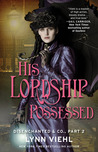
Review: His Lordship Possessed (Disenchanted & Co., Book 1, Part #2) by Lynn Viehl

His Lordship Possessed (Disenchanted & Co., Book 1, Part #2)His Lordship Possessed by Lynn Viehl
My rating: 2 of 5 stars

As I mentioned in my review of part one, I read this for a book club. I was startled to find the last book was only the first half, and so I read on, despite my dislike of the love interest.

This half has Charmian (Kit) Kittredge stumbling across a plot to take over the city of Rumsen, all traced to the husband of the woman who hired her. When her love interest, Lucien Dredmore, gets possessed by an evil spirit, her only option is to kill him before it can succeed.

Sadly, the second half takes everything that I liked about the first half, and throws it down the toilet. Kit spends the book running for her life or mooning about the odious Lord Dredmore. It has her hiding out in a brothel, just to give Dredmore an excuse to paw at her where other people can see. It also gives us the appearance of Harry Houdini a century earlier, just for some plot flavor.

And the worldbuilding I thought was so nicely handled in the first half suddenly takes on a kitchen sink approach, with conspiracies dating back generations, plots to take over the world, needless complications, and the creepiest declaration of love I've ever seen in written form.

Seriously, am I the only reader thoroughly creeped out by Dredmore's love being based on his ability to control her? Someone else in my group said she saw an unspoken, "But I'm not going to use it" in there, but that was the opposite of the impression I got.

Like it wasn't bad enough I had to stop to roll my eyes every time she was desperate to get him back after that, the ending is pure deus ex machina. The plot device that lets her fix everything came out of nowhere. It reads like the author wrote herself into a corner and couldn't figure out a better way to write herself back out. There were several better ways she could've handled it, including letting the alphahole stay dead.

The way the next book is set up, it sounds like a rehash of this one, without Kit having to be convinced magic is real. No, thank you.


View all my reviews

Wednesday, March 26, 2014

Advance Review: The Here and Now by Ann Brashares

The Here and NowThe Here and Now by Ann Brashares
My rating: 2 of 5 stars

I received an eARC of this book for review from Net Galley, with the understanding I would provide a fair review. I was not compensated for this review.

Prenna James could be any overly sheltered teenager, except that her community's reason for keeping her apart from the rest of the world is because she's from a future world ravaged by disease and shortages. Anything she does could disrupt the timeline, or she could pass a disease on to a "time native," which is what her community calls those who belong in that timeline. But Prenna is in love with native Ethan Jarves, who may be too observant for his own good. Then a crazy homeless guy tells her she has to stop an event that'll happen on May 17, and he seems to know where she's from.

It's a compelling premise, which is why the execution is so frustrating. If you'd told me this was a debut novel, I'd've believed you. The writing is stilted and uneven, and the dialogue made me cringe in places. Prenna offers an excuse as to why she communicates so badly, but that doesn't explain why everyone else speaks that way. People avoid contractions, and whip out multisyllabic scientific terms in casual conversation.

The plot is awfully straightforward for a story about time travel. Prenna gets her motivation, then an obstacle. She handles the obstacle. Another obstacle appears. She overcomes it. And so on. The society she lives in is painted as omniscient, omnipotent, and corrupt, but the solution comes about far too neatly. It severely detracts from the earlier depiction, and it paints everyone, Prenna included, as useless. And two whole days of story are spent just waiting for the event she's supposed to stop. The only conflict comes from the thin excuses the book has for making Prenna and Ethan lie down together in close quarters. The book could've benefited from a significant tightening of the timeline.

The whole story revolves around the premise of forbidden love between Prenna and Ethan. Which is unfortunate, because I didn't feel the romance. I believed they were close friends, and that he was a teenage boy. Aside from a brief fantasy she regrets, I never got the impression Prenna feels anything but tolerance for the physical aspect of their relationship. That makes his pressure despite her apathy rather creepy.

The least forgivable aspect of this book is its endorsement of the notion of purity. It's entirely up to Prenna to be a good girl, and the ending justifies her prudishness. I'm not expecting a sexually liberated YA heroine, but the book's reinforcement of purity culture left a bad taste in my mouth.

There's so much that could've been done better in this book. Had Prenna wanted Ethan as much as he wanted her, had the conclusion been used, instead, as a jumping-off point for Prenna to show how much she cares, had those two days of inactivity been cut, I would've forgiven a lot of stilted writing.

I do understand this is YA. That's why I'm so disappointed in how poorly this was written. I don't expect inferior quality from something, just because it's written for teenagers. In fact, most of the YA I've read thus far has been on par with adult fiction. Let's not give ammo to the crowd who argues the YA label means something isn't as good.


View all my reviews

Thursday, January 16, 2014

Review: Red Mars by Kim Stanley Robinson

Red Mars (Mars Trilogy, #1)Red Mars by Kim Stanley Robinson
My rating: 2 of 5 stars

I read this for a book club, but I ended up missing the book club, and finishing it more than a week after the meeting. It took me forever to slog through, and I nearly nodded off more than once during my reading.

In a near-future setting, 100 scientists are sent to colonize Mars. Once they get there, they find out that they're not all in agreement about how to accomplish that. The story takes place over a long span of time, during which thousands of people from Earth emigrate, a "space elevator" is built, people are murdered, projects are sabotaged, and the planet is forever changed by the arrival of people.

Part of the problem with the narrative is that it's incredibly scattered. I don't know why the scientists aren't sent with an agreed-upon agenda, but it would've saved a couple hundred pages. The bickering over whether to terraform and how to do it soon becomes tedious. If they weren't meant to change the planet, why send them at all? As we all know, remotely controlled rovers can study the planet without changing it or endangering the lives of the finest minds of their generation.

In addition to the above problem, we have a political treaty with the governments on Earth that takes up a good chunk of the narrative, descriptions of the Martian landscape I found hard to follow, a love triangle that never really goes anywhere, different factions undermining one another, an anti-aging treatment being developed and its repercussions touched on, and the science behind their terraforming efforts explained in excruciating detail.

The science is good. Robinson extrapolates a number of theories we've since found to be true, and gets across the alien nature of the landscape and its unique challenges. And yet, I never felt like I was really there. One of the characters, Maya, remarks that it feels like they're in a simulation, and that's how the entire book felt. Like none of this was really happening, and that we were dispassionate observers of things that didn't matter. I waited for the book to reveal that they were really in a virtual reality to test their readiness for colonization. Not that I would've liked that ending, but it would've explained so much.

The book is told through a few different perspectives: the aforementioned Maya Toitovna, Nadia Chernyshevski, Frank Chalmers, John Boone, and Ann Clayborne. Maya is described by all of the other characters in gender-stereotyped and unflattering terms, but she was the only character I connected with at all. A few of the other one hundred scientists are discussed, but not enough of them that I felt there were a hundred. The book could've benefited from trimming that number down to the twenty or so it actually discusses, and leaving the background work to automated machinery.

Other reviewers have said they hated the characters. I would've, too, if I ever cared enough. I never felt like they were real, though. They do terrible things for apparently no reason other than that they can. It's not that they're unsympathetic; it's that they're cartoon cutouts moving through a plot on rails. When characters died, I felt nothing but relief I wouldn't have to try to keep track of them in this scattered narrative anymore.

And the book really failed to impress me when it repeatedly referred to a group of nomadic people as "gypsies."

Overall, reading this book felt like watching an ant farm for hours and hours and hours. The ants are busy at work shaping their world, while you sit outside the glass, completely unaffected by whether they succeed or fail. I think it was supposed to be a metaphor about colonization or how we've hurt the Earth, or something, but it was too scattered to say for sure. It felt like I'd wasted my time reading this book, and I was mad at myself for bothering to finish it.


View all my reviews

Sunday, December 29, 2013

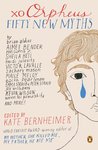
Review: xo Orpheus, edited by Kate Bernheimer

xo Orpheus: Fifty New Mythsxo Orpheus: Fifty New Myths by Kate Bernheimer
My rating: 2 of 5 stars

I'm a big fan of fairy tale and mythology retellings. I generally like to see different people's takes on these familiar tales, and how they might be affected by a modern mindset. So, when I saw this on NetGalley, I grabbed it for review. I was in no way compensated for reviewing this title, and the review copy is formatted to discourage duplication. I think I would be less disappointed if I'd paid money to read this. I wound up forcing myself to get through it so I could offer a fair review.

Of the fifty myths presented in this book, there are several repeats. Odysseus and aspects of his journey take up many of these tales, and Icharus shows up in more than a handful. The most amusing of these is a tale about an octopus who falls in love with the sun, which takes a turn for the surreal.

I know I'd be a lot more forgiving of the repetition if they hadn't been so tedious. With few exceptions, these tales are overwritten, overwrought, and they suck all the fun out of mythology. Some of them aren't stories at all, but long paragraphs about the meanings of mythology or pseudo-philosophical rambling. Many of them drop the reader into a potentially interesting world with no context, only to further confuse before the story is ended. There's little in the way of character development or insight. The authors do that thing I loathe, where characters act because it's what the story says they do.

I do understand that short stories have less room for back story, insight, or navel gazing, but the vast majority of these confounded me. Almost all of them are told in a dispassionate, detached way. The twelfth time I read a story with the exact same tone and literary devices, I started grinding my teeth.

There were a few standouts in the anthology. "Friend Robin" is an interesting way to bring brownies into a modern world, and "Lost Lake" manages to avoid many of the above pitfalls while telling an intriguing version of the Persephone myth. "Betrayal" was probably my favorite of the stories, for its modernization while preserving much of the tone and intent of myths and fairy tales. It's not a happy story, but it held my interest and wrapped up in a satisfying way.

Fifty stories are a lot to wade through to find three I liked, or four that didn't make me impatient to be finished. I cannot recommend buying this book. All I can recommend is skimming its contents to find the stories you might like, and saving yourself the slog through the rest.


View all my reviews

Monday, July 22, 2013

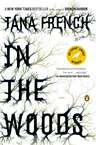
Review: In the Woods by Tana French

In the Woods (Dublin Murder Squad, #1)In the Woods by Tana French
My rating: 2 of 5 stars

This is another book in my 2013 TBR Pile Challenge, and it has the distinction of being the first book I'm not glad to have made myself read this year. I'd been looking forward to a taut, psychological thriller. Instead, I wound up tangled in a narrative mess.

In the 1980's, two children vanished in the woods in Knocknaree, Ireland. A third child was found with blood in his shoes, and no memory of what happened. Then, over 20 years later, a girl is found dead, and there's a sliver of physical evidence linking the crimes. And the boy, now Detective Robert Ryan and all grown up, is the one assigned to the case.

The premise is intriguing. The follow-through, not so much. We're treated to every false lead, every tedious detail, every single bit of evidence that doesn't pan out. In the end, it's Detective Ryan's sudden flash of insight that breaks the case, and then the book plods on for another 100 pages.

If the idea was to steer people away from wanting to be police detectives, well done, French. By the 100-page mark, I didn't even care about the dead little girl anymore. And it wasn't because I cared about Detective Ryan's angst more. The interpersonal drama takes the forefront in the book, and it's the kind that irritates me most. Detective Ryan's problems all seem to stem from his stupidity or stubbornness.

There's something of a twist in the plot at the end, one that Detective Ryan plays right into, while I read on wondering how this idiot ever made detective. He misses some very obvious signs that a person is manipulating him, fails to question several points, and, in the end, lets a dangerous person get away with it. I understand this happens in real cases all the time, but, if I wanted to be immersed in the reality of tedious and frustrating work, I'd go back to working retail. I read books to escape the tedium, not to be reminded of it and shown how things I didn't even know about it suck.

This is the second thriller I've read this year that's been highly praised, but that I've found tedious and uninteresting. It seems it's just not the genre for me.


View all my reviews

Monday, July 1, 2013

Review: Every Dead Thing (Charlie Parker #1) by John Connolly

Every Dead Thing (Charlie Parker, #1)Every Dead Thing by John Connolly
My rating: 2 of 5 stars

I picked this up because the later Charlie Parker books caught my eye, and I like to start from the beginning. If this is any indication of what I'll find in the later books, though, no, thank you. For a thriller, this was awfully tedious.

Charlie "Bird" Parker is a former NYPD cop who lost his wife and daughter to a brutal serial killer. Some months later, he's a private investigator hunting down Catherine Demeter, but still driven to find his wife's killer, who a psychic informed him is called "The Travelin' Man." His search takes him to the dying town of Haven, VA, which is only tangentially related to his personal search. Then it's back to NYC, and down to New Orleans to take in some culture, break up a gang war by slaughtering one of the leaders, and to discover a lot of gruesomely murdered bodies.

Along the way, we meet dozens of people, about half of whom die. By the second half of the book, I'd given up on keeping track of anyone, certain most of them would be dead before the book ended. I wasn't wrong. Charlie, himself, kills almost as many people as the serial killer. The biggest difference is that Charlie doesn't have a grandiose reason for doing so. He pulls a thin veneer of self-defense over it, and that's good enough for the local police.

Despite the needless complexity, I still figured out the killer long before the ending. I never figure out the killer. I couldn't remember the killer's name, granted, but I knew who it was. But then, I don't think Connolly could've made names harder to keep track of if he tried. There were far too many names that sounded similar.

If you're considering reading this book, be warned that it contains some rather graphic descriptions of mutilation, during which most of the victims are still alive. It's not something that normally bothers me, but I'm sure I was scrunching up my face while I read.

I realize this is a debut novel, and that writers often improve as they go. I enjoyed The Book of Lost Things greatly, and I'm going to give his Samuel Johnson books a chance. But I really had to drag myself through this book, and kept going days at a time without opening it.


View all my reviews

Sunday, June 2, 2013

Review: Talk Nerdy to Me (Nerds #5) by Vicki Lewis Thompson

Talk Nerdy to Me (Nerds, #5)Talk Nerdy to Me by Vicki Lewis Thompson
My rating: 2 of 5 stars

This is the fifth of the Nerds series by Vicki Lewis Thompson, and possibly the weakest so far. The books are linked by theme, rather than by events, so they can easily be read out of order. While it was a fun read, I don't think I'd be missing anything if I'd skipped it.

This book is about a pair of nerds. Eve Dupree is a fashion model and high school dropout, but she really wants to be an inventor. Charlie Shepherd is leaving his tiny Connecticut hometown for a job at the Hoover Dam, but is sidetracked overhearing an explosion in Eve's garage. It's lust at first sight, and, though he doesn't want any entanglements holding him back, they're soon all over each other.

While I understand the appeal of chaps, and agree with Eve's assessment that they showcase some of a man's better features nicely, the repetition of the word within this book renders it almost meaningless. Once they're used as a prop during sex, I was hoping they'd drop it, but soon they have to reminisce about that one time Charlie was wild and spontaneous.

Without repetition and overthinking, though, this would've been a slim volume, indeed. First they have to overthink Charlie's inevitable new job, and whether he's capable of a meaningless fling. Then, as Eve's invention appears to be sabotaged, the obsessing turns to safety measures and speculating about who might've done it.

The dialogue failed to improve since the last book, and some of the sexy elements were actually creepy. I have no idea what the point of the neighbor's alien abduction thing was about, and her winking offer to share her sex toys with Eve was horrifying. That's unsanitary. Then there's some voyeurism that was also pointless and creepy, and is shrugged off by the characters. The involvement of people in one another's sex lives in this book is truly dizzying.

While I enjoy these books for their lovable beta males and naughty hijinks, I would've skipped over this one, if I'd known how little I'd like it. I hope the next one's better.


View all my reviews

Monday, March 11, 2013

Review: The Way of Shadows (Night Angel #1) by Brent Weeks


The Way of Shadows (Night Angel, #1)The Way of Shadows by Brent Weeks
My rating: 2 of 5 stars

This was recommended to me as a good example of gritty, street-level fantasy. If this is a good example, I'm going to stay far, far away from the bad examples.

The book starts with Azoth wanting to apprentice to a famous assassin, but then he balks when given the condition he has to kill someone. I would've forgiven the angst and waffling and realization this is what it means to be an assassin, if that was what stopped young Azoth. But, no. Instead, we're treated to a long, drawn-out thought process of how he might do it, why he should, what the consequences are, and everything but what I'd expect an 11-year-old boy to think about. When it finally happens, the text glosses over it, to be doled out in flashbacks later.

Then we're treated to flashes of life over the next ten years for Azoth, now going by Kylar Stern. Most of the characters in this book have more than one name, incidentally, and names are used interchangeably. So, if you still want to read this after reading my review, be warned that you'll have to keep track of not only people's names, but their pseudonyms. And several people have names that could be confused for one another's. One character goes by Elene, and there's a minor character named Elena, as well.

Female characters are described in terms of their relationships to male characters. One woman is described as headstrong, and, within a few paragraphs, is informed her preteen son holds the power in their house. Her attempts to subvert this are crushed, and the next we hear from her, she's brutally murdered.

The strongest female character in the whole story is a prostitute. Not that I have a problem with prostitutes, but it tells me a few things about what the male author thinks of his female characters. There's a queen who could've been a decent character, except that her biggest role is to plot to put someone else on the throne, instead of her. Because they'll respect him, you see. Which is where I made a choking noise that's still hurting my throat.

So ten years are glossed over in a few overwrought scenes, leading me to the distinct impression that the author only had a few cool scenes he wanted to write, and had only the thinnest justification for stringing them together. As this book is long enough as it is, I suppose I shouldn't complain too stridently.

There's a guy who can tell the future who fits into all this, of course, because the plot isn't maddening enough without the author blatantly adding some, "I know something you don't know!"

While we are treated to tedious inner dialogues, we're rarely given the insights that would make the characters real, at least to me. Inner motivation is often left for the reader to guess, and characters often act in ways that are counter to their interests. I'm left to conclude, most of the time, that they did it so there would be a plot.

As for the plot, it shows up around the halfway point with an assassinated prince. One would think the child (Azoth/Kylar) has grown up some in the last ten years, but there's plenty more dithering to be had. Sometimes, we follow thought processes leading us to conclusions with no bearing on the plot, or that are blatantly wrong, or that we've already figured out. Had the author been forced to cut dithering and navel gazing, this book would've been a quarter its size.

When I found myself yawning through the drawn-out battle between apprentice and master, I knew this book was a mistake to pick up.

I will not be picking up the next book in this series. This one was painful enough to get through. As it is, I'm sorry I finished it. There are so many better books I could've been reading, meanwhile.

I read this on audio, which didn't help the book's quality one bit. The narrator read a lot of it with melodramatic emphasis. So many of the voices sounded similar that, in one scene with three people with the same accents, I couldn't tell who was speaking. A better narrator would've been wasted on this book, but it didn't make an unpleasant read any more palatable.


View all my reviews

Tuesday, November 13, 2012

Review: A Great and Terrible Beauty by Libba Bray


A Great and Terrible Beauty (Gemma Doyle, #1)A Great and Terrible Beauty by Libba Bray
My rating: 2 of 5 stars

Libba Bray mentions in her brief "bio" at the end of the audio book that she should've written what she knows, and I found myself agreeing with her. Maybe this story wouldn't have been as compelling set in modern-day Texas, but it wouldn't have had so many problematic elements.

A Great and Terrible Beauty is about young Gemma Doyle, whose mother dies horribly on Gemma's sixteenth birthday. Gemma blames herself for her mother's death, which is why she's so mopey when she first gets to her new finishing school, Spence Academy. She's mean to the only girl who'll speak to her, then bemoans her lack of friends. She finally gains a friend in the most popular girl in school through implied blackmail, and her new friends help her figure out that she's magic, not crazy. She and her new friends go to a magic realm where her dead mother hangs out and says cryptic things and makes unhelpful proclamations about what Gemma needs to do, and Gemma creates conflict by ignoring every bit of common sense slung her way.

I didn't understand why Gemma's mother couldn't at least drop a hint about who Gemma was supposed to be looking for, or how she was supposed to do that in her current situation. When we get the full story on her mother's background, the cryptic approach makes even less sense. You'd think, in one of the scenes where they lie around looking for shapes in the clouds, she might've mentioned some vague geographic hints. Instead, she gives her dire warnings about the terrible things that might happen if she doesn't. Because if she approached it like a thinking person, there would be no plot.

The novel is set in Victorian England (after starting out in India), but the characters rarely seem to inhabit that time period. For young women growing up in 1895, their notions are awfully modern. They chafe at being owned by their future husbands and are defensive of prostitutes. I can see why Gemma's attitude might be more progressive, but hearing it from her classmates and a teacher was odd. The finishing school, Spence, also feels more like a high school with sleeping quarters than a proper Victorian academy for young ladies. Some of the details are authentic, but the tone felt all wrong.

The worst part of the book, though, is the racism. Gemma interacts with "Gypsies" who threaten to rape her, and holds her head high long enough to speak to their resident fortune teller. My mouth actually fell open at the jumble of racist stereotypes, and again in the author commentary section where the author asserts how proud she is of her research. Clearly, she didn't dig long enough to find out that Romani are real people and that the stereotypes have been used to persecute them for centuries.

There was also some mumbling about her exotically beautiful love interest, who was kind of useless in the narrative, and who apparently joins the Gypsies without question.

The story is told in first-person present tense, though Gemma sometimes reflects on things that she hasn't narrated yet. It detracted severely from the sense of immediacy.

The book isn't uniformly terrible, but the terrible elements certainly detracted from my enjoyment of the better parts of the narrative. I was interested to learn what happened next, even if I did wince every time Gemma started talking about Gypsies.

I listened to this on audio, which did enhance my enjoyment somewhat, though how much lower I might've rated this if I'd had to read it, I don't know. I also don't know if I'm going to seek out the other two books in the trilogy. This is a stand-alone story, and the conflict was wrapped up by the end, though I can see where the later stories might go. There's the possibility we may be spared Gypsy depictions in future books, and that Gemma may have learned from her experiences of the first book and will, therefore, be less of a twit. But, I have a lot of other books I could read, instead.


View all my reviews

Thursday, September 13, 2012

Review: Distant Shores by Kristin Hannah


Distant Shores
Distant Shores by Kristin Hannah

My rating: 2 of 5 stars


Here's some free advice, worth the pixels it forms on your screen: don't read books about marriages on the verge of collapse when your own isn't doing too great. It's upsetting. I was hoping for an uplifting tale of a couple that makes it, despite the difficulties, to get some idea of what to do about my own situation. Instead, it just depressed me.

Distant Shores is a play on the last names of the main characters, Elizabeth ("Birdie") and Jackson ("Jumpin' Jack Flash") Shore. They are, indeed, distant, which is probably the first time I've found a title too apt. Jack is a former football star who injured his knee, got addicted to painkillers, and got thrown off Monday Night Football for getting into a car accident while high. Birdie is his wife of 24 years, mother of their two lovely daughters who are now in college. She's deeply unhappy. When Jack gets a job in NYC, she opts to stay behind in the house she thought she'd get to keep forever.

This is not well-written. It's trite, and absolutely stuffed with cliché. I thought about making a drinking game of one shot per cliché, but realized I'd be dead of alcohol poisoning before 20 pages were up. The sea is like a kaleidoscope, a tall, thin rock is a "monolith," eyes sparkle, people pop things into their mouths, hearts break, it's the end of the world. At one point, Birdie thinks that maybe there's a lesson in the spider who keeps rebuilding her web even after it's swept away every time, and I literally smacked myself on the head.

There is some grey area within the book, which is surprising. The separation is neither Birdie's nor Jack's fault, and they both have realizations to make before they can think of reconciling, or even know for certain if that's what they want to do.

But the majority of the prose is written with all the subtlety of a sledgehammer. There's a subplot about a sports star raping young women, but it's there entirely as a springboard for Jack's career. The author is aware this causes controversy, but the reactions from the football star's defenders are flimsy, nothing like the actual remarks made about women who accuse sports stars of rape.

I didn't like the audio edition, and I don't know if that's because of the infestation of clichés, or because a third of the female characters, all the women that were supposed to sound sexy, sounded like they'd just had dental work done. When a third of the background characters are slurred, it grates. The narrator also had a weird lilt. She put emphasis in places where it didn't belong, making the characters sound like they were children, mentally.

In the end, I found the solution too simplistic, not worth the setup, and definitely not worth wading through all that cliché.


View all my reviews

Sunday, August 19, 2012

Review: Death Masks by Jim Butcher


Death Masks
Death Masks by Jim Butcher

My rating: 2 of 5 stars


I don't know why I read these.

Okay, I know why I read them. James Marsters narrates the audio books, and he manages to turn the unlikable narrator into something less of a jerk. Still, after five installments, it feels like the books are going in circles. The same things happen, often in the same words, and nothing really changes.

In this book, Harry Dresden starts off in a TV studio, on a Springer-esque talk show. He's there to meet a contact, who doesn't want to be seen with him, except on TV, apparently. While he's there, Harry gets threatened by a vampire, and hired to retrieve the Shroud of Turin.

Up to this point, Harry has been painted as agnostic, though there's been a strong thread of the power of the Christian faith equaling the darker forces he taps into. Faced with a Russian atheist who wields one of the holy swords, though, Harry immediately starts proselytizing. Having just braced himself to defend his own lack of faith, it came as a rather curious about-face.

Harry meets another holy warrior, or whatever they're supposed to be called, an Asian stereotype named Shiro. Shiro talks like Mr. Miyagi, and has the same blinding competency for fighting that he doesn't want to use. He's also a mentor, both to Michael Carpenter, a character we were introduced to a couple of books ago, and to Harry. If this is what diversity looks like in the Dresden universe, I'd rather other ethnicities were left out of it.

And, of course, there's the casual sexism in Harry's "chivalry," which these nasty women-substitutes (they're not real women, just shadow puppets written by someone who doesn't seem to like women) then take advantage of to thicken the plot.

The tension I found in earlier books wasn't even there. I felt like Harry spent half the book watching other people fight and kill one another. There were very few moments when I felt like Harry, himself, was in danger. Other people kept showing up to pull him out of whatever scrape he'd gotten himself into, and I knew they would, every time. The ending felt needlessly drawn out.

A lot of my friends like these books, and I'm often reluctant to share my full opinion, because I don't like upsetting my friends. But I just don't think they're the be-all, end-all of urban fantasy. (Or, if they are, urban fantasy is in trouble.) I think they're a drawn-out concept spread too thin, with geeky references tossed in to appease the fanboys. Harry kept alluding to comic books in this volume, and I was rather surprised he had time to read them, considering how many pages he spends whining about how little time he has to sleep.

I don't know if I'll pick up the next book. I'm told they improve after this, and that I haven't hit the peak, yet. I also heard that about Grave Peril, and I wasn't impressed with that one.

We'll see if my friend will lend me the audio book for the next one, knowing how I feel about them, I guess.


View all my reviews

Saturday, July 14, 2012

Review: The Magicians by Lev Grossman


The Magicians
The Magicians by Lev Grossman

My rating: 2 of 5 stars


While I can understand what literary fiction enthusiasts might like about this book, to me, this book took the worst of both literary fiction and fantasy and wrapped it up in comparisons that made it sound far more appealing than it was.

I liked the concept. You have the Narnia-esque fantasy world of Fillory our hero, Quentin, is obsessed with. (And I do love the name Quentin.) You have the school of magic the average person is perfectly unaware of. I liked the elements, going in, but the follow-through was awful.

If you pull out all the sections where people mope, feel sorry for themselves, or undergo self-destructive activities, this book would be maybe a few dozen pages long. I know a lot of people love watching people go through existential crises, but that's what keeps me away from most literary fiction. I don't sympathize with people who create their own problems. I have a hard time rooting for people who have so much going for them, then throw it away on self-destructive, selfish impulses.

Quentin only grows more and more unlikable as the story goes on. It makes me wish I'd taken my reluctance to pick this up after a couple of nights of reading as a sign, and stopped reading. I guess my thinking was that I wanted to see what the plot was, first.

The plot doesn't show up until over halfway through, and it involves a device to go to the fictional land of Fillory, which actually exists. It's only after the story's climax that we learn what Quentin's four years at Brakebills, the school of magic, had to do with the plot. Call me a literary philistine, but I'm unforgiving of books that make me wade through over 200 pages before introducing the main conflict.

Even after the conflict is introduced, there are far more pages spent on second-guessing and preparation than on doing anything with their newfound access. When the characters start talking about how useless they are, and whining about how long it was taking for anything to happen, maybe I was supposed to chuckle appreciatively, but all I wanted to do was throw the book across the room.

I might have been more forgiving if I'd ever felt like Quentin took responsibility for the terrible choices he makes, but instead he keeps forging on, finding new and more self-destructive ways to forget that there are consequences. I lost all sympathy for him when he cheats on his long-term girlfriend, who he looks down on for not being a drunken party fiend like him. I got actively angry with him when he acted like she was still his girlfriend after that. He blames the girl he slept with, he blames the wine he drank too much of, and he blames the guy she sleeps with afterwards. He never thinks that maybe he needs to reexamine his approach to the relationship and quit taking her for granted or looking down his nose at her for having some personal integrity.

It doesn't help the book one bit when the characters are described as heading to upstate NY, near the Adirondacks. They're correctly described as heading to Albany in one chapter, but then the next chapter has them going to Buffalo, and this is repeated several more times. Buffalo is a five-hour drive from Albany, and a quick glance at a map would've told Grossman or an editor what a glaring error this is. It was distracting, and it told of sloppy writing elsewhere, as well.

Instead of finding this book a delightful fantasy romp, a Harry Potter for grownups, I found that all it did was drag down both literary and fiction genres. If this is how literary fiction snobs see fantasy, no wonder they never pick up any genre works. I wouldn't, either, with this to warn me away.

If you are an exclusively literary fiction reader, don't let this book dissuade you. Fantasy is so much better than this.


View all my reviews

Monday, May 28, 2012

Review: Little, Big by John Crowley


Little, Big
Little, Big by John Crowley

My rating: 2 of 5 stars


Out of 538 pages, this book has perhaps 20 I'd call good. They are not consecutive.

I picked this up because it was on io9's list of 10 Books Every Fantasy Author Should Read. So now I know where not to get my book recommendations in the future.

The book follows several generations of Drinkwaters who live in the fictional town of Edgewood in a house that appears to be a different structure from each side. The Drinkwaters play some part in a larger Tale, which means that everything they do is Somehow Important. Why does anyone do anything they do? For Reasons, okay?

If you want emotional engagement in a book, you're looking in the wrong place. This book actively resists any emotional verity. It pushes the reader away, actively. It starts off with a sweet love story about Smoky Barnable and Daily Alice Drinkwater, but he cheats on her before the story's halfway point. Why? Because the Tale says so.

I kept reading because I expected illumination by the end. Instead, we get a stuttering conversation between two sisters, who step around any answers with, "Well, I want to tell you, but . . ." for three damn pages. And that really stands in for most of the book. People do things for no reason, they talk around whatever the reader really wants to know, and wax poetic about things that may well have something to do with that inscrutable conclusion.

The language, by the way, can be quite poetic and pretty. But when the poetic meandering is about how much it sucks to be dumped YEARS later, or about the romance of a drunken bender where a guy sleeps with his lost lover's brother, I'm less than enchanted. It struck me as pseudo-intellectual BS, the prose too in love with itself to bother engaging the reader.

I had hoped for illumination, for this journey to be worth it by the end. Instead, I felt jerked around for 538 pages. I understood the ending just fine, but I didn't think it was worth all the enigmatic mutterings to get there.

If you like your narratives inscrutable and pointless, by all means, slog through this. If you're reading this, though, and wondering if it's worth finishing, save yourself and stop now. It may well be good for you to read, but that doesn't mean you have to waste the hours and hours and hours it'll take you to wade through it if you don't like it.


View all my reviews

Thursday, May 24, 2012

Review: An Ice Cold Grave by Charlaine Harris


An Ice Cold Grave
An Ice Cold Grave by Charlaine Harris

My rating: 2 of 5 stars


In An Ice Cold Grave, Harper Connelly is in the fictional town of Doraville, NC, which is described as being near Asheville. Several young men have gone missing, and Harper is called in to find one in particular. That doesn't take her long, but then forces conspire to keep her there, and she feel compelled to solve the mystery of who would kill all those boys in the violent way she senses. While she's trapped in a lake cabin during an ice storm, she and her not-related-by-blood brother confess their feelings for one another, and consummate the relationship Harper has wanted since at least the last book.

Ewwwww.

Okay, so intellectually, I know Harper and Tolliver aren't related by blood, and therefore there's no incest taboo to be broken, here. But the relationship between them still had me squirming in discomfort. I felt like their platonic, sibling-like bond was fairly well established in the previous books. So to have it turn into a physical relationship in this book left me thoroughly grossed out. I never felt sexual tension between them, or like the "love" Harper describes had a physical aspect to it. Then, suddenly, she's describing his penis in loving detail and talking wistfully about his "dick." Yes, she uses that word. So in addition to feeling gross about listening in graphic detail to these two boning, I was left questioning her emotional maturity, too.

From a writing standpoint, too, I found the book lacking. Harper annoyed me with her constant bellybutton-gazing as she reviews all the crucial things she knows for the reader, there's far too much time taken up in the narrative on puttering, and her constant attention on politeness grated. The woman is hit on the head with a shovel, and she's obsessed with not coming across as grumpy to the parade that marches through her hospital room. It shows a curious set of priorities, at the very least.

There are constant references to things that are going to come up in later books (how handy psychics are, when one wants to smack the reader over the head with foreshadowing), but there's no movement toward solving those mysteries yet. If they're half as plodding as this narrative, I want nothing to do with them.

I'm stopping with this book, because my sense of curiosity in those greater mysteries doesn't override my squick factor with the physical relationship between the siblings-by-marriage. I really don't want to have to sit through another sex scene that makes me throw up in my mouth.


View all my reviews

Wednesday, May 16, 2012

Review: Winter Garden by Kristin Hannah


Winter Garden
Winter Garden by Kristin Hannah

My rating: 2 of 5 stars


This is not my favorite of the Kristin Hannah books I've read. It reads like one of hers, and carries over a lot of the themes of her other books, but I felt like the deeper subject matter was made light of, instead of the shallowness of the rest of the plot being enriched by some heavier topics.

The book is about the Whitson sisters, whose mother never loved them. Their wonderful, perfect father tries to make up for the lack of a mother's love, but then he dies, and people's lives fall apart. It turns out Mom has been suffering from PTSD for the last 55 years, and has to be pestered into sharing her trauma so that her daughters can get over their issues. Those being, one of them can't figure out if she still loves her husband of 20-something years, and the other might not want to marry her awesome boyfriend.

If that summary read as deeply sarcastic to you, congratulations. I was extremely disappointed in the use of someone's history of near-starvation during WWII in then-Leningrad to help some WASPy women realize their mother loved them all along. It was too pat, too neat and predictable.

I had a hard time believing that the father was as wonderful as everyone believed. He was married to this woman he supposedly loved for 50+ years, and never once confronted her about the fact that she was acting out her trauma? There's keeping the peace, and then there's being delusional to the point of scarring your kids. Supposedly, he loved his daughters, but he let them think their mother just didn't care about them. The fact that he made his youngest daughter promise, on her deathbed, to extract the story of what happened, fails to make this better in my mind. He sidestepped the real work involved with loving someone, and let everyone around him suffer so he didn't have to upset his wife.

As for the trauma, itself, it turns out dear, distant Mom actually survived WWII in Leningrad, by the skin of her teeth, and has been carrying around that trauma and survivor's guilt for decades. That she shares her trauma with her girls (and therefore heals their midlife angst) is supposed to fix four decades of treating them like they didn't matter.

One major problem with the narrative was that Mom's flashback is called a "fairy tale," and it's described as being told in a storytelling voice. But the tone of the "fairy tale" is never anything like a fairy tale, even a Russian one. It's too detailed, too dialogue-centric, too formally crafted. It didn't sound like the sort of narrative a woman could repeat word-for-word with each retelling.

I never felt like the characters were real, their reactions something real human beings would have, except for Vera, who's been deeply traumatized. For that trauma to translate into healing one self-sabotaging woman's marriage and another's commitment issues made it shallow, though, and like it didn't matter. The takeaway was too superficial. It also managed to trivialize every other difficult mother-daughter relationship, ever, in suggesting that distant moms must have a good excuse and therefore the daughters' feelings of emotional abandonment don't matter.

I know Kristin Hannah can write touching stories about grief and love and healing, which is why this was such a disappointment. Hopefully she'll stick to lighter subjects.


View all my reviews

Saturday, May 5, 2012

Review: Naked in Death by J.D. Robb


Naked in Death
Naked in Death by J.D. Robb

My rating: 2 of 5 stars


Once again, I find myself in the minority about a piece of popular fiction. At least now I have more keywords in my "I'm not going to read that" stable. It's always good to know that, if someone compares a book to someone popular I dislike, I won't like that book, either.

I picked this one up because it was slated to be darker than Nora Roberts' usual books. I don't like fluffy romance, and the tropes used in her usual books didn't appeal to me. I thought some intrigue might make up for the tropes and keep me interested enough to read despite that.

I was wrong.

In this book, Eve Dallas (not her real name) is covering the high-profile murder case of a prostitute who happens to be the granddaughter of a well-known politician. The year is 2058, though it's a vision of the future set from 1995, so some of the predictions are dated.

I can overlook the technology being likely obsolete, and the apparent nonexistence of an internet. What I can't overlook, though, is the backwards attitudes. I expect the bad guy to have a regressive view about women, but the main love interest, Roarke, made my skin crawl. He has no respect for Eve's boundaries, and he literally has sex with her when she's in the middle of panicking about being held down. He never apologizes for it when he realizes what a violation it is for her, and she doesn't expect him to. Instead, we're treated to a laughing rendition to her one female friend about the encounter as, well, she must've enjoyed herself, because they had a lot of sex.

The initial encounter that got her in her bed was consensual. Every other encounter on that night is told with her protesting, trying to get away, actually attacking him to get him off her. She never consents to more than that one encounter.

Yuck.

I would feel a lot better about the above if she ever reflects on that, but she doesn't. Instead, she keeps going back to him.

The murder mystery plot was thin, and the romance dominated the focus of the novel. Add in some head-hopping that made the scenes hard to follow (perspectives were shifted jarringly, with no warning), underdeveloped side characters, and a number of pointless scenes, and I found myself hurrying through this just to be able to return it to the library.

The series may well improve in future volumes. I won't know. I have no love for a bodice ripper thinly veiled as a futuristic dystopian mystery. Let those who like that sort of thing have it; I want nothing to do with it, and wish to warn you away if this isn't your thing.


View all my reviews

Wednesday, April 25, 2012

Review: Wicked Appetite by Janet Evanovich


Wicked Appetite
Wicked Appetite by Janet Evanovich

My rating: 2 of 5 stars


I should've listened to my friend Cyndy when she said I wouldn't like this. Wicked Appetite is a rehash of everything I don't like about the Stephanie Plum series, with nothing new to recommend it.

I'm not a fan of the between-the-numbers books in the first place. This book basically takes the between-the-numbers formula and files the serial numbers off Stephanie Plum to turn her into a single woman from Virginia living in Salem who can cook. Lula is no longer a sassy black ex-prostitute; in this, she's Glow, a ditzy wannabe witch who botches spells. Baker-Stephanie, whose name is Lizzie Tucker, is supposedly staid and predictable, and is able to get out of bed before her alarm even after tromping around all night on this ridiculous quest for the MacGuffin, a series of items that make a person gluttonous in various ways.

I didn't see any reason for Lizzie to want to help Diesel. I was unconvinced that her attraction to him was anything more than Stockholm syndrome. He regularly ignores her, violates her boundaries (he sleeps naked next to her when she expressly told him to sleep on the couch, for crying out loud), and generally does nothing to recommend himself. In return, apparently, she thinks he's cute.

There were way too many wacky hijinks in this book, something that I was merely tolerating through Evanovich's other books. They're not funny, and their inclusion makes the story drag along. It's like talking to that batty aunt who thinks she's really funny. In Wicked Appetite, in addition to the aforementioned Glow, there's the inclusion of Carl the monkey, lots of blown-up cars and houses, and a ninja cat without a name. There are also a number of scenes which serve the singular purpose of trying to be funny by giving the weirdo characters a whole scene in which to embarrass Lizzie.

As for Lizzie, she tells us about the things that make her different from Stephanie Plum, but, at the end of the day, she's so much like her, she even has the same mannerisms, verbal tics, and cadence. The narrator for the audio book tries gamely to make her sound different from Ms. Plum by adding a subtle southern accent, but the fact of the matter is, she sounds just like Stephanie. And some of Diesel's dialogue is lifted, word-for-word, from Morelli and Ranger's dialogue. Unh, indeed.

If you're begging for more of the between-the-numbers fare and you're desperately in love with the annoying Diesel character, you'll love this, because that's all it is. As for me, this book has sealed my decision to not pick up another book Janet Evanovich has written. I enjoyed some of the Stephanie Plum books, but not enough to risk slogging through another like Wicked Appetite.


View all my reviews