Search This Blog

Monday, September 16, 2013

Review: Shoggoth's Old Peculiar by Neil Gaiman

Shoggoth's Old PeculiarShoggoth's Old Peculiar by Neil Gaiman
My rating: 4 of 5 stars

This was a short story Audible was giving out for free to promote
  The Ocean at the End of the Lane

. It included a bonus chapter of the Ocean audiobook.

The short story is originally from "Smoke and Mirrors." It's about Benjamin Lassiter, an American from a small Texas dry town, in more senses of the word than average rainfall. He's decided to do a walking tour of the British coastline during the off season, believing a guidebook that assures him that'll work out well. He winds up in a town called Innsmouth, and hasn't read enough to know why it's a bad idea to drink the local beer.

The story is funny, but not in a laugh-out-loud way. It's slyly so, and funnier the more one knows about H.P. Lovecraft's fiction. Benjamin knows even less about that than he does about beer and its effects, and the story hinges on his being completely unaware of what he's gotten himself into.

The story was narrated by the author, who does a fine job reading his words, though his American accent could use some work. He can be forgiven for that, for his pleasant British accent that carries the narration and other characters' dialogue.

The story is no longer offered through Audible, so I feel lucky to have pounced on the offer while it was still around.

View all my reviews

Friday, September 13, 2013

Review: The Golem and the Jinni by Helene Wecker

The Golem and the JinniThe Golem and the Jinni by Helene Wecker
My rating: 5 of 5 stars

My younger sister and I were taking a long car trip together last month, and I was looking for ways to pass the time. I had Audible credits, so she suggested I pick up this book, as it seemed relevant to both of our interests, and she'd heard good things about it. I went in with no expectations whatever, except that it would pass the time.

We only made it about halfway through the book together, but I finished listening as quickly as I could. It builds slowly, at first, with simple, straightforward language, often describing newly introduced characters' entire lives. The story takes place in New York City, amongst the immigrant communities, so the narrative often halted to explain what a person was doing in America. But, after the scene is set and the players established, the story that unwinds is tightly plotted and fascinating.

It turns out that each introduced character plays an important role in the narrative. Even one who seemed to only be there to show how basely another character behaved wound up helping in an essential way. The plot is never bogged down with the numerous characters and perspective shifts; rather, they carry it.

The fantastical elements of this book stand in for human traits, often exaggerated or that the author wishes to explore within the story. The titular jinni's fiery nature makes him a reckless pleasure seeker who lives in the moment, while the golem is grounded, unchanging, and dependable. Their friendship is unlikely, but entirely believable the way it unfolds. Similarly, I can't imagine that many Jewish widows mingled with many Syrian hotheads in the New York City of 1899.

The golem's creation seemed, to me, like a metaphor for the preparation young women might've gone through to become the perfect wives, only to be whisked away from everything they know. Chava is made to order, her specifications sounding a lot like the list a young man seeking a bride might have presented to a matchmaker. She's lost and confused when she reaches New York City, but her fantastic nature makes her far more prepared than human women would've been. Nonetheless, I feel she represents the strength and staid nature of a lot of women immigrants.

Ahmad, on the other hand, appears even more suddenly in Little Syria, and is no less disoriented. He's a prisoner, kept in human form, and his restlessness is perfectly understandable. For a being of fire who lived by himself most of the time and didn't understand humans, New York City is stifling. His characterization captures the spirit of those who didn't find what they expected, and whose skills were undervalued in the new world they found themselves in, but made the most of what they could do. His wandering also gives the author a chance to show us a lot of the New York City we don't read about in history books, in a way that never felt like an infodump.

Within the book, such concepts as free will, what makes a person human, the nature of the soul, ethics, spirituality, consequences, and nature versus nurture are all explored. The book offers no easy answers to these questions, and it never browbeats the reader with the author's opinion. Sometimes Chava is right to be cautious, and sometimes Ahmad's impulsivity serves him well. Neither is a mouthpiece, though I found Chava the more sympathetic of the two.

The ending is bittersweet, but hopeful. Or maybe most of the bitterness came from the fact that I was finished listening to it. The language isn't flowery or poetic, but it does present a fascinating world, and uses it to make the reader think about the world we live in. If you have any interest in historical fiction with fantasy elements, pick this up. For me, the multicultural approach was a bonus, not a barrier, but it's quite approachable even if you aren't familiar with these cultures.

As I mentioned above, I read this book on audio, read by George Guidall. He's an excellent narrator, and was well up to the task of imitating several different accents. I couldn't have told you what the difference was between a Christian Syrian and a Muslim one, but Guidall gave them subtly different accents that easily distinguished them. He also narrated female dialogue well, softening it without affecting a falsetto or screeching.


View all my reviews

Review: The Ocean at the End of the Lane by Neil Gaiman

The Ocean at the End of the LaneThe Ocean at the End of the Lane by Neil Gaiman
My rating: 5 of 5 stars

I was one of the lucky readers who lived close enough to an event to see Neil Gaiman read from this book in person, answer questions, and then sign books, mine included. If you want to read my write-up about the event, it's in this blog entry.

Even without the excitement of meeting the author on his last US signing tour, though, I would've enjoyed this book. It's what I've always waited for in a fantasy novel, but I never realized this is what I lacked.

The book is short, and therefore can be a quick read. But if you read it quickly, you lose the flow of the language, the layers of complexity, the characterizations. The narrator is a middle-aged man, looking back at an event that happened when he was seven but had forgotten until that very moment. The narration has the honesty only a seven-year-old can have, filtered through years of experience and revelation. The young boy is often confused about things the adult understands, which evokes a certain wistfulness and melancholy at the same time.

The character is taking refuge after a funeral (the text never says for who, but, based on the focus of the story, I think it's his father). He goes to the end of the lane, where a girl four years his senior once lived. She called the duck pond "the ocean," and it's gazing at that pond that the unnamed narrator remembers that strange summer. His family had slipped in financial status, and had to take in boarders. One such boarder kills himself in the family car, which leads to the boy's meeting the Hempstock women. It's a grandmother, mother, and daughter (crone, mother, maiden), and the girl's name is Lettie. He goes with her to help put to rest a spirit who's been stirred up by the death, but something goes wrong, and a malevolent woman shows up at his house. He has to use every ounce of courage and strength his little seven-year-old self can muster to banish her, and, of course, there are consequences.

Neil Gaiman has said that he feels there isn't so much as a word wasted in this book, and I agree. Everything that's in there is essential. Every character needs to be there, every event, every detail, all shape this narrative. There are some things that go unwritten or unspoken, and the narrative shapes around those, too, defined by the space they left behind.

I read the hardcover of this book, but I intend to get the audiobook when I want to reread it. I think that could only add to the experience. I think both paper (or electronic) and audio are necessary experiences to absorb this story.


View all my reviews

Thursday, September 5, 2013

Review: Among Others by Jo Walton

Among OthersAmong Others by Jo Walton
My rating: 3 of 5 stars

I decided to pick this book up because it won the Hugo for Best Novel, and I'd heard good things about it. In the end, I was left with an unflattering opinion of the entire award process. I can see why a lot of Hugo voters might have liked this story, but I don't think it was the best SF book to come out during the eligibility period.

The book is a series of diary entries written by Morwenna (Mori) Phelps between September 1979 and February 1980, with a brief stop in 1975. She has an injury that makes it difficult to walk, and she has a twin sister who died in some tragedy she doesn't specify until much later in the book, except that she blames her mother for it. Mori is Welsh, and the bulk of the narrative takes place in England, where she feels out of place and lonely.

When the story opens, Mori has run away from her mother, and is living with the father she never knew. His half-sisters send her away to an all-girls' boarding school, where she befriends the librarian and feels even more alone and bemoans the lack of privacy.

Mori can do magic and sees fairies, an ability she says most children grow out of. She says her mother wanted to use magic to grab power for herself, and vows never to become like her. To that end, she decides she won't use magic, except to protect against her mother.

The mother remains a shadowy figure for most of the book. She sends Mori some letters, and pictures of the twins with Mori's image burned out of them. Mori frets about her mother finding her, but the mother's presence is barely felt within the narrative. The bulk of the story is about Mori finding an SF book club at the library, making friends with the members, finding a cute boyfriend with a bad reputation, having awkward conversations with her father, who she calls by his given name, visiting Wales, and, mostly, reading SF books that were current to the late 1970s. Her comments may have been relatable to someone who's read all those books, but I was either mystified, or I didn't agree. I violently dislike Heinlein, so to hear her going on at length about what genius he is rankled, and I honestly don't think Tolkien was the literary god Mori posits him as.

Honestly, it wasn't a bad book, and I might've given it four stars, if not for all the acclaim. But I felt it was transparently pandering to a certain audience, and I was not that audience. If you grew up during that same time period and worship Heinlein and Tolkien, you'll probably like this book a lot more than I did. I just don't think the resonance with that certain audience makes this book worthy of one of the highest genre awards.

I listened to this book on audio, and I happened to listen to it with someone with a better ear for accents than mine. She pointed out how awful the Welsh accent was, and then I couldn't unhear it. The narrator's British accents were fine, but the Welsh was obnoxious and overdone. I recommend a paper copy, unless your ear for accents even worse than mine.


View all my reviews

Tuesday, September 3, 2013

Review: The Way of Kings (The Stormlight Archive #1) by Brandon Sanderson

The Way of Kings (The Stormlight Archive, #1)The Way of Kings by Brandon Sanderson
My rating: 4 of 5 stars

This is the eighth book in my 2013 TBR Challenge, and it's the longest of them. It's also the first in a series of ten books about this world and these characters.

The world presented in The Way of Kings is harsher than most fantasy landscapes. Instead of dragons and gryphons and wizards, we're dealing with a world with very little magic wielded by people. The animals and even plant life have adapted to a world with harsh, violent storms. Somehow, these storms can produce a magical light, which can be harnessed into stones. From there, it's used for illumination, and to power magical items left behind by heroes who used to be able to wield magic, themselves.

Into this world we have Dalinar, brother to the deceased king and a powerful lord who holds honor above all. And maybe he's going crazy. Then there's Shallan, a young woman out to steal one of these magical devices from the king's daughter, an atheist. Last but not least is Kaladin, a soldier forced into slavery where he doubles as a pack mule and cannon fodder. He's determined to survive, and to help all those in his squad do so, too.

Kaladin's story was the most interesting, to me. He had the greatest struggles, and the greatest potential for growth. Shallan had some intriguing moments, as well, but she was so removed from the other two characters that it was difficult to see how she tied in. Dalinar's arc interested me the least, to the point where I felt relief, not tension, in the final scenes when all looks hopeless for him. I felt the continuing narrative would've been a lot more interesting carried by one of his two sons.

There are several minor characters, some of whom get their own perspective chapters, but all revolves around these three. It doesn't become obvious until the very end how Shallan is relevant to the rest of the story, and, it seems, her narrative may entwine with that of the assassin Szeth. That could be interesting.

A lot of this book is laying groundwork and showing how the world works, so the 1000-page epic does drag in places. It was hope of finding out what happened to Kaladin that kept me going through it. It's hard to believe Sanderson can sustain this for 10 books, but I guess we'll see. He did find a good place to wrap this one up, while leaving enough threads open that I really want to read the next one, now. (It comes out in March 2014.)

Overall, I recommend you don't start this book until you have some time to make your way through it. I have a feeling the portents are in the details, and you'll miss them if you quickly skim through to get to the good parts. This is a solidly built world, as you can expect from Brandon Sanderson. I just hope all of the characters are up to carrying this story.


View all my reviews

Wednesday, August 7, 2013

Character Traits: Intelligence

Photo of astronomical clock in Prague
found on Free Stock Photos.biz
I was thinking the other day about how I view intelligence. While I value it highly in those I choose to associate with, I don't go by IQ scores, and I'm always surprised to be compared favorably to another person's intelligence. I pride myself on my creativity and grasp of grammar, and I carry around a lot of random trivia, but I don't consider myself particularly smart.

There are different types of intelligence, of course, and there's the famous quote about judging a fish by whether it can climb a tree. But that's not it. Intelligence isn't a mastery of many different facets of knowledge, nor is it having the right answers. To me, curiosity about the world around you is what separates a smart person from one I'll look down on for a lack of intelligence. Deciding you have all the answers, refusing to listen to contrary evidence, being convinced you're right, putting down others' intelligence before you've given them a chance to show their strengths, all point to a lack of intelligence, in my mind.

The way I see it, I don't have all the answers. The more I learn, the more I find things I want to know more about. The world changes every day, and it's a big place. A lifetime isn't long enough to learn everything there is to know. Even if I spent the next thousand years reading and researching and testing hypotheses and exploring the world, there would still be things I wouldn't know.


It's an overwhelming notion. Luckily, I take comfort in what I can learn, and in the lives I can explore within the pages of books. I find, however, that I have a hard time enjoying perspective characters I find unintelligent. Characters who don't learn anything, or who take too much hammering-away by the authorial hand to get the point, annoy me. So do characters who are too stupid to live, mostly because it shows a certain unwillingness to have learned from one's past mistakes. Also, it taxes my suspension of disbelief; I have a hard time believing the character has survived that long in the first place.

When I write my own characters, if they're supposed to be intelligent, I use the above philosophy. The bad guy in my trilogy wants to keep the status quo as it is, while the good guys' quests are driven by finding out more about how the world works. The main character in the epic fantasy I'm still mentally mapping knows very little about how the world works, and it's her curiosity to find out that ropes her into the adventure. I've never considered her stupid; she has an innocence to her that makes her a character I really want to write.

I hope my approach to intelligence makes my smart characters easier to relate to. I hadn't even realized I'd been doing that until I articulated my view of intelligence, in the first place. Now, I intend to use it to my advantage.

Feel free to do the same. Or drop me a comment about how you characterize intelligence when you're writing.

Sunday, August 4, 2013

Review: Things I Want My Daughters to Know by Elizabeth Noble

Things I Want My Daughters to KnowThings I Want My Daughters to Know by Elizabeth Noble
My rating: 4 of 5 stars

This is the seventh book I've read for my 2013 TBR Pile reading challenge. It puts me back on track for my book-a-month goal, as well as my enjoyment of books I'd been meaning to read for a while. I'd picked this book up years ago when I met the author, and have enjoyed everything else I'd read of hers. Why, then, did I hesitate to read this?

That answer is easy: it's about a mother of four daughters who dies of cancer. The last time I almost picked this book up to read, my own mother had been diagnosed with breast cancer, and I felt I would jinx her recovery if I read about a similar mother dying. (My mother has made a full recovery and is doing well. She's been cancer-free for two years.)

The girls' ages are far more spread than that of me and my sisters. The oldest in this book is in her 40's, while the youngest is still in high school. (The British equivalent thereof, anyway.) They're also a lot closer, both geographically and emotionally. They bemoan the distance between them, but they also consider it odd to have not spoken to one another for months, whereas my sisters and I catch up primarily on Facebook, and go years at a time without hearing one another's voices.

The story, itself, follows the four women in the aftermath of their mother's death. She left them letters, and a journal of her life and thoughts. She loved them dearly, but she also sheltered them from certain truths about her life while she was alive. The story lacks any major conflicts, but the sisters' relationships and personalities pull the reader through to the end. I never felt like the story dragged, despite the lack of a strong narrative thread.

The sisters are initially hard to tell apart. Their names are so generic and interchangeable that I had a hard time keeping track, and the omniscient narration didn't help. Perspectives shift from one paragraph to the next, in some passages. So, while each section may list a perspective character, it doesn't stick to that one character enough to solidify that person. By the end, I had them sorted out, but it took me nearly two thirds of the book.

Overall, I liked this book. It starts off bittersweet, but turns into a story about celebrating love and life, and making the most of what one has. I think I'm glad I didn't read it when I was worried for my own mother, though. The opening sections, immediately after the mother's death, would've been more than I could take.


View all my reviews

Review: Swan Song by Robert McCammon

Swan SongSwan Song by Robert R. McCammon
My rating: 5 of 5 stars

This is a long, intimidating book that starts off really grim, with a nuclear apocalypse killing hundreds of millions of people, and scorching the skies. I'm glad I listened to all of the people who praised it, though, and kept going. The payoff is well worth getting through the depressing start.

While the book never states the year it's taking place, it's clearly an alternate 1987. There are too many cultural markers tying it to that time in US history. This version of 1987 has the cold war escalating rather than fizzling out, and culminating in the launch of every nuclear device on the planet. Many hit their targets, but many fall out of the sky to wreak havoc on US soil. There are survivors, but most are badly burned, and they have to scrabble to find food and potable water, not to mention a reason to keep going.

Within this category of survivors are Colonel James P. Macklin, Roland Croninger, Sue Wanda (Swan) Prescott, Josh Hutchins, and a bag lady on the streets of Manhattan who goes by Sister Creep. Each character has their own struggles in the post-apocalyptic landscape, and the book paints the aftermath in their personal conflicts. Meanwhile, there's an unnamed man often referred to as The Man with the Scarlet Eye who can shift his appearance at will, create fire from his hands, and make people do his bidding. He revels in pain and death and corruption, and makes it his life's mission to stomp out what little hope humanity has left after the events that end the world.

This book is often compared to The Stand, and it's a fair comparison. End of the world, good versus evil, and there's a personification of the devil walking around. The differences don't end with the causes of the end of the world, though. Swan is a far more sympathetic perspective character than Mother Abigail, and The Man with the Scarlet Eye is a much more sinister force than Randall Flagg. He doesn't simply amass a force; he insinuates himself into the very souls of the survivors, so that even good people are led to do terrible things, never realizing the evil of their actions. I also felt that Swan Song has a greater grasp on human nature. What separates "good" from "evil" characters is how corrupted they are, and many characters reform once they have a reason to hope.

In the end, Swan Song is about the endurance of the human spirit, and how we adapt to even the most trying situations. The message is that life is worth living, so long as we're alive, and that there's always something to hope for. Even in the most hopeless and bleak moments within Swan Song, the characters can find beauty.

I listened to this book on audio, narrated by Tom Stechschulte. He has an authoritative sound, well worth the gravity in this book. He also has a good range of accents, so no two characters sounded alike.


View all my reviews

Monday, July 22, 2013

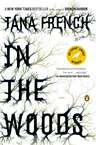
Review: In the Woods by Tana French

In the Woods (Dublin Murder Squad, #1)In the Woods by Tana French
My rating: 2 of 5 stars

This is another book in my 2013 TBR Pile Challenge, and it has the distinction of being the first book I'm not glad to have made myself read this year. I'd been looking forward to a taut, psychological thriller. Instead, I wound up tangled in a narrative mess.

In the 1980's, two children vanished in the woods in Knocknaree, Ireland. A third child was found with blood in his shoes, and no memory of what happened. Then, over 20 years later, a girl is found dead, and there's a sliver of physical evidence linking the crimes. And the boy, now Detective Robert Ryan and all grown up, is the one assigned to the case.

The premise is intriguing. The follow-through, not so much. We're treated to every false lead, every tedious detail, every single bit of evidence that doesn't pan out. In the end, it's Detective Ryan's sudden flash of insight that breaks the case, and then the book plods on for another 100 pages.

If the idea was to steer people away from wanting to be police detectives, well done, French. By the 100-page mark, I didn't even care about the dead little girl anymore. And it wasn't because I cared about Detective Ryan's angst more. The interpersonal drama takes the forefront in the book, and it's the kind that irritates me most. Detective Ryan's problems all seem to stem from his stupidity or stubbornness.

There's something of a twist in the plot at the end, one that Detective Ryan plays right into, while I read on wondering how this idiot ever made detective. He misses some very obvious signs that a person is manipulating him, fails to question several points, and, in the end, lets a dangerous person get away with it. I understand this happens in real cases all the time, but, if I wanted to be immersed in the reality of tedious and frustrating work, I'd go back to working retail. I read books to escape the tedium, not to be reminded of it and shown how things I didn't even know about it suck.

This is the second thriller I've read this year that's been highly praised, but that I've found tedious and uninteresting. It seems it's just not the genre for me.


View all my reviews

Sunday, July 14, 2013

Review: Kitty and the Midnight Hour (Kitty Norville #1) by Carrie Vaughn

Kitty and the Midnight Hour (Kitty Norville, #1)Kitty and the Midnight Hour by Carrie Vaughn
My rating: 4 of 5 stars

I went into this expecting a cookie-cutter urban fantasy. I was pleasantly surprised. Though this predates many of the current genre standbys, it manages to avoid many of the tropes that have made some aspects of the genre seem tired.

Kitty Norville is a radio DJ on KNOB. She's also a werewolf. One night, she wonders aloud about Bat Boy, the tabloid staple, and asks people to call in with their stories about the supernatural. Calls pour in, and her boss asks her to make it an ongoing theme. Soon, she's syndicated across the country, doling out advice about dating a werewolf, and pissing off the local vampire and werewolf leaders.

The werewolves in this series are about more than just furry animalism. The pack politics that make it so hard for her to disobey her higher-ups highlights several points in our world about consent, power, and bullying. Carl, her pack leader, is adamant he doesn't want her to continue doing the show, because to do so shakes the very foundation of his authority. But she continues, because she needs the show as much as the callers need her to continue putting it on.

Kitty's strength isn't always in her fighting, though she does make a point to take a self-defense class so she can take care of herself. The two most tense moments in the book are defused through her words.

The book sets up a lot of subplots for later exploration, but that's also a weakness. So much of the book is setup, with so little payoff, that it's hard to feel invested in any of the plots at all. The ones that end up getting addressed this book weren't the ones I would've guessed.

I plan on listening to the next book in the series. I'm looking forward to hearing what else Kitty can get up to.

I listened to this book on audio, narrated by Marguerite Gavin. She has an excellent radio voice, and I could believe that Kitty would have her husky alto. But her cadence was sometimes off, changing the meaning of some of the dialogue, and I'd have to mentally fix it.


View all my reviews

Review: Zorro and the Pirate Raiders by Johnston McCulley

Zorro and the Pirate Raiders: A Radio DramatizationZorro and the Pirate Raiders: A Radio Dramatization by Johnston McCulley
My rating: 3 of 5 stars

Of all the Zorro dramatizations I've listened to, this is the weakest. Not because of the acting, but because of the story. This story is a mess.

In this installment of Zorro's adventures, Diego de la Vega is all set to marry the pretty Lolita Pulido when pirates raid their wealthy little pueblo. They've been sent by Captain Ramon, the sleazy governor's man who didn't learn his lesson the last time he lost to Zorro. The pirates kidnap Lolita, Don Diego's friends go after them, and Zorro sneaks aboard the ship to comfort Lolita and to make the pirates think the ship is haunted.

Zorro is captured three times within this story, convinces everyone he died twice, and dashes all over the countryside (and the ocean) in pursuit of the pirates. Lolita, meanwhile, manages to get her hands on two different daggers while she's in captivity, proving she's far more useful captive than her dear Zorro.

Captain Ramon's plans might've worked in this episode. The pirates far outnumber the police force and the citizen's brigade, and they're bloodthirsty, at that. But Ramon gets in his own way as often as he plots and plans. In the end, the plan collapses under its own weight as much as by Zorro's intervention.

I listened to this story on audio, acted out by The Colonial Radio Players. They always do a fine job with these roles. They're clear and understandable, despite their accents, and people sound distinct enough to keep them apart. The audio dramatizations are a really fun way of taking these stories in.


View all my reviews

Advance Review: Princesses Behaving Badly by Linda Rodriguez McRobbie

Princesses Behaving Badly: Real Stories from History Without the Fairy-Tale EndingsPrincesses Behaving Badly: Real Stories from History Without the Fairy-Tale Endings by Linda Rodriguez McRobbie
My rating: 4 of 5 stars

I won a copy of this book through a Goodreads First Reads giveaway. While Goodreads does ask for a review in exchange for the advance reader copy, I was in no way compensated for my review.

This is a collection of stories about real-life princesses throughout history who made their marks, in one way or another. Several make power grabs, while others are known for being the true power behind the throne, or for their madness. There are some warriors, all from non-European backgrounds. Many of the stories are about princesses in the last century or so, known for a certain wildness.

The book's strength is that it covers a lot of different cultures. There are princesses from every continent but Australia and South America. It could've stuck to just European royalty, but the variety fills in a lot of gaps of my own knowledge of history. Two North American princesses are discussed, in very different terms due to their very different approaches to the white conquerors.

While this does go a long way toward showing us where the women were in history, it's not without its faults. The book uses "gypsy" to describe people of Romani heritage, and doesn't question the stereotyped views thereof. It also takes a modern approach to beauty, scoffing at descriptions of plump princesses as attractive and describing all of the European princesses in terms of their looks. The Asian, African, and Native American, apparently, weren't worth considering. Last, it often presents the mythologized stories of these royals for several paragraphs before cutting in to say that's not true, that this is how it really happened.

This book was a decent way to make history interesting and relevant to me. It adds on to my high school courses about dead white guys. But, as a primary resource, it's lacking. I think it's a good jumping-off point for discovering about different people and cultures, but it's not detailed enough. It is a fun read, though the last third felt rather repetitive.

I would recommend this book to middle school and high school students who are bored to tears of their history courses, and want to hear about something other than dates and battles and borders. Budding feminists may also be pleased with the new ammunition about how women have been erased from history.

This book will be released November 19th.


View all my reviews

Saturday, July 6, 2013

Review: The Idiot by Fyodor Dostoyevsky

The IdiotThe Idiot by Fyodor Dostoyevsky
My rating: 5 of 5 stars

(Please note that spellings of names may vary, as the novel was originally written in the Cyrillic alphabet.)

This was rather a dense read to start at the beginning of a brain-deadening summer. That's probably why I chose to pick it up on audio and listen to it while I drove myself in air-conditioned comfort.

At any rate, one cannot think of Russian literature and think of light, fluffy pleasure reads. Even the happiest stories have a bitter edge to them, coming out of that era and place. This is no exception. Long conversations may be trudged through, all to throw out one bit of dark foreshadowing. Minute details are picked over, all to delay the inevitable moment of horror. If nothing else, Dostoevsky knew how to draw out the inevitable.

The events of The Idiot take place over the course of less than a year, six months of which are glossed over in a few short paragraphs. The story covers the arrival of the innocent, goodhearted Prince Myshkin in Petersburg (now St. Petersburg), where he meets the family of General Ipanchin and is captivated by a photograph of Nastassya Filippovna. By that evening, he's proposed marriage to the lady, only to have her stolen out from under him by Rogozhin, a young man he met on the train and who's just inherited a million rubles. Rogozhin offers Nastassya Filippovna one hundred thousand rubles to spend the night with him, and, apparently overwhelmed by the notion of becoming a princess, she refuses Myshkin and accepts the money.

Six months later, Myshkin seems to have given up on her and is courting Aglaia Ipanchin, the youngest of the general's daughters. But she's not convinced Myshkin is free of the supposedly loose woman's clutches, and forces a confrontation. Meanwhile, Myshkin inherits a sum of money from a distant relative, nearly gives up half of it to a man claiming the right, makes a lot of friends, engages in long, philosophical conversations, gets tangled up in society gossip, and has several epileptic fits while under extreme stress. This last is enough to horrify people who want no part in a sick person's physical manifestations, though Dostoevsky's view is less judgmental. He speaks of a feeling of enlightenment filling Myshkin's mind when he goes into these episodes, and seems to imply his illness is what gives him his saintly outlook. By the standards of 1869, when the book was published, his view is liberal, though hardly enlightened by modern standards.

The title of the book is used ironically. Myshkin may be trusting and naive, but such trust draws out the better nature of everyone he meets. He enriches the lives of almost everyone he comes in contact with, and it's he alone who understands what plagues Nastassya Filippovna. He has great insight into the human mind, and his compassion serves him well in relieving his curiosity about the evils of human nature.

In some ways, I wanted to compare this to Jane Austen's work. It deals with the subjects of courtship and scandal and eligible bachelorhood. Much of the narrative takes place in drawing rooms or over dinners or in public gatherings. Also, the dialogue is similar, in that characters talk about subjects not immediately related to the narrative for pages and pages. In the end, though, it's far too dark for a comparison, nor does it read like a response to Austen's lighter fare.

Though I listened to this on audio, I don't recommend readers coming to Russian literature for the first time do the same. The Russian naming convention can be confusing if you're not used to it, and most of the characters are referred to by three or four names within the text interchangeably. That can be easier to keep track of on the page than on the audio, where losing track of a character can throw you out of a scene entirely.

The audio is good quality, though. Robert Whitfield has an array of accents which made it clear who was speaking, though some of them are obnoxious. (The girls' mother sounds froggy.) I understood every word of the narrative, and it moved along briskly, despite its density.


View all my reviews

Review: The Hundred Thousand Kingdoms (Inheritance Trilogy #1) by N.K. Jemisin

The Hundred Thousand Kingdoms (The Inheritance Trilogy, #1)The Hundred Thousand Kingdoms by N.K. Jemisin
My rating: 5 of 5 stars

This is another off the list of books I promised myself I'd read this year. When I signed up for the challenge, I had no idea how much of a favor I was doing myself. I have no idea why I'd put off reading this book, and I'm so glad I motivated myself to finally pick it up. I enjoyed it immensely.

N.K. Jemisin's debut is a fantasy novel with gods and political intrigue, told in first person. The teller is Yeine, a young woman raised in the Northern tribes to be a leader. Because of her father's "savage" blood and her dark skin, she finds little acceptance in her grandfather's court, though she quickly captures the interest of the royal family's "weapons." There are four gods in residence in Sky, all of whom are enslaved to the will of the royal family. The most dangerous of these is Nahadoth, the Nightlord who's human by day, sensual and powerful by night. Yeine is warned early that none of his human lovers have lived through the experience, but she's drawn to him despite—or perhaps because of—the danger.

Jemisin set out a large task for herself in this book. She has a fantasy world to build and establish, a mythology to work into the story without slamming the reader over the head with it, powerful characters to build as vulnerable and flawed, and a large cast of characters to develop. She proves equal to all of the above tasks. This world is full and lush, without a second of infodumping. There are confusing moments, but I trusted the author to make everything clear by the end, and she does.

I loved the style the book was written in, too. Yeine doubles back on her story, sprinkles pertinent mythology into the narrative, and even argues with herself in some sections. A lesser writer might've made the narrative seem fractured with such techniques, but, in this book, it made it flow even better. I felt more like I was in Yeine's head as the story unfolded.

The romance could've felt contrived, or Jemisin could've gone with the alpha male shortcut. She did no such thing. The development of the relationships are as key to the story as Yeine's quest to find out who killed her mother. I understood why the characters felt the way they did for one another, even if I wouldn't have felt the same way. For all his scary sensuality and potential to be an alpha male, I liked Nahadoth. Even the antagonists had reasons for their choices, though Yeine found those reasons distasteful and self-serving.

This book didn't read like a debut. There was no clumsy exposition, no dragging passages that didn't serve the story in any way. The story sucked me in from the start, and carried me through a fascinating, tension-filled ride. This book didn't need to be this good, but I'm glad it was.


View all my reviews

Monday, July 1, 2013

Review: Every Dead Thing (Charlie Parker #1) by John Connolly

Every Dead Thing (Charlie Parker, #1)Every Dead Thing by John Connolly
My rating: 2 of 5 stars

I picked this up because the later Charlie Parker books caught my eye, and I like to start from the beginning. If this is any indication of what I'll find in the later books, though, no, thank you. For a thriller, this was awfully tedious.

Charlie "Bird" Parker is a former NYPD cop who lost his wife and daughter to a brutal serial killer. Some months later, he's a private investigator hunting down Catherine Demeter, but still driven to find his wife's killer, who a psychic informed him is called "The Travelin' Man." His search takes him to the dying town of Haven, VA, which is only tangentially related to his personal search. Then it's back to NYC, and down to New Orleans to take in some culture, break up a gang war by slaughtering one of the leaders, and to discover a lot of gruesomely murdered bodies.

Along the way, we meet dozens of people, about half of whom die. By the second half of the book, I'd given up on keeping track of anyone, certain most of them would be dead before the book ended. I wasn't wrong. Charlie, himself, kills almost as many people as the serial killer. The biggest difference is that Charlie doesn't have a grandiose reason for doing so. He pulls a thin veneer of self-defense over it, and that's good enough for the local police.

Despite the needless complexity, I still figured out the killer long before the ending. I never figure out the killer. I couldn't remember the killer's name, granted, but I knew who it was. But then, I don't think Connolly could've made names harder to keep track of if he tried. There were far too many names that sounded similar.

If you're considering reading this book, be warned that it contains some rather graphic descriptions of mutilation, during which most of the victims are still alive. It's not something that normally bothers me, but I'm sure I was scrunching up my face while I read.

I realize this is a debut novel, and that writers often improve as they go. I enjoyed The Book of Lost Things greatly, and I'm going to give his Samuel Johnson books a chance. But I really had to drag myself through this book, and kept going days at a time without opening it.


View all my reviews